Most roofing manufacturers publish lifespan estimates based on national averages. A 30-year architectural shingle is rated for 30 years — in a climate like Denver or Chicago. In Orlando, that same product often performs closer to 20 to 25 years, and in some cases less, depending on how the attic is ventilated and how much direct sun the roof planes take.
This isn’t a knock on the materials. It’s a function of what Orlando’s climate actually does to a roof over time. If you bought a home here and the inspector told you the roof has “10 years left,” understanding what that estimate is based on matters. And if you’re trying to plan around a roof replacement before the next hurricane season, knowing the real variables gives you a more accurate timeline than a manufacturer’s rating.
Here’s what actually drives roof lifespan in Central Florida — and what it means for your home specifically.
The Four Climate Factors That Shorten Roof Life in Orlando
UV Radiation
Orlando averages around 233 sunny days per year. That’s more than Miami, and significantly more than the national average of roughly 205 days. UV radiation breaks down the asphalt binders that hold shingle granules in place. As those binders degrade, granules shed, the underlying mat becomes exposed, and the shingle loses its waterproofing capability.
The effect is cumulative and accelerates once a certain threshold of degradation is reached. A roof that looks fine at year 12 can decline noticeably within two to three years once the granule loss becomes significant. This is one of the reasons a professional roof inspection in Orlando in years 15 through 18 often catches things that homeowners weren’t expecting.
South-facing and west-facing roof planes take the most punishment. If your home runs roughly east-west, the back slope gets full afternoon sun from the west every day. That side typically shows wear two to four years ahead of the shaded slopes.
Attic Heat Buildup
In summer, an Orlando attic with inadequate ventilation can reach 150 to 160 degrees. This heat conducts through the roof deck and cooks the shingles from below as the sun heats them from above. The result is accelerated aging that goes faster than UV exposure alone.
Proper ridge and soffit ventilation keeps attic temperatures closer to outside ambient temperatures. On a well-ventilated roof, the deck temperature stays 20 to 40 degrees cooler than on a poorly ventilated one, which translates directly to longer shingle life. If your home was built before 2000, it’s worth having a contractor check your ventilation setup as part of any inspection — inadequate ventilation is common in older Central Florida construction and it’s one of the most overlooked factors in premature roof failure.
Humidity and Biological Growth
Central Florida’s year-round humidity creates ideal conditions for algae and moss growth on roof surfaces. The black streaks visible on roofs across Orlando, Kissimmee, and the surrounding area are Gloeocapsa magma algae. On its own, algae is mostly cosmetic, but it signals that the surface is staying damp, and damp shingles break down faster than dry ones.
Moss is more damaging. It holds moisture directly against the shingle surface, accelerating granule loss and softening the mat beneath it. If you’re seeing raised moss growth rather than flat streaks, the shingles underneath are typically more degraded than the surrounding roof.
Neither means you need an immediate replacement, but both are signals to have the roof assessed rather than ignored.
Hurricane Season Wind and Impact Stress
Central Florida doesn’t often take direct hurricane hits, but it takes tropical storm conditions multiple times in an average season. Wind events from fast-moving summer thunderstorms, tropical depressions, and the outer bands of Gulf and Atlantic storms create repeated stress cycles on the roof fasteners, shingles, and flashing.
Each wind event that doesn’t cause visible damage may still loosen fasteners slightly, lift shingle tabs, or crack aged shingles along stress lines. Over years of repeated stress, a roof that has been through 15 to 20 storm seasons is mechanically different from one that hasn’t, even if it looks similar from the ground.
This is specifically why storm damage inspections are worth doing after significant weather events, not just when you see obvious damage. Subtle fastener backing, lifted tabs, and hairline cracks in aged shingles often only show up under close professional inspection.
Expected Lifespan by Material in Orlando’s Climate
3-Tab Asphalt Shingles
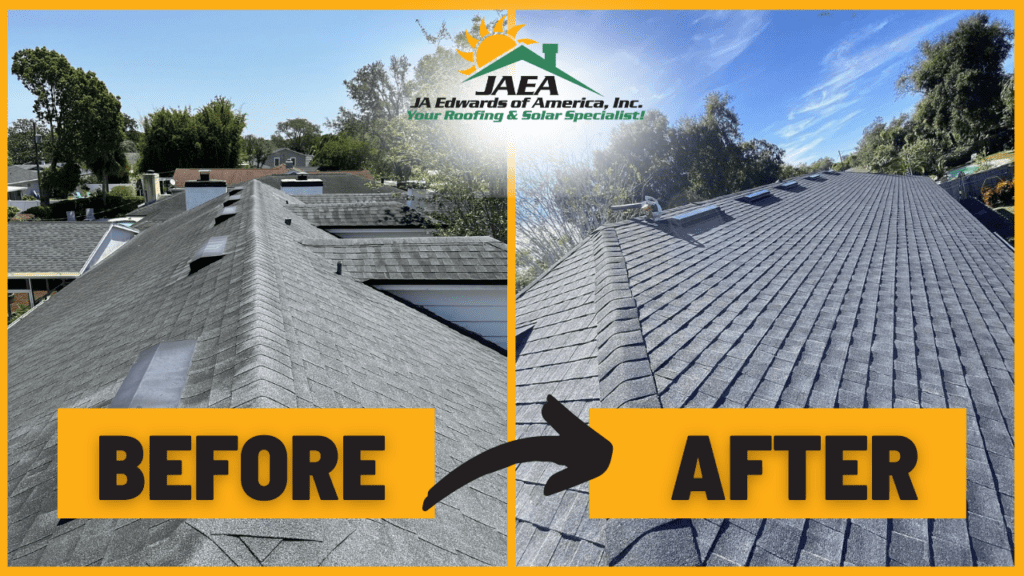
These were standard through the 1980s and into the 1990s. They’re thinner, lighter, and have less wind resistance than architectural shingles. In Orlando’s climate, expect 15 to 18 years of useful life, often less on heavily sun-exposed slopes. If your home has original 3-tab shingles and it was built before 2005, you’re likely past or approaching end of life.
Architectural (Dimensional) Asphalt Shingles
This is the current standard for most residential reroofing in Central Florida. Rated at 25 to 30 years nationally, they typically perform 20 to 25 years in Orlando depending on ventilation, sun exposure, and installation quality. Homes built or reroofed in the late 1990s and early 2000s with architectural shingles are now in the 20 to 25-year window.
Metal Roofing
Standing seam and metal shingle products hold up significantly better in Florida’s climate. Properly installed metal roofing in Central Florida routinely lasts 40 to 50 years. It handles UV exposure better, doesn’t support algae growth the way asphalt does, and generally performs better in wind events. The higher upfront cost makes sense as a long-term investment, particularly if you plan to stay in the home for 20-plus years.
Tile Roofing (Clay and Concrete)
Tile is common across Central Florida, particularly in the communities around Lake Nona, Dr. Phillips, Windermere, and Winter Garden. The tile itself can last 40 to 50 years. The component that fails first is almost always the underlayment beneath the tile, which has a shorter lifespan. Re-underlayment projects, where the tile is removed, the deck is inspected, new underlayment is installed, and the existing tile is reset, are common on Central Florida homes with tile roofs in the 20 to 30-year age range.
Flat and Low-Slope Roofing
Some Orlando homes — particularly older concrete block construction and certain mid-century designs — have flat or low-slope roofs with modified bitumen or EPDM membranes. These systems typically last 15 to 25 years depending on the product and maintenance history. Flat roofs that pool water or have poor drainage fail significantly faster than well-drained installations.
Age Ranges: Where Your Roof Probably Stands
Under 10 years: Barring storm damage or an installation defect, a well-installed roof in this age range should have significant life remaining. A periodic inspection is still valuable, but replacement isn’t typically in the near-term picture.
10 to 15 years: This is a good time to get a professional roof inspection in Orlando if you haven’t recently. Not because replacement is necessarily imminent, but because you want a clear baseline. If there are ventilation problems, early granule loss, or flashing issues developing, addressing them now is cheaper than addressing them after water gets in.
15 to 20 years: This range requires honest evaluation. Many Orlando roofs in this age bracket look acceptable from the street but show significant degradation in a close inspection. A repair at this stage often makes sense for isolated issues, but it’s worth having a replacement conversation alongside the repair estimate so you understand your options with full information.
Over 20 years: Most asphalt roofs in this range in Orlando are at or past their practical lifespan. Some are still performing adequately — particularly if they were installed with good materials, have solid ventilation, and haven’t taken significant storm damage. But statistically, the probability of failure within the next few years is high. Planning for replacement rather than waiting for an emergency gives you the ability to choose your timing, compare estimates, and potentially take advantage of financing options like Slice or Improvifi.
Signs You’re Approaching End of Life
Rather than relying on age alone, here are the physical indicators that your Orlando roof is approaching replacement territory:
Granule accumulation in gutters or at downspout runoff areas. Consistent granule shedding after rain means the shingles are actively degrading. Once this starts happening at scale, the exposed asphalt beneath the granules begins cracking and blistering within a few seasons.
Curling, cupping, or clawing shingles. Shingles that have dried out and lost flexibility will show visible curl at the edges or buckling in the middle. These can’t be flattened back down — the material is past its useful state.
Visible daylight in the attic or water staining on the decking. Any light coming through the roof deck means there’s a breach. Water staining on rafters and decking means water has been getting in, often for longer than you’d expect.
Multiple flashing failures across the roof. If flashing around multiple penetrations or valleys is failing, it’s often a sign that the entire roof system is reaching end of life, not just the flashing itself.
A second or third repair on the same area. When the same spot leaks repeatedly despite repair, the surrounding material is typically the issue, not just the spot being fixed.
If you’re seeing more than one of these, it’s time to move from monitoring to planning. The right starting point is a professional roof inspection that gives you a written assessment of the roof’s current condition and remaining useful life.
What a Roof Replacement in Orlando Actually Costs
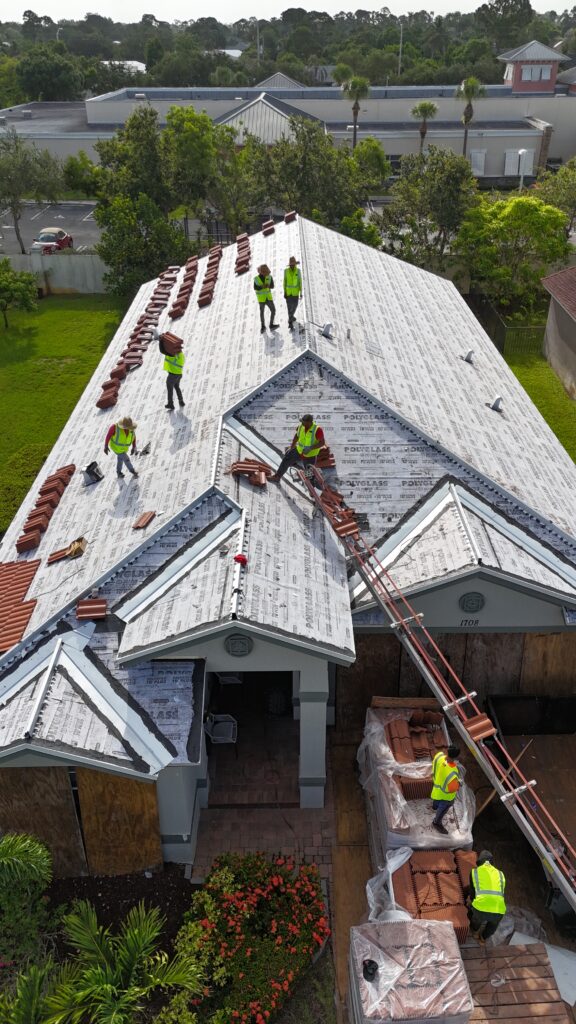
The cost of a roof replacement in Orlando depends on the size of the home, the pitch of the roof, the materials selected, and the condition of the existing decking.
For a standard 1,800 to 2,200 square foot single-family home in the Orlando area with an architectural shingle reroof, the typical range runs $10,000 to $16,000. Homes with steep pitches, complex roof lines, or multiple penetrations sit toward the higher end. Homes that need decking replacement due to existing rot or damage add cost on top of the base estimate.
Metal roofing costs more upfront, typically $18,000 to $30,000 for the same home size, but the 40-plus year lifespan and lower long-term maintenance costs change the math on total cost of ownership.
Financing through programs like Slice and Improvifi allows homeowners to address replacement needs without waiting to accumulate the full cost out of pocket. For homeowners with homes that qualify, the Florida My Safe Florida Home grant can also offset a portion of the cost for installations that meet the state’s wind-resistance standards.
Why the Inspection Comes Before the Estimate
A lot of homeowners call a roofing contractor with the expectation of getting a cost estimate on the first visit. The problem is that an estimate without a real inspection is a guess. The actual cost of a replacement depends on what’s under the shingles — and you don’t know what’s under the shingles until you’re removing them.
What a thorough inspection does is give you a realistic picture of what you’re working with: the condition of the decking, the state of the ventilation, how much life the existing roof actually has, and whether there are any structural issues that would affect the replacement scope.
From that point, an estimate is a real number based on what the job actually requires.
JA Edwards of America offers free roof inspections for Orlando homeowners. Our team will assess your roof’s current condition, give you an honest appraisal of its remaining lifespan, and walk you through your options before any commitment to a project scope.
Call us at (407) 677-7663 or schedule your free inspection online.
Frequently Asked Questions
How long does a roof last in Orlando, FL specifically?
The lifespan depends on the material. Standard architectural asphalt shingles, rated at 25 to 30 years nationally, typically perform 20 to 25 years in Orlando due to higher UV exposure and summer heat. 3-tab shingles, common on homes built before 2000, often reach end of life at 15 to 18 years in Central Florida’s climate. Metal roofing lasts 40 to 50 years. Tile typically lasts 40 years, though the underlayment beneath tile needs replacement sooner.
Does Florida’s heat shorten the lifespan of my roof?
Yes, in two ways. Direct UV radiation breaks down the asphalt binders in shingles faster than in cooler climates. And heat buildup in a poorly ventilated attic degrades shingles from below. A well-ventilated attic can meaningfully extend the life of an asphalt roof by keeping deck temperatures lower during summer.
What’s the average cost of a roof replacement in Orlando?
For a standard single-family home in the Orlando area, a full architectural shingle reroof typically runs $10,000 to $16,000. That range assumes an average-size home with a standard pitch and no major decking damage. Larger homes, steeper pitches, and extensive decking replacement push costs higher. Metal roofing runs $18,000 to $30,000 for the same home but lasts significantly longer.
When should I start planning for a roof replacement in Orlando?
If your roof is between 15 and 18 years old, this is the right time to get a professional inspection and start having the replacement conversation. You don’t need to rush — but you want to plan ahead rather than react to a leak during a storm. Having an accurate picture of your roof’s condition lets you choose your timing and budget rather than being forced into an emergency decision.
Does a new roof affect homeowners insurance in Florida?
In most cases, yes. A new roof reduces your insurance carrier’s risk exposure and typically results in a lower premium. A roof that meets current Florida Building Code wind-resistance standards may also qualify for a wind mitigation credit, which is one of the larger premium discounts available in Florida. Some carriers also require roofs to be under a certain age to offer full coverage — an aged roof can affect both your premium and your coverage terms.
How do I know if my Orlando roof needs repair or full replacement?
The decision depends on three things: the age of the roof, the percentage of the surface that’s affected, and the cost comparison. A general guideline used in the industry is that when the repair cost exceeds 50 percent of the replacement cost, replacement is the better investment. For Orlando roofs over 15 years old, even a repair that looks cost-effective now usually leads to another repair within two to three years — and total costs over that window often exceed what a replacement would have cost upfront.
What time of year is best for a roof replacement in Orlando?
Fall and winter (October through March) are generally the most favorable months for roof work in Central Florida. The weather is more predictable, temperatures are lower for the crew, and you’re outside the main hurricane season window. Spring and early summer are also workable. The peak of hurricane season (August through October) isn’t an ideal time to start a planned replacement, though emergency work can be done any time.