
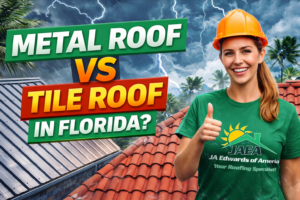
Metal Roof vs. Tile Roof in Florida: Which is Best for Hurricanes?
For Florida homes, both metal and tile roofs offer excellent hurricane resistance, far superior to asphalt shingles. Metal roofs are generally lighter, more energy-efficient, and often have a lower upfront cost. Tile roofs offer a longer lifespan (50+ years) and a classic aesthetic but are heavier and more expensive. The best choice depends on your budget, home structure, and aesthetic preference.
Why hurricanes are different in Florida (and what actually fails first)
In Florida hurricanes, most roof failures are not “the whole roof flew off.” They start at weak points: edges, ridges, flashing, soffits, and how the roof is attached to the structure. That’s why material alone is not the entire story. A metal or tile roof only performs as well as the system underneath it, including the underlayment, fastening pattern, deck attachment, and the details around penetrations like vents and chimneys.
If you’re co
The Ultimate Showdown: Metal vs. Tile Roofs in Hurricane-Prone Florida
When it comes to protecting your Florida home, the roof is your first line of defense. After a major storm, you’ll notice that the homes with intact roofs are almost always metal or tile. But when it’s time to choose between these two premium options, which one is truly the best for a Florida homeowner?
It’s a debate we see often in Orlando, Tampa, and our other service areas. Both metal and tile offer significant advantages over traditional asphalt shingles, but they have key differences in cost, weight, durability, and style. This guide breaks down the pros and cons of each to help you make an informed decision.
Head-to-Head Comparison: Metal vs. Tile
| Feature | Metal Roof | Tile Roof (Clay/Concrete) |
| Hurricane Resistance | Excellent (Can be rated for 150+ mph winds) | Excellent (Extremely heavy and wind-resistant) |
| Lifespan | 40-70 Years | 50-100+ Years |
| Cost | $$$ (Higher than shingles) | $$$$ (Highest upfront cost) |
| Weight | Lightweight (1-3 lbs/sq ft) | Very Heavy (6-12 lbs/sq ft) |
| Energy Efficiency | Excellent (Reflects solar heat) | Good (Airflow under tiles helps cool) |
| Maintenance | Low | Low (but repairs can be costly) |
| Insurance Savings | Excellent (Often qualifies for top discounts) | Excellent (Also qualifies for top discounts) |
Round 1: Hurricane & Wind Resistance
Both metal and tile are champions in this category, which is the most critical for any Florida roof.
- Metal Roofs: Standing-seam metal roofs have interlocking panels that form a single, unified structure that is incredibly resistant to wind uplift. Many systems are rated for winds of 150 mph or more, which is well into Category 4 hurricane territory.
- Tile Roofs: The sheer weight of clay or concrete tiles is their greatest asset in a storm. They are extremely difficult for wind to lift. However, they can be more susceptible to damage from flying debris compared to metal.
- Winner: Tie. Both are top-tier choices for hurricane protection.
Round 2: Lifespan & Durability
- Metal Roofs: A properly installed metal roof can last 40 to 70 years, easily 2-3 times longer than an asphalt shingle roof.
- Tile Roofs: Tile is in a class of its own, often lasting 50 years, 100 years, or even the entire life of the house. The tiles themselves are incredibly durable; however, the underlayment beneath them will likely need to be replaced every 20-30 years.
- Winner: Tile, for its sheer longevity.
Round 3: Cost & Value
- Metal Roofs: While more expensive than shingles, metal roofs are generally less expensive than tile. Because they are lightweight, they typically don’t require any structural reinforcement to your home, saving on installation costs.
- Tile Roofs: Tile is one of the most expensive roofing materials on the market. Due to its heavy weight, your home’s roof structure may need to be reinforced to support the load, adding to the overall project cost.
- Winner: Metal, for providing premium performance at a slightly lower price point.
Hidden costs homeowners forget to budget for
Upfront price is not the full cost of ownership. In Florida, two line items often decide the real budget:
-
Structural reinforcement for tile: because tile is heavy, some homes require framing upgrades, which can add meaningful cost and time.
-
Underlayment and detailing: tile roofs commonly need underlayment replacement before the tiles wear out. You may keep the tile but pay for underlayment work down the road.
On the metal side, cheaper systems can look attractive until you factor in long-term maintenance on exposed fasteners or lower-grade coatings in high-sun, high-salt environments.
Round 4: Energy Efficiency
In the relentless Florida sun, an energy-efficient roof can save you hundreds of dollars a year on cooling costs.
- Metal Roofs: Metal is highly reflective, especially in lighter colors. It reflects solar radiant heat, which can reduce your cooling costs by up to 25% compared to a dark asphalt shingle roof.
- Tile Roofs: The natural air space created between the tiles and the roof deck helps to insulate the home, reducing heat transfer.
- Winner: Metal, due to its superior reflective properties.
What to ask your roofer (so you don’t buy the wrong “metal” or “tile”)
Not all metal roofs are equal. A standing-seam system with concealed fasteners is generally a different performance category than exposed-fastener panels. The same goes for tile. The tiles may be durable, but performance depends on how they’re attached, the underlayment quality, and how the roof is detailed at hips, ridges, and valleys.
When comparing quotes, ask specifically about:
-
Wind rating or design criteria for the system
-
Underlayment type (and whether it’s upgraded for Florida conditions)
-
Attachment method and fastening schedule
-
Edge and flashing details (often where failures start)
-
Warranty terms and what voids them (common surprise)
Which Roof is Right for You?
- Choose a Metal Roof if: You want the best combination of hurricane resistance, energy efficiency, and value. It’s a modern, high-performance choice that offers a sleek look and a fantastic return on investment.
- Choose a Tile Roof if: You want the longest possible lifespan and a classic, traditional Florida aesthetic. If your budget allows and your home can support the weight, a tile roof is a true “lifetime” investment.
Making the right choice starts with a professional consultation. An experienced contractor can assess your home’s structure, discuss your budget, and help you decide which system is the best fit.
Want a recommendation based on your home, not a generic comparison?
A quick inspection can confirm whether your structure can support tile and which metal system makes the most sense for Florida wind exposure. Schedule a free consultation and we’ll walk you through options, tradeoffs, and budget ranges.
Ready to explore your options? Contact [JA Edwards of America] for a free consultation on metal and tile roofing systems.
FAQ
-
Is a metal roof or tile roof better for hurricanes in Florida?
Both can perform extremely well in hurricanes when properly installed. The best choice depends on system design, fastening, underlayment, and your home’s structure. -
What wind speed can metal roofs handle?
Many standing-seam systems are engineered for very high wind conditions, but performance depends on the specific product and installation details. -
Do tile roofs crack during hurricanes?
Tile roofs can be very wind-resistant, but individual tiles may crack from flying debris. Repairs can be more involved and more expensive than simple shingle repairs. -
Do tile roofs require structural reinforcement?
Sometimes. Tile is heavy, so some homes need framing reinforcement or engineering review before installation. -
How long does a metal roof last in Florida?
A properly installed metal roof can often last decades. Longevity depends on coating quality, installation, and exposure (especially in coastal areas). -
Will a metal or tile roof lower homeowners insurance in Florida?
Many insurers offer discounts for stronger roof systems and certain wind-mitigation features. Discounts vary by carrier and documentation. -
What’s the biggest maintenance issue with tile roofs?
Often it’s not the tile itself. Underlayment and flashing details may need attention long before the tiles wear out. -
Is standing seam better than exposed-fastener metal panels?
In general, standing seam is considered a higher-performance system with concealed fasteners. Your budget and roof design determine what’s best.