Top Roofing Companies in Port St. Lucie, FL: How to Find the Right One
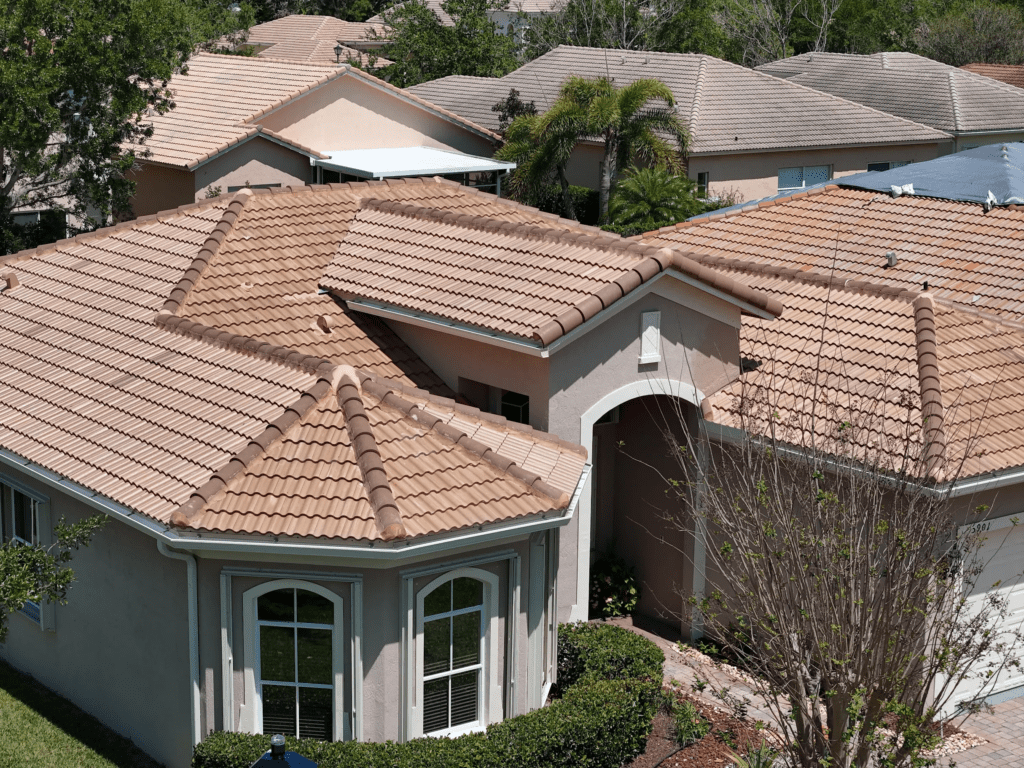
Finding a good roofing contractor in Port St. Lucie is harder than it should be. The Treasure Coast gets hit hard every storm season, and every time a major system comes through, the number of roofing companies operating in the area seems to double overnight. Some of those companies are legitimate and do good work. A lot of them are not, and they know how to sound convincing on the phone.
This guide is not a list of names ranked by who paid to be here. It is a walkthrough of what actually separates a trustworthy roofing contractor from the alternatives, based on the specific conditions that homeowners in Port St. Lucie deal with. If you use this framework, you will be much better positioned to make a decision you are not going to regret.
Why Choosing a Roofer in PSL Is Different From Other Parts of Florida
Port St. Lucie sits on the Treasure Coast, which puts it squarely in the path of Atlantic hurricanes and tropical systems that travel up the coast. The homes here were mostly built in the 1980s through 2000s, which means a significant portion of the housing stock is approaching or past the point where the original roof needs serious attention.
That combination creates a specific dynamic. You have a lot of aging roofs, a climate that accelerates wear, and insurance carriers that are watching this market very closely. Citizens Property Insurance and private carriers operating in Florida have become more aggressive about roof age requirements, which means a homeowner here can find themselves in a situation where a roof replacement is no longer optional, it is a condition of keeping their coverage.
What makes this harder is that PSL is not a huge metro market. It does not have the contractor density of Orlando or Tampa, which limits your options but also means that the companies doing serious volume here have real local experience. The ones to work with know Martin County permitting, understand how local adjusters evaluate claims, and have crews that are familiar with the construction styles common to this area.
The Credentials That Actually Matter in Florida
Florida has its own licensing structure for roofing contractors, and it is worth understanding before you start making calls.
Certified Roofing Contractor (CCC) is the Florida-specific license for residential and commercial roofing. Any company doing roofing work in the state is required to hold this. You can verify a contractor’s license on the Florida Department of Business and Professional Regulation website before you ever invite them to your property. If a company cannot give you their license number, that is a hard stop.
Certified General Contractor (CGC) is the broader construction license that covers a wider scope of work. For homeowners, this matters most when there is structural damage involved, because repairs to rafters, decking, or trusses require a CGC license in addition to the roofing certification.
Beyond state licensing, the manufacturer credentials matter more than most homeowners realize. GAF, the largest roofing manufacturer in North America, has a tiered certification program for the contractors who install their materials. The entry-level tier is GAF Certified. The top tier is GAF Master Elite, which only about 2% of roofing contractors in the country qualify for. Above that is the GAF President’s Club designation, which requires consistently meeting standards across installation quality, customer satisfaction, and business operations over multiple years.
Why does this matter to you as a homeowner? Because it is the only independent verification you have of a company’s installation quality. Anyone can say they do good work. The manufacturer certification means a third party evaluated the company’s work and said the same thing.
What to Look at Before You Call Anyone
Most people start with a Google search and then call the top two or three results. That is not a bad starting point, but it misses some things worth checking before you spend time on phone calls.
Google Business Profile reviews. Look at the number of reviews, but pay more attention to how recent they are. A company with 200 reviews, most of which are from three or four years ago, is a different signal than a company with 80 reviews that are spread consistently across the past two years. You want to see that the company is actively working and that recent customers are satisfied, not just that they had a good run at some point.
Also read the negative reviews. Not to disqualify companies on the basis of a single complaint, but to see how they respond. A company that responds thoughtfully and offers to make things right is showing you something real about how they operate. A company that argues with unhappy customers publicly, or that does not respond at all, is showing you something too.
BBB accreditation. The Better Business Bureau rating is not the most important factor, but an A+ rating combined with a clean complaint history is worth something, especially in a market with a lot of transient operators who do not maintain long-term business credentials.
How long they have been operating in Florida. Storm chasers come to Florida after major weather events and disappear within a year or two. A company with a physical office in Port St. Lucie or the surrounding Treasure Coast area, that has been operating continuously for a decade or more, is a fundamentally different entity. They have a local reputation to protect. They cannot pack up and leave if something goes wrong on your roof two years from now.
Questions Worth Asking When You Call
The conversation you have when you first contact a roofing company tells you a lot. Here are questions that will help you evaluate how a company operates, not just how they market themselves.
Can you give me your CCC and CGC license numbers? A legitimate company will have these ready and will not hesitate to provide them. If the person on the phone is not sure or says they will have to call you back with that information, it is a red flag.
Do you have a permanent office in Port St. Lucie or nearby? You want a local presence, not a company operating out of a post office box or out of state.
Who actually does the installation work? Some roofing companies function more as brokers, signing contracts and then subcontracting to whoever is available. That is not inherently disqualifying, but you want to know whether the company trains and oversees the crews doing the work, or whether they are just passing the job along.
How do you handle the insurance process? For homeowners dealing with storm damage, this is one of the most important questions. A company with genuine insurance claim experience will walk you through how they document damage, how they communicate with adjusters, and what happens if the initial claim comes back short of what the scope of work actually costs. A company that says “we just fix the roof, you handle the insurance” is telling you something meaningful about their experience level.
What warranties come with the installation? There is a difference between a manufacturer’s material warranty and a workmanship warranty. You want both. GAF’s top-tier warranty, called the Golden Pledge, covers both materials and labor for 25 years and is only available through GAF Master Elite contractors. It is the strongest protection available in residential roofing.
Red Flags That Should End the Conversation
There are a few things that, if they come up, should make you stop and reconsider regardless of how professional everything else seems.
Offering to waive or absorb your deductible. This is illegal in Florida under statute 489.147. The practice of contractors absorbing deductibles to win jobs was specifically outlawed because it leads to inflated claims and fraud. If a company offers this, walk away. They are either operating outside the law or setting you up for problems down the road.
Asking for full payment upfront. A standard payment structure involves a deposit at signing, sometimes a progress payment when materials are delivered, and a final payment upon completion. Any company asking for the full job cost before work begins is either in financial trouble or planning to disappear.
Pressure to sign today. Legitimate companies do not use artificial deadlines to force decisions. Some companies that work storm damage will tell homeowners that a price is only good for 24 hours, or that they need to sign before the insurance adjuster comes out. That is a sales tactic, not a reflection of reality. A company confident in their work and their pricing does not need to pressure you.
No local physical address. Post a contractor’s company name into Google Maps and see where their office is. If there is no office, or if the address resolves to a strip mall mail center, take note of that.
Why Insurance Experience Matters So Much on the Treasure Coast
Port St. Lucie homeowners file a lot of insurance claims. The Treasure Coast takes direct hits and glancing blows from Atlantic storms with regularity, and the claim process in Florida is significantly more complicated than most homeowners expect the first time they go through it.
An adjuster from your insurance company is trained to document damage in a way that limits the carrier’s payout. That is their job. A roofing contractor with real insurance experience knows how to document damage in a way that reflects the actual scope of what needs to be repaired or replaced, using language and photo documentation that meets the standard the carrier requires.
The difference between a contractor who understands this process and one who does not can be tens of thousands of dollars on a major claim. It can also be the difference between a claim that gets approved on the first submission and one that gets denied and requires a supplemental review.
This is not about gaming the system or inflating claims. It is about making sure your insurance company pays what your policy actually covers, which is what you have been paying premiums for.
Making the Final Decision
Once you have narrowed things down to two or three companies that pass the credential check, get a local reputation, and handled your initial conversation professionally, the final decision usually comes down to the inspection itself.
Pay attention to how the inspector conducts themselves. Do they take time to explain what they are seeing? Do they give you a clear picture of what the scope of work involves, and why? Are they comfortable answering technical questions, or do they deflect?
The proposal you receive after the inspection is also worth examining carefully. A detailed proposal that breaks down materials, labor, and any supplemental work is a good sign. A single lump-sum number without explanation is harder to evaluate and harder to compare against a competitor’s bid.
Price matters, but it is rarely the right variable to optimize on when choosing a roofing contractor. A roof on a Florida home is a significant structural system that affects your insurance, your home’s value, and your family’s safety. The savings from going with the cheapest option rarely justify the risk if something goes wrong.
JA Edwards of America Serves Port St. Lucie
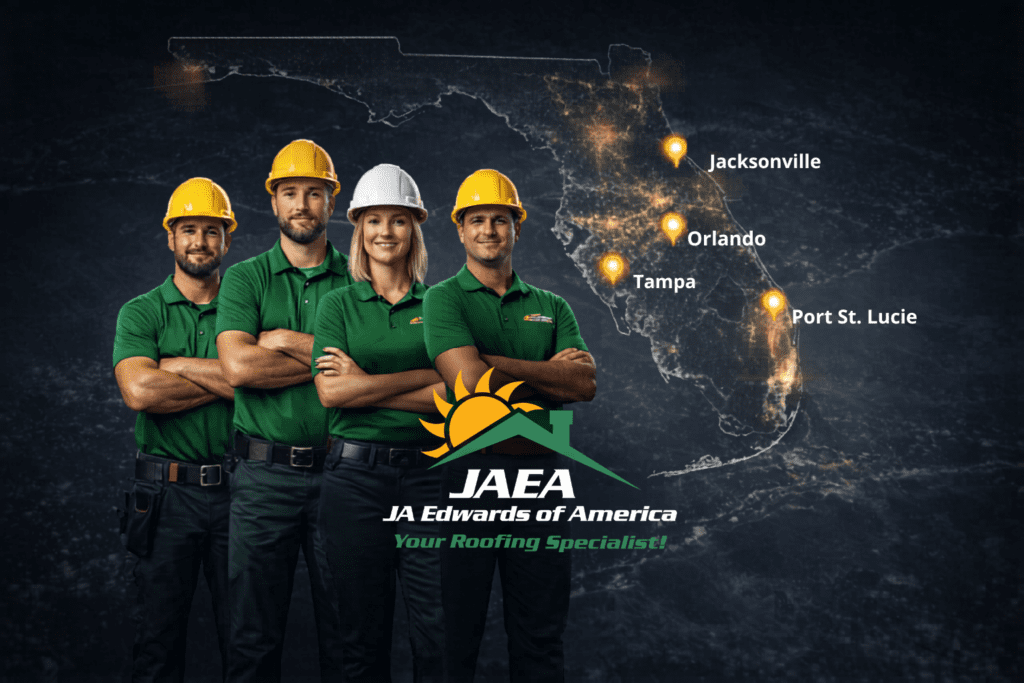
JA Edwards of America has been working on Treasure Coast roofs for years, with a Port St. Lucie office at 540 NW University Blvd STE 103. The company holds both a Certified Roofing Contractor license (CCC1334804) and a Certified General Contractor license (CGC1534283), carries a GAF Master Elite certification with President’s Club 3-Star status (one of three companies in Florida to hold that designation), and maintains a BBB A+ rating.
For homeowners dealing with storm damage, the Port St. Lucie team handles the insurance process from inspection through claim documentation, not just the installation. Free inspections are available. Call (772) 204-2452 or request an inspection online.
Frequently Asked Questions
How many roofing companies are in Port St. Lucie? The number varies significantly depending on the season and whether there has been recent storm activity. During active storm seasons, unlicensed or out-of-area contractors often enter the PSL market temporarily. The more useful question is how many contractors have a permanent local presence, hold Florida roofing licenses, and have a track record of completed jobs in the area.
What roofing license is required to work in Florida? The Florida Certified Roofing Contractor license (CCC) is the minimum required for roofing work on most residential and light commercial projects. For work that involves structural repairs beyond the roof covering itself, such as repairing damaged roof trusses or decking with structural issues, a Certified General Contractor license (CGC) is also required. You can verify both on the DBPR website at myfloridalicense.com.
Does a new roof increase home value in Port St. Lucie? Generally yes. A new roof improves the home’s insurance eligibility, which is a significant factor in the PSL market where Citizens Property Insurance and private carriers have tightened age requirements. It also increases buyer confidence during the inspection process. The return on investment varies depending on the material, the age of the existing roof, and the overall condition of the home.
How long does a roof last in Port St. Lucie? Asphalt shingles in South Florida typically last 15 to 20 years, depending on exposure to UV, wind events, and the quality of the original installation. Tile roofs can last 25 to 30 years or longer if maintained properly, though the underlayment beneath tile usually requires replacement in that window. Metal roofs in the Treasure Coast area can last 40 years or more. Florida’s humidity, salt air exposure in coastal neighborhoods, and storm activity all accelerate wear compared to northern climates.
What is GAF Master Elite and why does it matter? GAF Master Elite is the top-tier certification from GAF, the largest roofing manufacturer in North America. To qualify, a contractor must be properly licensed, carry adequate insurance, demonstrate a strong installation track record, and pass GAF’s training and quality standards. Fewer than 2% of U.S. roofing contractors hold this designation. The practical benefit to homeowners is that GAF Master Elite contractors can offer the GAF Golden Pledge warranty, which provides 25-year coverage on both materials and workmanship. Regular GAF Certified contractors cannot offer this warranty.
How do I verify a roofing contractor’s license in Florida? Go to myfloridalicense.com and search by company name or license number. You can see whether the license is active, what type of license it is, and whether there are any disciplinary actions on file. This takes about two minutes and is worth doing before you agree to any inspection or sign any paperwork.
Should I get multiple quotes for a roof replacement in PSL? Getting two or three quotes is reasonable, especially for a retail replacement where you are paying out of pocket or financing. When comparing proposals, look at the scope of work and materials rather than just the total price. Two quotes at different prices may be using different shingle grades, different underlayment systems, or different warranty tiers. A lower total on a quote that does not include a workmanship warranty is not actually a better deal.
What happens if my insurance claim is denied? A denial from your insurance carrier is not necessarily the final word. In Florida, you have the right to request a re-inspection, hire a public adjuster, or pursue an appraisal process if you disagree with the carrier’s damage assessment. A roofing contractor experienced in insurance claims can help you understand whether the denial reflects the actual condition of your roof or whether there is documentation that supports a different outcome. Do not accept a denial without at least reviewing it with a contractor who understands the claim process.