

What Are Roof Trusses

Roof trusses are one of the most important parts of a roof system. However, most homeowners never really think about them. Because trusses stay hidden above the ceiling, people often forget they exist. Still, without roof trusses, a roof would not stay stable, safe, or properly supported.
In simple terms, roof trusses are the structural framework that holds the roof up. They support the roof deck, carry the weight of roofing materials, and help transfer loads safely to the walls of the house. Because of this, trusses play a major role in how a roof performs over time.
In this article, we explain what roof trusses are, how they work, and why they matter so much, especially for homes in Florida.
Roof trusses are engineered structural frames, usually made of wood, that support the roof, distribute weight evenly, and help keep a home stable and safe over time.
What roof trusses are in simple terms
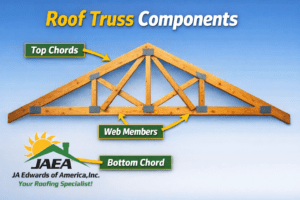
Roof trusses are prefabricated structural frames, most often made of wood. They are built using a triangular shape because triangles naturally distribute weight more efficiently than other shapes.
Each truss works as a single unit. Instead of relying on one beam or one piece of wood, the truss spreads forces across multiple connected members. Because of that, trusses can support large roof spans without needing extra interior walls.
In modern residential construction, roof trusses replace traditional rafter systems in most cases. This happens because trusses are stronger, more predictable, and easier to install correctly.
In our experience, homeowners often assume the roof’s strength comes only from shingles or tiles. However, the real strength comes from the structure underneath.
Why roof trusses exist in modern construction
Roof trusses exist to solve several structural challenges at the same time.
First, they help manage weight. A roof carries more weight than most people realize. Roofing materials, roof decking, insulation, and even maintenance activity all add load. Trusses help distribute that weight evenly across the walls.
Second, trusses improve consistency. Because they are built in controlled environments, trusses are manufactured to exact specifications. This reduces human error during construction.
Third, trusses allow for open interior layouts. Since they can span long distances, homes can have fewer interior load-bearing walls. This makes modern floor plans possible.
Because of these advantages, trusses are now the standard for most residential roofs.
How roof trusses work structurally
Roof trusses work by transferring loads from the roof down to the walls. The triangular shape allows forces to move along the members instead of concentrating in one area.
A typical roof truss includes:
-
Top chords, which support the roof deck
-
Bottom chords, which often support the ceiling
-
Web members, which connect everything and balance forces
Each part plays a specific role. If one part fails, the entire system can be affected.
Because trusses function as engineered systems, changes to one area can create problems elsewhere. That is why trusses should never be altered without professional evaluation.
Roof trusses vs rafters: understanding the difference
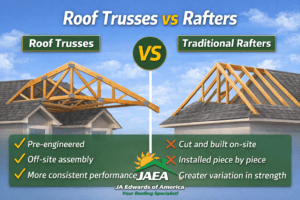
Many homeowners confuse roof trusses with rafters. While both support the roof, they are not the same.
Rafters are built on site. Carpenters cut and install them one by one. This method relies heavily on workmanship and can vary from house to house.
Roof trusses, on the other hand, are engineered and built off site. They arrive ready to install as complete units.
Because of this difference:
-
Trusses provide more consistent structural performance
-
Installation is faster and more precise
-
Long-term movement is easier to predict
We still see rafter systems in older Florida homes. Many of them perform well. However, newer homes almost always rely on trusses for better structural reliability.
Common types of roof trusses used in homes
Roof trusses are not all the same. Different roof designs require different truss types.
Some common residential trusses include:
-
King post trusses, used for short spans
-
Fink trusses, very common in standard homes
-
Hip trusses, designed for hip roof systems
-
Attic trusses, which allow for usable attic space
Each type serves a specific purpose. Because of that, trusses are designed based on roof shape, span, and load requirements.
In Florida, truss designs must also account for high wind zones and uplift forces. That is why local code compliance is critical.
Why roof trusses matter so much in Florida
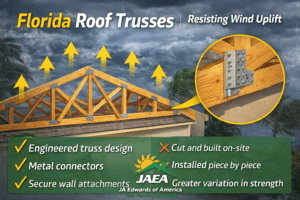
Florida presents unique challenges for roof systems. Strong winds, hurricanes, heavy rain, and humidity all put stress on roof structures.
Because of these conditions:
-
Trusses must resist uplift forces
-
Connections must stay secure over time
-
Structural alignment must remain stable
We have worked on roofs in Florida where the shingles looked fine, but structural issues underneath caused long-term problems.
That is why a roof inspection should never focus only on what is visible from the outside.
Signs that roof trusses may have problems
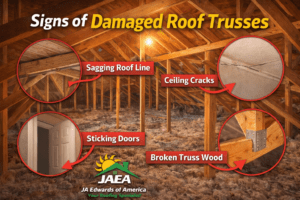
Truss issues are not always easy to spot. However, some signs should raise concern.
Common warning signs include:
-
Sagging or uneven roof lines
-
Cracks in interior ceilings or walls
-
Doors or windows that suddenly stick
-
Visible separation in attic framing
These signs do not always mean truss failure. However, they often indicate structural movement that needs professional evaluation.
Ignoring these symptoms can lead to bigger problems over time.
Why roof trusses should never be modified casually
Roof trusses are engineered systems. That point cannot be overstated.
Cutting, drilling, or altering trusses without approval can compromise the entire roof structure. Even small changes can affect how loads move through the system.
We sometimes see homeowners or contractors modify trusses to add storage or run mechanical systems. While this may seem harmless, it often creates hidden structural risks.
Because of that, any truss modification should involve:
-
Structural engineering review
-
Approved repair methods
-
Code compliance
According to the National Roofing Contractors Association, protecting roof structure during roofing work is essential for long-term performance.
Why understanding roof trusses helps homeowners
Homeowners do not need to become structural experts. However, basic understanding helps with better decisions.
When homeowners understand roof trusses:
-
They ask better questions
-
They avoid risky DIY work
-
They recognize early warning signs
This knowledge protects both the home and the investment over time.
How Roof Trusses Are Designed, Installed, and Why They Matter Long Term
How roof trusses are designed before installation
Roof trusses are not designed on the job site. Instead, engineers design them before construction even starts. This step matters because each truss must handle very specific loads.
During the design process, engineers calculate:
-
The width of the house
-
The roof shape and slope
-
The weight of roofing materials
-
Wind loads for the region
-
Long-term stress on the structure
Because Florida has strict wind requirements, truss design here is more demanding than in many other states. As a result, engineers must account for uplift forces that try to pull the roof off the walls during storms.
In our experience, properly designed trusses create a strong foundation that allows the roof system to perform as intended for many years.
How roof trusses are manufactured
Once the design is approved, trusses are manufactured in controlled facilities. This environment allows for precision that is difficult to achieve on site.
Manufacturers:
-
Cut lumber to exact measurements
-
Assemble members using metal connector plates
-
Verify alignment and strength
-
Inspect trusses before shipping
Because trusses are built as complete units, they arrive ready to install. This reduces installation time and minimizes structural variation from one house to another.
Also, because quality control happens before delivery, trusses offer more predictable performance over time.
How roof trusses are installed on a home
After delivery, crews install trusses directly onto the top of the walls. At this stage, accuracy matters.
Installers must:
-
Set trusses at correct spacing
-
Align them perfectly
-
Brace them temporarily during installation
-
Secure them with approved connectors
In Florida, hurricane ties or metal connectors play a critical role. These connectors help lock the roof structure to the walls and resist uplift forces during high winds.
If installation skips or weakens these connections, the roof system becomes vulnerable, even if the trusses themselves are well designed.
How roof trusses connect to the roof deck and coverings
Once trusses are installed, the roof deck goes on top. The deck helps distribute loads across the truss system and creates a solid base for roofing materials.
The deck:
-
Adds rigidity to the structure
-
Helps control movement
-
Supports shingles, tiles, or metal panels
Because of this, the relationship between trusses and decking is critical. If the deck flexes or shifts, it places extra stress on trusses and fasteners.
We often see roof problems when decking issues go unnoticed during roofing work.
What happens to roof trusses during a roof replacement
A roof replacement does not usually require truss replacement. However, trusses still matter during the process.
During a professional roof replacement:
-
Trusses remain untouched
-
Load distribution stays balanced
-
Structural integrity stays intact
However, removing old roofing materials can expose hidden damage. Moisture intrusion over time may affect decking or truss members.
Because of that, experienced roofing teams pay attention to what they uncover. They do not just install new materials and ignore what is underneath.
How roof trusses affect roof lifespan
Roof trusses directly influence how long a roof lasts. When the structure remains stable, roofing materials perform better.
However, when trusses shift or weaken:
-
Shingles lift or crack
-
Fasteners loosen
-
Water finds paths inside
Because of this, even the best roofing materials cannot compensate for structural problems.
In our experience, long-lasting roofs always start with a stable and well-supported structure.
Can roof trusses be repaired?
Yes, roof trusses can be repaired. However, repairs require careful planning.
Most truss repairs involve:
-
Structural engineer evaluation
-
Approved repair drawings
-
Reinforcement using proper materials
Temporary fixes or guesswork usually cause more harm than good. Because trusses are load-bearing components, incorrect repairs can create serious safety risks.
That is why professional evaluation always comes first.
Why DIY work on roof trusses is not recommended
It is important to be clear here.
Roof trusses are engineered systems. Even small changes can affect the entire structure.
Cutting, drilling, or modifying trusses without professional guidance can lead to:
-
Structural instability
-
Code violations
Therefore, while learning about trusses helps homeowners understand their roof better, working on them directly is not recommended.
Roof structure issues should always be handled by qualified professionals who understand load paths and building codes.
How roof trusses relate to inspections and insurance claims
After storms, many homeowners focus on visible roof damage. However, structural damage often remains hidden.
Truss issues can affect:
-
Insurance claim scope
-
Repair decisions
-
Long-term safety
Because of that, proper roof inspections should include structural awareness, not just surface-level checks.
This approach protects both the homeowner and the integrity of the roof system.
If you want a professional evaluation of your roof structure, start here:
roof inspection services
Final thoughts on roof trusses
Roof trusses may stay out of sight, but they play a critical role in every roof system. They support the roof, manage loads, and help protect the home during severe weather.
Understanding how trusses work helps homeowners make better decisions. It also helps prevent costly mistakes during repairs or renovations.
In Florida, where roofs face constant environmental stress, strong structure matters just as much as quality materials.