
What to Do After a Hurricane Damages Your Roof in Orlando, FL
The storm has passed and you are standing in your backyard looking up at your roof. Maybe you can see shingles missing. Maybe there is a branch sitting where it should not be. Maybe everything looks fine from the ground but there is water dripping somewhere inside. Whatever you are seeing, or not seeing, the next few days matter more than most homeowners realize.
Orlando homeowners deal with a specific pattern of hurricane and tropical storm damage that looks different from what hits the coast. By the time a major system reaches Central Florida, sustained winds have often dropped, but the rain volume is still significant, and the wind gusts that do occur are unpredictable in direction. That combination tends to produce damage that is less dramatic than coastal areas but harder to assess, because a lot of it does not show up immediately from the ground.
Here is what to do, in order.
Step 1: Wait for the Storm to Pass Completely
This sounds obvious but is worth saying clearly. Do not go on your roof, or hire anyone to go on your roof, while the storm is still active. Wind gusts continue well after the main system passes, and post-hurricane activity can extend for hours. NOAA’s forecast page and the National Hurricane Center both provide current conditions and post-storm wind data. Wait until the all-clear.
If you have active water intrusion into the home, the priority is containing the water, not getting on the roof. Move belongings, place buckets, and document what you are seeing inside. That interior documentation will be useful for your insurance claim.
Step 2: Do a Ground-Level Assessment First
Before anyone goes on the roof, do a thorough ground-level walkthrough. You are looking for a few categories of things.
Visible structural damage. Missing shingles, displaced tiles, exposed roof decking, or sections of the roof that have shifted or collapsed are visible from the ground. If you can see the substrate (the wood decking beneath the roofing material), that area needs emergency tarping before additional rain gets in.
Fallen objects on the roof. Branches, tree limbs, or debris sitting on the roof surface may or may not have caused damage beneath them. Note their location. Do not attempt to remove them yourself if they are large or if you would need to climb onto the roof to reach them.
Damage to fascia, soffits, and gutters. Hurricane wind typically works on the edges of a roof first. Bent, torn, or separated gutters and fascia boards indicate where wind uplift was highest, and the roof surface above those areas warrants closer attention.
Water staining or discoloration on exterior walls. Moisture that has gotten under the roofing material will sometimes show on the exterior wall below the roofline before it shows inside. Dark streaking or new staining on stucco or siding below the eaves can indicate where water is traveling.
Take photos of everything you observe from the ground. Use your phone’s timestamp feature and document the date. That record becomes part of your insurance claim and establishes when the damage was observed.
Step 3: Check the Interior
Before a roofing contractor arrives, go through your home and document anything that might be storm-related on the interior.
Water stains on ceilings or walls that were not there before the storm are the most common indicator of roof damage. Check attic spaces if you can access them safely. Fresh staining on rafters or insulation, daylight visible through the decking, or wet insulation are all significant findings. Photograph and timestamp every interior observation.
Check all rooms, not just the ones that seem most likely. Wind direction during a storm determines where water gets pushed, and it is not always the room directly below visible exterior damage.
A musty or wet smell in a room or closet that has not flooded before is worth noting even without visible evidence. Moisture in insulation does not always drip through immediately but will produce odor as it begins to degrade the material below.
Step 4: Call a Licensed Roofing Contractor Before You Call Your Insurance Company

This is the step most homeowners reverse, and it costs them money.
The instinct is to call your insurance company first because the roof is covered and you want to know what to do. What most homeowners do not realize is that the insurance company will send an adjuster whose job is to evaluate the damage from the carrier’s perspective. That adjuster is not there to find everything that is wrong with your roof. They are there to document what they can identify and determine what the policy covers based on that documentation.
If you have a roofing contractor inspect your property before the adjuster arrives, two things happen. First, the contractor can identify damage that would not be obvious to someone without roofing expertise, including issues like compromised seam integrity, damaged flashing, and granule loss that indicates shingle impact. Second, you have your own documentation of the damage condition before anyone else influences the record.
A good roofing contractor can also help you understand whether what you are looking at is likely to be covered under your policy, what the typical claim process looks like for the type of damage present, and how to communicate with your adjuster to make sure the full scope is evaluated. That preparation makes the insurance conversation much more productive.
Step 5: Get Emergency Tarping if the Roof Has Exposed Areas
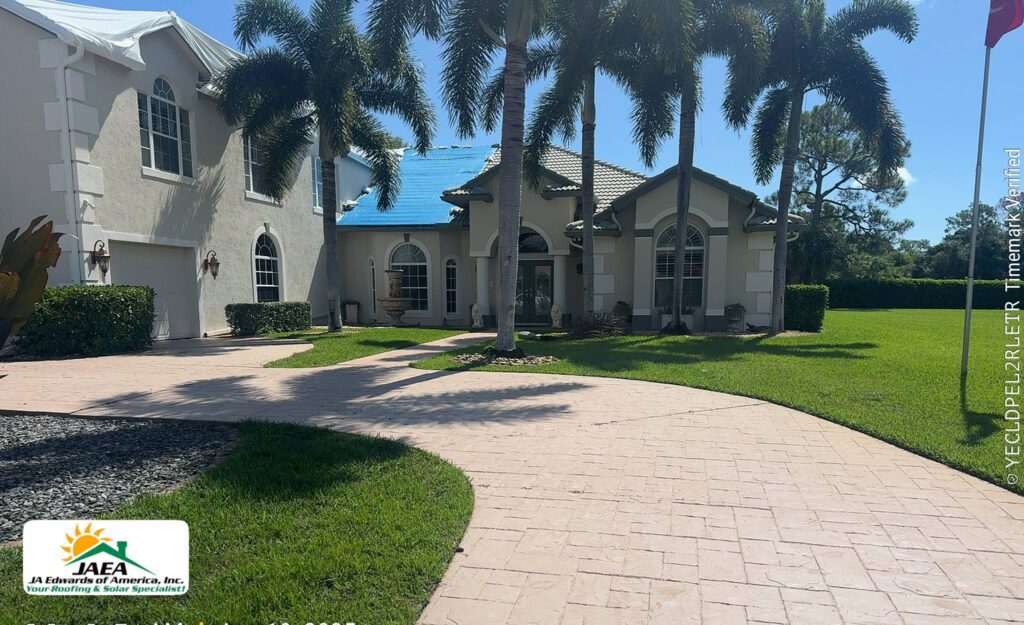
If your roof has areas where the decking is exposed, where flashing has been displaced, or where missing material creates an obvious path for water intrusion, emergency tarping is the priority before the next rain event.
In Florida, secondary damage from water intrusion that occurs after a storm is a separate category from the original storm damage in most insurance policies. If you had a hole in your roof after the hurricane and it rained again before you addressed it, the additional water damage may not be covered on the same basis as the original event. Tarping the affected areas protects your home and protects your claim.
A licensed roofing contractor can install emergency tarps properly. A properly installed tarp is anchored to prevent wind displacement, covers the full affected area plus a margin of intact roofing on each side, and does not damage the existing roofing material during installation. Improperly installed tarps can blow off in the next wind event, cause additional damage through improper anchoring, or create drainage issues that concentrate water rather than directing it away.
Keep the receipt and documentation for emergency tarping. Most insurance policies reimburse reasonable costs for protecting your property against further damage.
Step 6: File Your Insurance Claim with Documentation Ready
When you contact your insurance company to file the claim, have the following ready before the call.
Your policy number and contact information for your agent. The date the storm occurred, which you can confirm through the National Hurricane Center records for named storms or through local weather services for other events. Your photos from the ground-level assessment and interior walkthrough, organized by date and location. Any roofing contractor inspection report you have obtained.
When speaking with the adjuster, be specific. Do not characterize the damage as “a lot” or “pretty bad.” Describe what you observed and reference the documentation. If you have a contractor’s report, share it with the adjuster and ask that they address each item documented.
Florida law gives insurance carriers a specific timeline to acknowledge your claim, assign an adjuster, and complete their review. If the process is moving slowly or you disagree with the initial assessment, a roofing contractor experienced in insurance claims can help you understand your options, which may include requesting a supplemental review, hiring a public adjuster, or invoking the appraisal process in your policy.
Step 7: Document Everything Throughout the Repair Process
Once the repair or replacement process begins, continue documenting. Get a written scope of work from your contractor before work starts. Keep a record of when work occurs and what is completed on each day. Take photos of the finished work, including detail shots of flashing installations, underlayment layers before the surface material is applied, and the completed project from the ground and from any elevation you can safely access.
That documentation serves two purposes. It is your record that the work was completed as specified, and it is evidence of the post-repair condition of your roof if there is ever a future claim that questions whether earlier damage was addressed.
What Makes Orlando Hurricane Damage Different From Coastal Damage
One thing worth understanding is that Orlando’s hurricane damage profile is genuinely different from what coastal homeowners experience, and this affects how claims are evaluated and what repairs are needed.
Coastal properties, especially those that take a direct hit, often deal with concentrated, severe damage from peak sustained winds. That kind of damage is dramatic and visible. Insurers and contractors are both accustomed to evaluating it.
Orlando properties tend to see wind damage that is more diffuse and less immediately visible. The mechanism is often uplift pressure rather than direct impact, which means shingles or tiles may be loosened without being fully displaced, underlayment may be compromised without the surface material showing obvious damage, and the cumulative effect of multiple tropical systems over a season can degrade a roof incrementally without triggering an obvious single-event claim.
That pattern means a professional inspection by a contractor who understands this type of damage is more important in Central Florida than homeowners often expect. The damage that is hardest to see is also the damage most likely to be underestimated by an adjuster who does a brief visual walkthrough.
JA Edwards of America Handles Storm Damage Roofing in Orlando
JA Edwards of America is based in Orlando at 220 Weber St and has been handling storm damage roofing and insurance claims across Central Florida for years. The company holds licenses CGC1534283 and CCC1334804, carries GAF Master Elite certification with President’s Club 3-Star status, and maintains a BBB A+ rating.
For Orlando homeowners dealing with hurricane or storm damage, the company offers free inspections and handles the insurance process from documentation through claim filing, not just the installation. If you are seeing signs of damage after a storm, getting a professional assessment before the insurance adjuster arrives puts you in a significantly better position. Call (407) 677-7663 or schedule an inspection online.
Frequently Asked Questions
How long do I have to file a hurricane roof damage claim in Florida? Florida Statute 627.70132 sets the timeframe for filing claims after a hurricane or other windstorm event. As of recent legislative changes, homeowners generally have one year from the date of loss to file an initial claim, and three years for claims involving a reopened or supplemental claim. These timelines have been updated by the Florida legislature in recent years, so it is worth confirming the current deadline with your insurance agent when you file. Acting quickly after a storm is always the safer approach regardless of the statutory deadline.
What if my roof looks fine from the ground but I have a leak inside? This is common with the type of diffuse wind damage that Orlando properties experience during tropical systems. Uplift pressure can loosen shingles, compromise underlayment, or displace flashing in ways that are not visible from the ground but create water infiltration paths. A professional roof inspection that accesses the roof surface and evaluates each component is the only way to find this type of damage. Do not assume a clean ground-level view means the roof is undamaged.
Should I let a door-to-door roofing contractor inspect my roof after a storm? With caution. After major storm events in the Orlando area, a significant number of contractors enter the market, some of them legitimate and some of them not. If a contractor knocks on your door after a storm and offers to inspect your roof, the first step is to ask for their Florida license number (CCC or CGC) and look it up on myfloridalicense.com before you agree to anything. A legitimate contractor will have that information ready and will not pressure you to sign anything before you have had time to evaluate the situation.
What does emergency tarping cost and does insurance cover it? Emergency tarping costs vary based on the area that needs coverage and the difficulty of access, but a typical residential tarping job in Orlando runs $300 to $700. Most insurance policies cover reasonable emergency protective measures taken to prevent additional damage after a covered event. Keep the receipt and documentation, and include it as part of your claim. Some contractors will coordinate this directly with your insurer.
Can I stay in my home while the roof is being repaired or replaced? For most roofing repairs, yes. For full replacements, the answer depends on your situation. There will be noise, debris, and foot traffic above your living space during the work. If there are young children, pets, or family members with medical conditions that make that environment difficult, arranging to stay elsewhere during the active work days is reasonable. Your contractor should give you an estimated work schedule so you can plan accordingly.
What is the difference between a public adjuster and a roofing contractor when it comes to insurance claims? A public adjuster is a licensed professional who represents you in the insurance claim process. They are paid as a percentage of your settlement and advocate specifically on the insurance side. A roofing contractor handles the actual repair or replacement and, depending on their experience level, may assist you in understanding the insurance process and documenting damage. They are separate roles. In complex claim situations, some homeowners use both, though a roofing contractor with deep insurance claim experience can often navigate the process effectively without requiring a public adjuster.
How do I know if my roof needs full replacement versus repair after a hurricane? A professional inspection is the only reliable way to determine that. The factors that typically indicate full replacement rather than repair include the age of the existing roof (shingles over 15 years old often cannot be matched, and partial replacement on an older roof can create compatibility and warranty issues), the percentage of surface area damaged (widespread granule loss, multiple affected sections, or compromised underlayment across a large area), and whether the storm event triggered an insurance payout that covers full replacement. A contractor who handles both repairs and replacements has less incentive to steer you in either direction; the recommendation should be based on the actual condition of the roof.