
What Is a Pitched Roof

A pitched roof is one of the most common roof styles in residential construction. However, even though many people live under one, most homeowners do not really understand what a pitched roof is or why it matters.
In simple terms, a pitched roof is a roof with a slope. Instead of being flat, it angles upward from the walls to the ridge. This slope helps the roof shed water, resist weather, and last longer over time.
In Florida, where heavy rain and strong storms are common, pitched roofs play a very important role in protecting homes.
A pitched roof is a roof with a slope that allows water to drain off instead of sitting on the surface. The slope, called roof pitch, helps protect the home from leaks, moisture damage, and long-term structural issues. In Florida, pitched roofs play a key role in handling heavy rain and storm-driven water.
What a pitched roof means in simple language
A pitched roof is any roof that has an angle. That angle can be steep or gentle, but it always slopes instead of staying flat.
Because of this slope:
-
Rainwater drains faster
-
Debris does not collect as easily
-
Roofing materials experience less standing moisture
This design has been used for centuries because it works well in many climates. However, it becomes especially important in places with frequent rain.
In our experience, homes with properly designed pitched roofs tend to have fewer long-term moisture problems.
Why pitched roofs are so common in residential homes
Pitched roofs are common because they solve several problems at once.
First, they help manage water. Water is one of the biggest enemies of any roof system. A sloped surface moves water away quickly, which reduces leaks and material wear.
Second, pitched roofs support better ventilation. The attic space created by the slope allows heat and moisture to escape more effectively.
Third, pitched roofs work well with many roofing materials. Shingles, tiles, and metal panels all perform better on a sloped surface.
Because of these benefits, pitched roofs remain the standard choice for most homes.
How pitched roofs handle rain and weather
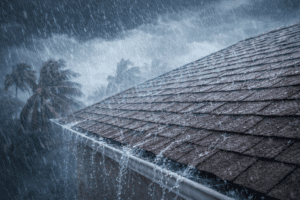
Rainwater moves downhill. That simple fact explains why pitched roofs work so well.
When rain hits a pitched roof:
-
Water flows toward the edges
-
It drains into gutters
-
It moves away from the foundation
This process protects not only the roof but also the walls and structure of the home.
In Florida, sudden heavy rain can overwhelm poorly designed roofs. That is why pitch, drainage, and material choice all matter.
The relationship between pitched roofs and roof structure
A pitched roof does not work alone. It relies on the structure underneath, including rafters or roof trusses.
The pitch affects:
-
Load distribution
-
Wind resistance
-
Structural design
Because of this, roof pitch must match the structural system. Trusses and rafters are designed based on the roof’s slope.
That is why changing roof pitch is not a simple cosmetic decision. It affects the entire roof system.
Common pitched roof styles homeowners see
Not all pitched roofs look the same. The pitch may be similar, but the overall shape can vary.
Some common pitched roof styles include:
-
Mansard roofs
-
Gambrel roofs
Each style uses pitch differently. Some focus on drainage, while others emphasize interior space or architectural appearance.
Later posts will break these styles down in more detail.
Why pitched roofs work well in Florida
Florida homes face specific challenges. Heat, humidity, rain, and wind all affect roof performance.
Pitched roofs help because they:
-
Reduce standing water
-
Improve airflow in the attic
-
Work well with hurricane-rated materials
We have worked on many Florida homes where roof issues were tied to poor drainage or improper slope. In most cases, the roof pitch played a role.
That is why proper design and installation matter from the start.
Pitched roofs and roofing material performance
Roof pitch affects how roofing materials behave.
For example:
-
Shingles seal better on sloped surfaces
-
Metal panels shed water more efficiently
-
Tiles rely on gravity to stay dry
Because of this, manufacturers often specify minimum pitch requirements for their products.
Installing materials outside those requirements increases the risk of leaks and premature failure.
How homeowners benefit from understanding roof pitch
Homeowners do not need to calculate angles or design roofs. However, understanding pitch helps them make smarter decisions.
When homeowners understand pitched roofs:
-
They ask better questions
-
Homeowners understand why certain materials are recommended
-
They avoid poor design choices
This knowledge leads to better long-term outcomes.
How roof pitch is measured (simple explanation)
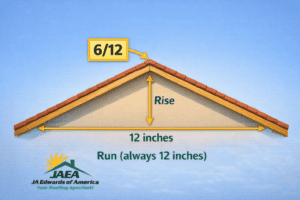
People measure roof pitch using a ratio. That ratio tells you how much the roof rises vertically for every 12 inches of horizontal run.
For example:
-
A 4/12 pitch rises 4 inches for every 12 inches across.
-
A 6/12 pitch rises 6 inches for every 12 inches across.
-
A 12/12 pitch rises 12 inches for every 12 inches across, so it looks steep.
This method keeps things consistent because everyone uses the same “12-inch run” baseline. Therefore, it becomes easier to compare roofs.
Also, many roofing manufacturers use this same pitch language. So, when you read material requirements, you will usually see numbers like 2/12, 4/12, or 6/12.
Low-slope vs steep-slope: what is the difference?
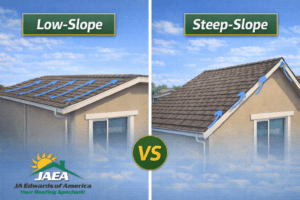
A pitched roof can still have a low slope. That sounds confusing at first. However, the main difference comes down to how fast water moves off the roof.
Low-slope roofs (still pitched)
Low-slope roofs usually sit around:
-
2/12 to 4/12 (sometimes slightly lower depending on the system)
These roofs still drain water, but they drain slower. Because of that, they often need stronger underlayment and better detail work around seams and penetrations.
Steep-slope roofs
Steeper roofs often sit around:
-
5/12 and higher (and sometimes much higher)
These roofs shed water quickly. Therefore, they reduce the risk of standing water issues. Also, they often keep debris from sitting in valleys for too long.
In our experience, steep slopes help with drainage, but they also create other challenges, like safety and access.
Why pitch matters for roofing material choice
Roof pitch does not only affect appearance. It affects which materials perform well and which ones create problems.
Shingles and pitch
Shingles rely on overlap and gravity. Therefore, they work best when the roof has enough slope to move water downhill.
Also, manufacturers often set minimum pitch requirements for shingles. If a roof does not meet those requirements, the shingle system may leak in wind-driven rain.
Metal roofing and pitch
Metal roofing can work on lower slopes than shingles in many cases. However, the roof still needs the correct panel type and correct seam design.
For example, standing seam systems handle water differently than exposed fastener systems. Because of that, pitch plays a role in which metal profile works best.
Tile and pitch
Tile systems also rely on proper pitch and proper underlayment. Tile sheds water well, but it still needs correct flashing and correct drainage design.
In Florida, we see many tile roofs. So, we also see how important underlayment becomes over time.
Florida weather changes how pitch performs
Florida brings heavy rain, wind-driven rain, and storms that push water sideways. So, the roof pitch matters, but the details matter even more.
A roof can have a good pitch, but it can still leak if:
-
valleys are poorly built
-
underlayment is installed incorrectly
-
vents and pipe boots are not sealed properly
In our experience, Florida leaks often come from roof details, not from the main field of the roof. Therefore, pitch helps, but workmanship still decides the outcome.
Common pitched roof problems (and what usually causes them)
Even a pitched roof can create problems when design or installation goes wrong.
1) Water intrusion near valleys
Valleys collect water from two roof planes. Because of that, valleys handle more volume and more force.
If installers cut corners in valleys, leaks show up faster.
2) Leaks around penetrations
Roofs need vents, pipe boots, and sometimes skylights. These penetrations create weak points.
A pitched roof moves water faster. However, if flashing fails, water still finds the opening.
3) Poor attic ventilation
A pitched roof often creates attic space. That attic space needs ventilation, or moisture and heat build up.
Heat and moisture can:
-
shorten shingle life
-
damage decking
-
create condensation issues
So, pitch helps create the space, but ventilation keeps the system healthy.
4) Structural movement
If the structure underneath shifts, roof lines sag. Then shingles, flashing, and seams start to separate.
We often see this after storms or long-term moisture problems. Therefore, when a roof looks uneven, we inspect the structure, not just the surface.
Does a steeper roof always mean a better roof?
No. A steeper roof helps drainage, but it also increases:
-
labor complexity
-
safety requirements
-
installation time
-
material waste on cut lines
So, a steeper roof can cost more to install and maintain. Also, steep roofs make inspections harder.
In other words, pitch is not “good” or “bad.” Instead, it needs to match the home design, the materials, and the environment.
How pitch affects cost in real life
Pitch affects cost because it changes how crews work.
A steeper pitch usually means:
-
slower installation
-
more safety equipment
-
more staging and harness work
-
extended labor hours
Also, some roof shapes add complexity. For example, multiple gables, dormers, or intersecting planes create more valleys and more flashing detail.
Therefore, when homeowners compare quotes, they should compare scope, not just price.
If you want to understand what drives roof replacement decisions, start here:
roof replacement services
When homeowners should worry about pitch-related issues
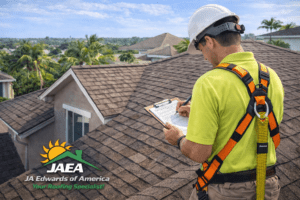
Homeowners should pay attention when they notice:
-
persistent leaks in the same area
-
stains near valleys or penetrations
-
sagging lines or uneven roof planes
-
excessive granules in gutters (for shingles)
These issues do not always mean pitch problems. However, they often point to drainage or detail failures that need inspection.
If you want a professional evaluation, start here:
roof inspection services
Final takeaway
A pitched roof uses slope to move water away from the home. Because of that, it usually performs better in wet climates than a flat design. However, pitch alone does not guarantee a good roof.
A roof performs well when:
-
the pitch matches the roofing material
-
the underlayment and flashing are installed correctly
-
ventilation supports the system long term
-
crews follow Florida code and manufacturer requirements
In our experience, homeowners get the best outcome when they treat the roof as a complete system, not just a surface.