
How to Install Metal Roofing Over Shingles
How to install metal roofing over shingles is a common question among homeowners who want to save time and money during a roof upgrade. The idea sounds simple. Leave the old shingles in place, install metal panels on top, and avoid the mess of a tear-off.
However, installing metal roofing over shingles is not always allowed, not always smart, and not always safe. In Florida, this decision depends on roof condition, structure, moisture control, and local building code.
In our experience, this method works well only when very specific conditions are met. When those conditions are ignored, problems show up fast.
This guide explains how the process works, when it makes sense, and what must be done correctly to avoid long-term damage. This content is meant to help you understand the process, not to guide a DIY installation. Metal roofing should always be installed by qualified professionals to avoid safety, structural, and code issues.
Installing metal roofing over shingles involves inspecting the existing roof, confirming code compliance, preparing a flat and solid surface, adding proper underlayment or furring strips, installing flashing, and fastening metal panels correctly to prevent moisture, heat, and wind issues.
Is It Allowed to Install Metal Roofing Over Shingles?
The first question is not “how.”
The first question is “is it allowed?”
Florida Code Considerations
In Florida, installing metal roofing over shingles may be allowed when:
-
Only one layer of shingles exists
-
The roof deck is structurally sound
-
The system meets wind uplift requirements
-
Local building officials approve the method
The Florida Building Code limits roof coverings to prevent excess weight and structural risk.
Therefore, code approval always comes before installation planning.
When Installing Over Shingles Makes Sense
In some cases, installing metal over shingles is reasonable.
Acceptable Conditions
-
Shingles are flat and in good condition
-
No trapped moisture exists
-
Decking shows no signs of rot
-
Roof structure meets load requirements
We often see this method used on homes where shingles are relatively new but homeowners want metal for durability or energy performance.
When You Should NOT Install Over Shingles
This is just as important.
High-Risk Situations
-
Shingles are curled, cracked, or uneven
-
There are soft spots or sagging areas
-
Ventilation is already poor
-
Previous leaks are visible
Metal roofing hides problems instead of fixing them.
In our experience, skipping a tear-off to save money often costs more later when moisture damage spreads under the new roof.
Understanding the Two Installation Methods
There are two main ways to install metal roofing over shingles.
Method 1: Direct-to-Deck Installation (Limited Use)
In rare cases, metal panels are installed directly over shingles using long fasteners.
This method:
-
Requires very flat shingles
-
Increases risk of uneven fastening
-
Is rarely recommended in Florida
We do not commonly recommend this approach because it creates too many variables.
Method 2: Furring Strips or Batten System (Preferred)
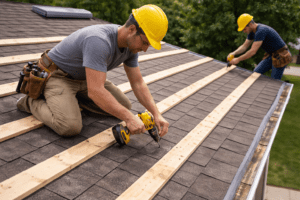
This is the most reliable method.
Furring strips are wood or metal battens installed over shingles and anchored into the roof deck.
They:
-
Create a flat surface
-
Allow airflow under panels
-
Improve moisture control
-
Improve wind resistance
In Florida, this method performs significantly better over time.
Step 1: Inspect the Existing Roof Thoroughly
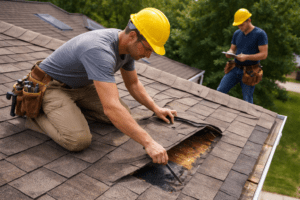
Before anything is installed, the roof must be inspected.
Inspection Checklist
-
Confirm only one shingle layer
-
Check decking from attic if possible
-
Identify past leak areas
-
Verify ventilation layout
We often see skipped inspections lead to hidden rot trapped under metal roofing.
If the deck is not solid, metal roofing should never be installed over shingles.
Step 2: Address Ventilation First
Ventilation must be planned before panels go on.
Why Ventilation Matters More Here
When metal is installed over shingles:
-
Heat can get trapped
-
Moisture can accumulate
-
Shingles underneath can degrade faster
Balanced airflow reduces these risks.
The U.S. Department of Energy explains that roof ventilation plays a major role in temperature control and moisture management.
Step 3: Install Underlayment or Separation Layer
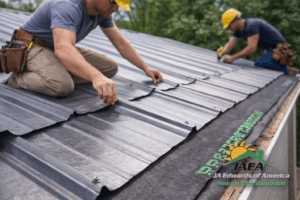
A separation layer protects the metal panels and controls moisture.
Common Options
-
Synthetic roofing underlayment
-
High-temperature peel-and-stick membrane
-
Furring strips with airflow gap
Felt paper is usually not recommended due to heat retention and shorter lifespan.
In Florida conditions, underlayment choice is critical.
Step 4: Install Furring Strips Correctly
When using a batten system, spacing matters.
Key Rules
-
Battens must anchor into rafters or decking
-
Spacing must match panel requirements
-
Battens must be straight and level
If battens are uneven, metal panels will flex, oil can, and loosen over time.
Step 5: Flashing Must Be Reworked
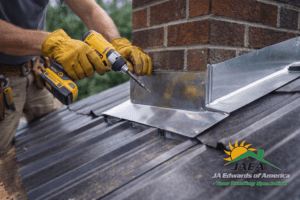
Old flashing is rarely reused.
Areas That Require New Flashing
-
Valleys
-
Chimneys
-
Skylights
-
Roof-to-wall intersections
We often see leaks caused by installers trying to “work around” old flashing. That shortcut never lasts.
Step 6: Panel Layout and Direction
Panel layout still follows the same rules as standard metal roofing installation.
-
Start from the downwind side
-
Maintain consistent overlap
-
Align panels square with roof edges
Mistakes at this stage affect the entire roof.
Why This Installation Is Riskier Than a Tear-Off
Installing metal roofing over shingles adds complexity.
Potential risks include:
-
Trapped moisture
-
Reduced inspection visibility
-
Increased fastening difficulty
-
Code compliance issues
This method can work, but it leaves less margin for error.
Professional Evaluation Matters
In our experience, the decision to install metal roofing over shingles should never be made without a professional inspection.
If you want to understand whether your roof qualifies, start with an inspection:
roof inspection services
Noise Concerns When Installing Over Shingles
A lot of homeowners worry about noise.
Installing metal roofing over shingles does not automatically make the roof louder.
In fact, shingles can help dampen sound.
What Actually Causes Noise
In our experience, noise usually comes from:
-
Panels installed too tight
-
Missing underlayment
-
Poor fastening patterns
-
Uneven furring strips
When panels cannot expand and contract, they pop and creak. That has nothing to do with shingles underneath.
What Reduces Noise
-
Synthetic underlayment
-
Air gap from batten systems
-
Proper screw torque
-
Solid decking
When done correctly, rain noise is minimal and often quieter than expected.
Condensation Risk and How to Control It
Condensation is one of the biggest risks when installing metal roofing over shingles.
Why It Happens
-
Warm, moist air rises
-
Metal cools quickly at night
-
Moisture condenses under panels
If moisture has nowhere to go, it stays trapped.
How We Control Condensation
-
Ventilated batten systems
-
Vapor-resistant underlayment
-
Balanced attic ventilation
According to the EPA, moisture control is essential to prevent mold and structural damage. Roofing systems play a major role in that process.
In Florida, ignoring condensation always leads to problems.
Wind Resistance When Installing Over Shingles
Florida wind does not care about shortcuts.
Installing metal roofing over shingles must still meet wind uplift requirements.
Critical Wind Factors
-
Fastener length and penetration depth
-
Attachment into decking or rafters
-
Edge and corner zone reinforcement
-
Manufacturer-rated systems
We often see failures at roof edges when installers treat overlay installs like standard installs.
The Florida Building Code requires roofing systems to meet uplift standards regardless of what sits underneath.
Cost Comparison: Over Shingles vs Tear-Off
Many homeowners consider this method to save money. Sometimes it does. Sometimes it does not.
Potential Savings
-
No tear-off labor
-
No disposal fees
-
Faster installation
Added Costs
-
Furring strips or battens
-
Longer fasteners
-
Additional underlayment
-
Extra labor for detailing
In our experience, the cost difference is often smaller than people expect.
When roofs need repair or correction later, the initial savings disappear.
Long-Term Performance Expectations
When installed correctly, metal roofing over shingles can perform well.
However, it has limits.
What to Expect Long-Term
-
Harder to inspect decking later
-
Repairs require panel removal
-
Moisture issues are harder to detect
-
Future tear-off is more complex
Because of this, many homeowners choose full tear-off for maximum lifespan and clarity.
Maintenance Considerations
Maintenance is similar to standard metal roofing, but inspections matter more.
What We Recommend
-
Annual exterior inspection
-
Attic moisture checks
-
Fastener and flashing inspection
-
Gutter and valley cleaning
We often see problems caught early when homeowners stay proactive.
Should You Install Metal Roofing Over Shingles?
This method is not right for every home.
In our experience, it works best when:
-
The roof is relatively new
-
The deck is confirmed solid
-
Ventilation is upgraded
-
Installation follows strict standards
It should never be done just to save money.
A professional evaluation matters.
If you want to discuss whether this method fits your home, start here:
metal roofing services
Final Thoughts
Installing metal roofing over shingles is possible, but it is not a shortcut. It requires more planning, more precision, and better moisture control.
When done correctly, it can perform well in Florida conditions.
When done wrong, it hides problems and creates bigger ones.
Understanding the process helps homeowners make better decisions before committing.