
Port St. Lucie sits in one of the most storm-exposed parts of Florida. Martin and St. Lucie counties have taken direct hits and serious brushes from multiple named storms over the past two decades, and the Treasure Coast’s coastal geography means that even storms tracking toward Miami or the Space Coast can produce damaging winds here.
That exposure is also the reason Port St. Lucie homeowners have access to one of the most valuable home improvement programs in the state: the My Safe Florida Home grant. If you own a single-family home in PSL and haven’t looked into this program, the short version is this — Florida will pay for a wind mitigation inspection on your home and match your investment in qualifying hurricane-resistant upgrades up to $10,000.
For homeowners looking at a roof replacement, this can be a significant offset. A qualifying reroof that meets the program’s wind-resistance standards counts as an eligible upgrade. Done right, you could receive up to $10,000 toward a roof replacement you were already planning.
This post covers how the program works, what Port St. Lucie homeowners need to know about eligibility, how to apply, and what the process looks like from inspection to reimbursement.
What Is the My Safe Florida Home Program?
The My Safe Florida Home program (MSFH) is a state-funded initiative administered by the Florida Division of Emergency Management. It was originally created after the 2004 and 2005 hurricane seasons, was defunded for years, and was relaunched and significantly expanded by the Florida Legislature in 2022 following Hurricane Ian.
The program has two components that work together. First, it provides free wind mitigation inspections to eligible homeowners. Second, it provides matching grants for qualifying hurricane-resistant home improvements, including roofing upgrades that improve wind resistance.
The grant is structured as a dollar-for-dollar match. For every dollar you spend on a qualifying improvement, the state matches it up to the program maximum. The standard grant maximum is $10,000. Homeowners in lower income brackets may qualify for an enhanced benefit where the state covers a larger share of the cost without the full dollar-for-dollar match requirement.
The goal of the program isn’t just to help homeowners afford upgrades — it’s to reduce insurance losses from hurricanes by making Florida’s housing stock more resilient. The state’s calculation is that a dollar spent on hardening now costs far less than a dollar paid out in post-storm insurance claims.
Who Qualifies in Port St. Lucie
Eligibility for the My Safe Florida Home grant is based on several criteria. Here’s what the program requires as of 2026:
Property type: The home must be a single-family residence. Condos, townhomes, and multi-family buildings are not eligible under the standard program.
Homestead exemption: The property must have a homestead exemption on file with the St. Lucie County Property Appraiser’s office. This means it must be your primary residence, not an investment property or vacation home.
Insured value: The home’s insured value must be $700,000 or less. This threshold was raised from prior years to make more Treasure Coast homes eligible, given rising property values in the PSL area.
Location: The home must be located within the state of Florida, which PSL qualifies for. There are no county-specific restrictions that exclude St. Lucie or Martin County homeowners.
Completed wind mitigation inspection: You must have a completed wind mitigation inspection through the MSFH program (or a recent private inspection that meets the state’s criteria) before applying for the grant portion.
Homeowners who have previously received a grant under the program are generally not eligible for a second grant on the same property.
What Improvements Qualify for the Grant
Not every home improvement qualifies. The program focuses specifically on upgrades that improve a home’s wind resistance. For Port St. Lucie homeowners, the most relevant qualifying improvements are:
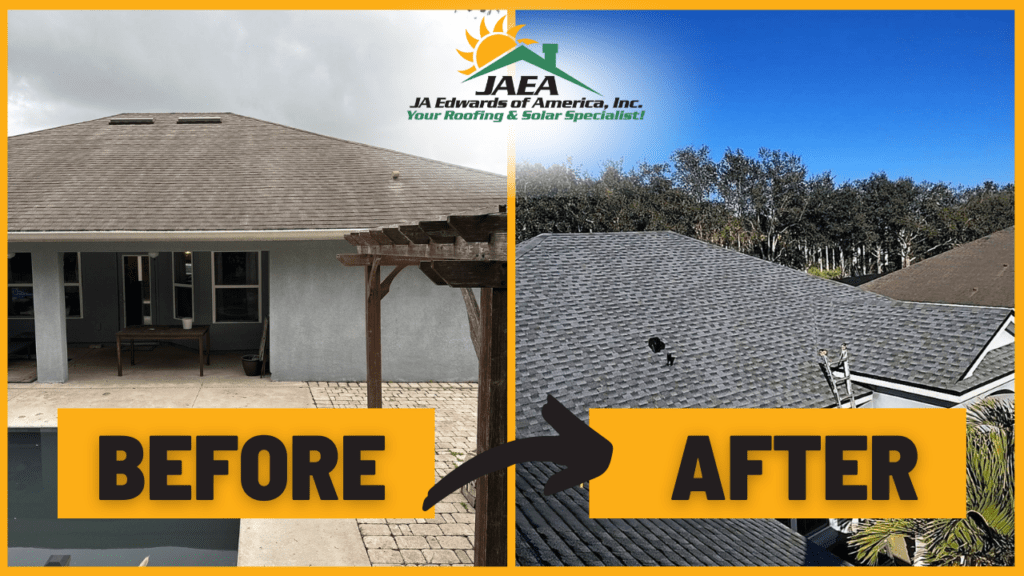
Roof covering: This is the big one. Replacing an existing roof with a new roof that meets Florida Building Code’s current wind-resistance standards qualifies for the grant. Specifically, the new roof must use products rated for the wind zone applicable to St. Lucie County. That’s typically a minimum of 140 mph wind resistance for homes in the Treasure Coast region.
Roof deck attachment: Upgrading the way the roof decking is fastened to the trusses can qualify as a standalone improvement if a full reroof isn’t being done. This often involves replacing standard nails with ring-shank nails and adding supplemental fasteners.
Secondary water barrier: This is a self-adhering underlayment installed beneath the shingles that provides a waterproof layer if the shingles are blown off in a storm. It’s sometimes called a peel-and-stick membrane or a self-adhered underlayment. It can be installed as part of a full reroof.
Opening protections: Hurricane shutters, impact-resistant windows, and impact-resistant garage doors qualify separately from the roofing work. If you’re planning multiple improvements, they can potentially be combined under a single grant application up to the program maximum.
For most Port St. Lucie homeowners, the most cost-effective use of the grant is pairing it with a full roof replacement that naturally incorporates compliant deck attachment and secondary water barrier as part of the installation.
How the Application Process Works
The process has several steps, and the sequence matters. Here’s how it works:
Step 1: Apply for the free wind mitigation inspection. Applications are submitted through the My Safe Florida Home program portal at mysafefloridahome.com. The state will schedule a certified inspector to assess your home’s current wind resistance characteristics and produce a formal report.
Step 2: Review the inspection results. The wind mitigation inspection report identifies specific areas where your home falls short of current standards. For most older PSL homes, the roof covering, deck attachment, and opening protections are the areas that need improvement. This report becomes the basis for your grant application.
Step 3: Apply for the grant. Once you have the inspection report in hand, you submit your grant application through the same portal. You’ll need to specify which qualifying improvements you’re planning and provide contractor quotes or estimates.
Step 4: Get approval before starting work. The grant approval must come through before you contract for the work. Improvements made before the grant is approved are not eligible for reimbursement. This is one of the most common mistakes homeowners make — starting the project before the approval is in place.
Step 5: Complete the work with a licensed contractor. The improvements must be done by a licensed Florida contractor. All work must be permitted and inspected per local building code requirements. In Port St. Lucie, that means pulling a Lucie County building permit and scheduling a final inspection.
Step 6: Submit for reimbursement. After the work is completed and inspected, you submit your final documentation to the state for reimbursement. This includes the permit, the contractor’s invoice, and proof of payment.
The timeline from application to reimbursement varies. During periods of high demand (typically following active hurricane seasons), the program can have waiting lists. Applying early in the calendar year before storm season tends to result in faster processing.
How Much Can PSL Homeowners Actually Save
The math depends on your specific situation, but here’s a realistic example.
A standard residential roof replacement on a 2,000-square-foot Port St. Lucie home typically costs between $11,000 and $16,000, depending on pitch, material selection, and the condition of the existing decking. A qualifying replacement that includes proper deck attachment and a secondary water barrier might add $800 to $1,500 to the base cost compared to a minimum-spec job.
With the standard $10,000 grant at a dollar-for-dollar match, you’d need to spend $10,000 of your own money on the qualifying work to receive the full $10,000 grant benefit, bringing a $14,000 replacement down to an effective out-of-pocket cost of $4,000 after reimbursement. That’s a significant difference.
For homeowners who qualify for the low-income enhanced benefit, the state’s share increases to 75 percent of the cost up to the program maximum, which can reduce out-of-pocket exposure further.
On top of the grant savings, a qualifying roof replacement typically reduces your homeowner’s insurance premium through a wind mitigation credit. Insurance carriers in Florida are required to offer discounts for homes that have certified wind-resistant features. Many Port St. Lucie homeowners report insurance savings of $500 to $1,500 per year after a qualifying reroof. Over 10 years, that adds up to as much as $15,000 in premium savings on top of the grant itself.
Port St. Lucie Specifics: What to Know Before Applying
A few things are worth knowing if you’re specifically in the PSL area.
Permit requirements: St. Lucie County requires a building permit for any full roof replacement. Your contractor must pull the permit and schedule the county inspection. This is required for the MSFH grant reimbursement regardless.
HOA considerations: Many Port St. Lucie communities, particularly in Tradition, St. Lucie West, and Sandpiper Bay, have HOA guidelines for roof materials and colors. If you’re replacing a tile roof with a shingle roof, or choosing a different color profile, you’ll want to confirm HOA approval before the contractor orders materials. The grant doesn’t exempt you from HOA requirements.
Hurricane wind zone: St. Lucie County falls under Florida Building Code Wind Zone III, which requires shingles rated for 150 mph wind exposure. Not every product on the market meets this standard. Make sure your contractor is specifying products that qualify for your wind zone — this affects both the grant eligibility and your wind mitigation credit.
Older construction: Many PSL neighborhoods were built in the 1980s and 1990s with roof structures that don’t meet current code for deck attachment. A full reroof that brings the deck attachment up to current standard is both a qualifying improvement and a long-term structural upgrade. If you’re in Sandpiper Bay or the older sections of St. Lucie West, it’s worth having your contractor assess the existing deck attachment when they do the inspection.
Common Questions About the My Safe Florida Home Grant
Does the program apply to roof repairs, or only full replacements?
The grant is focused on improvements that meet the current Florida Building Code wind-resistance standards. A partial repair typically doesn’t qualify because it can’t be certified to meet the full wind-resistance requirement for the roof covering. A full replacement, done to current code, does qualify.
Can I use the grant for a metal roof?
Yes. Metal roofing that meets the wind zone requirements for St. Lucie County qualifies under the program. Metal is actually an excellent choice from a grant perspective because it easily meets the 150 mph wind rating requirement and typically qualifies for a larger wind mitigation credit with your insurance carrier.
What if my application gets approved but I can’t find a contractor right away?
Grant approvals have validity windows. If you receive approval and can’t complete the work within the required timeframe, contact the program to ask about extensions. Letting an approval lapse without completing the work means restarting the process.
Is there a risk the program runs out of funding?
Yes. The My Safe Florida Home program is funded through state budget appropriations. When demand exceeds the current funding allocation, the program closes to new applications until additional funds are approved. This has happened in previous years. The safest approach is to apply as early as possible rather than waiting.
Do I need to use a specific contractor?
No. The program doesn’t require you to use a state-approved contractor list. You need a licensed Florida roofing contractor who pulls the proper permits. That said, choosing a contractor who is familiar with the MSFH process and documentation requirements makes the reimbursement step significantly smoother.
Working With JA Edwards of America on MSFH Projects

JA Edwards of America has been serving Port St. Lucie from our office at 540 NW University Blvd, STE 103. We’re familiar with the My Safe Florida Home grant process and can help PSL homeowners understand what qualifying improvements look like in practice, what documentation you’ll need, and how to structure the project to maximize both the grant benefit and your wind mitigation insurance credit.
We’re GAF Master Elite certified, which puts us in the top 3% of roofing contractors nationally. Our BBB A+ rating and dual Florida licenses (CGC1534283 and CCC1334804) mean that any work we complete meets the documentation requirements the state program expects.
If you’ve already received a wind mitigation inspection and want to understand how the grant applies to your specific situation, we’re happy to review your report and walk through the options with you. If you haven’t applied yet, we can help you understand whether your home is a good candidate before you invest time in the application.
Call us at (772) 204-2452 or schedule a free inspection online.
Frequently Asked Questions
What is the My Safe Florida Home grant and how much is it?
The My Safe Florida Home program provides a dollar-for-dollar matching grant of up to $10,000 for qualifying hurricane-resistant home improvements. Eligible improvements include new roof coverings that meet current wind-resistance standards, deck attachment upgrades, secondary water barriers, and opening protections. Homeowners in certain income brackets may qualify for an enhanced benefit with a higher state contribution.
Do I need a homestead exemption to qualify for the MSFH grant?
Yes. The property must have an active homestead exemption with the county property appraiser. This means it must be your primary residence. Investment properties, rental homes, and vacation homes are not eligible.
Can Port St. Lucie homeowners apply for the My Safe Florida Home grant in 2026?
Yes. St. Lucie County is fully eligible for the program. Applications are submitted through the state program portal. The program has been funded and active following Hurricane Ian, though funding availability can change. Applying early in 2026 before hurricane season begins is advisable.
How long does the My Safe Florida Home grant process take?
The timeline varies depending on program demand. The free wind mitigation inspection is typically scheduled within a few weeks of application. Grant approval can take 30 to 90 days. Reimbursement after project completion typically takes 30 to 60 days. The entire process from initial application to final reimbursement often takes 3 to 6 months.
Can I combine the MSFH grant with homeowner’s insurance proceeds?
Yes. If your roof replacement is being partially covered by an insurance claim for storm damage, you can apply for the MSFH grant for the qualifying portion of the work that falls outside your claim. However, the grant cannot be used to cover your insurance deductible. You should document both the insurance payment and the grant application separately.
What happens if my roof replacement costs less than $10,000?
The grant is capped at the lesser of $10,000 or the actual cost of qualifying improvements. If your qualifying work costs $8,000, the maximum grant would be $4,000 (the dollar-for-dollar match on your $4,000 contribution, with the state matching the other $4,000). The grant cannot exceed your actual out-of-pocket spending on qualifying work.
Does a new roof actually lower my homeowners insurance in Port St. Lucie?
In most cases, yes. A new roof that qualifies for a wind mitigation credit through the My Safe Florida Home program should result in a reduction in your homeowner’s insurance premium. The specific discount depends on your carrier and the specific features certified in your new wind mitigation report. Many PSL homeowners see reductions of several hundred dollars per year, and some see over $1,000 annually depending on their current premium and the improvements made.