
What Happens During a Roof Insurance Adjuster Inspection
The adjuster visit lasts maybe 45 minutes, but the document that comes out of it controls everything that happens next in your claim. Here is what actually takes place on your roof, and what to do with the 45 minutes you get.
An insurance adjuster, working for or contracted by your carrier, inspects your roof to document damage and determine whether it was caused by a covered event. They typically use a method called a test square to count hail impacts, check flashing and soft metals for storm marks, and note the roof's overall age and condition. Their written report, not anything said verbally on the roof, becomes the scope of work your claim is built on.
Most homeowners go into an adjuster inspection expecting a quick walk-around and a handshake. What actually happens is closer to an audit. The adjuster is building a document that will determine what gets paid, and every slope, vent, and piece of flashing they do or do not photograph ends up either in your scope or left out of it. Knowing what they are doing, and why, is the difference between a claim that gets the full picture and one that comes back thinner than the actual damage.

Who Is Actually On Your Roof
The person inspecting your roof is one of two things: a staff adjuster who is a direct employee of your insurance company, or an independent adjuster hired by the carrier on a contract basis, often brought in during high claim volume after a widespread storm. Either way, they represent the insurance company. That is worth saying plainly because it gets lost in how friendly and professional most adjusters actually are, and most of them are. Professional does not mean neutral. Their job is to document damage according to the carrier's guidelines and policy language, not to advocate for the largest possible payout on your behalf.
A public adjuster is a different role entirely, one you would hire yourself to represent your interests against the carrier. That is a separate decision with its own costs and tradeoffs, not something that happens automatically during a standard claim.
What They Are Actually Looking For
Test squares
On each roof slope, adjusters commonly mark off a small measured section and count qualifying hail strikes inside it, using that density to judge damage across the whole slope rather than inspecting every shingle individually.
Soft metal and flashing
Vents, gutters, flashing, and other soft metals often show hail impact more clearly than shingles do, since the dents don't blend back the way granule loss can. Adjusters who skip these components are a common reason claims come back underpaid.
Bruising, not just visible marks
Some hail damage compromises the shingle's fiberglass mat without an obvious surface mark. An adjuster may press on suspected impact sites checking for a soft spot, since a fractured mat under an intact-looking surface still counts as damage.
Roof age and general condition
Adjusters note existing wear and granule loss separately from storm damage, because carriers need to distinguish new damage from a roof that was already near the end of its service life.
Interior damage, if reported
If you noted ceiling stains or attic moisture when you filed, show them during the visit. Interior damage tied to the same storm event belongs in the same claim file.
Storm date correlation
Carriers want the damage tied to a specific weather event. This is exactly why documenting the storm date and conditions when you first notice damage matters so much.
Why the Scope of Work Is the Document That Matters
The inspection itself does not set final pricing. What it produces is the scope of work, the document that lists what damage was found, what repairs are approved, and how the claim gets valued. That scope is what everything downstream is built on, including any contractor estimate and the final settlement. A friendly conversation on the roof, an adjuster nodding along as you point out damage, none of that is binding. Only the written scope is. Review it carefully line by line before agreeing to anything or signing a contractor scope built around it.
The Mistake Homeowners Make Most Often
It is treating the verbal conversation on the roof as the outcome. An adjuster saying something looks like it needs replacement, or that a slope looks fine, is not a coverage decision. It is a comment made in the middle of a process that ends with a written document. Plenty of homeowners relax after a positive-sounding conversation and then are caught off guard when the scope comes back narrower than what was discussed. Wait for the written scope before drawing any conclusions, and treat everything before that as provisional.
The single most effective thing you can do to prevent this gap is having your own roofing contractor present during the adjuster's visit. Two sets of eyes on the same roof, one representing your interests, catch more than one set alone, and it means damage gets documented from both directions instead of just the carrier's.
How to Prepare Before They Arrive
| Before the visit | Why it matters |
|---|---|
| Know your coverage type: ACV or RCV | Actual cash value and replacement cost value settle very differently. Knowing which one you have shapes what a fair outcome looks like. |
| Know your deductible structure | A percentage-based hurricane deductible on a higher-value home can run into the thousands. Understanding it upfront helps you judge whether the numbers being discussed make sense. |
| Have your own photos ready | If you documented damage before the adjuster arrived, that record exists independent of what they choose to photograph. |
| Clear physical access | Unlock gates, move vehicles away from the roofline, and keep pets inside so the visit isn't slowed down or incomplete. |
| Have a contractor present if possible | An independent set of eyes on the roof at the same time is the clearest way to avoid a scope that misses something. |
| Touch nothing permanent beforehand | Emergency tarping to stop active water intrusion is expected. Permanent repairs before the inspection can complicate what the adjuster is able to verify. |
Before the adjuster leaves, ask what they found, what they expect the recommendation to be, and when you should expect the written estimate. Ask for a copy of their photos as well, most carriers will provide them on request, and having your own copy gives you something concrete to compare against the scope once it arrives.
What Happens After the Inspection
Under Florida law, once your insurer has your written proof of loss, they generally have to complete a physical inspection within 30 days, and must pay or deny the claim, in whole or in part, within 60 days of receiving notice of the claim. If that deadline passes without a decision, interest starts accruing on the claim automatically. Those are the deadlines Florida statute sets. What they don't guarantee is that the scope covers everything your roof actually needs, which is exactly why the inspection itself is worth this much attention.
If the scope that comes back feels thin compared to what you or your contractor observed, that is not necessarily the end of the conversation. We cover what to do when a claim comes back denied or underpaid in a separate guide, including Florida's mediation and appraisal options.
Have an Adjuster Visit Coming Up?
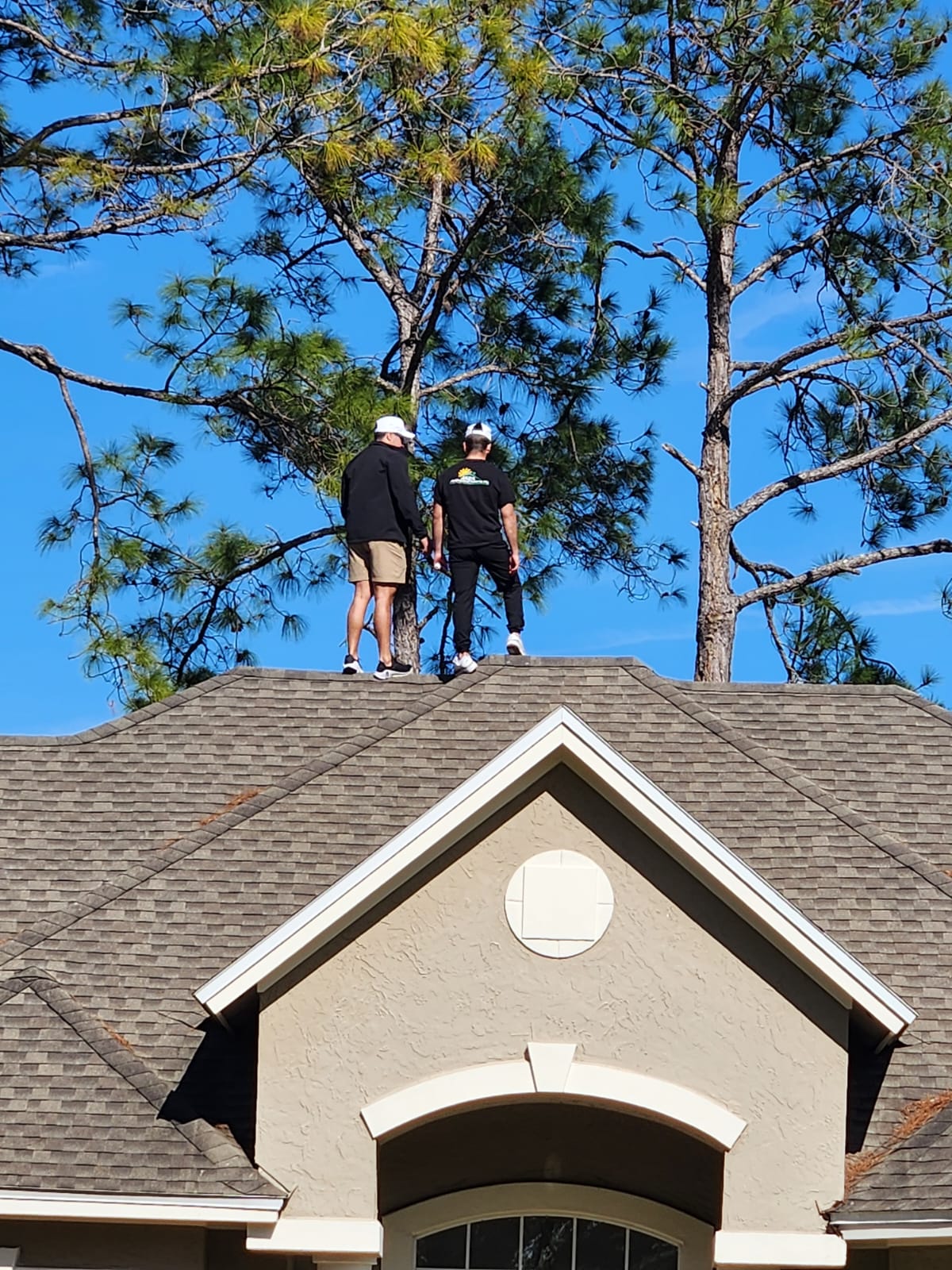
We attend adjuster meetings alongside homeowners as a standard part of our process, not an add-on, in Orlando, Tampa, Jacksonville, and Port St. Lucie. A second set of eyes on your roof at the same time as the adjuster is the clearest way to make sure the scope reflects what's actually there.
Schedule a Free InspectionFrequently Asked Questions
Does the insurance adjuster work for me or for the insurance company?
The adjuster works for or is contracted by your insurance company, whether they are a staff adjuster or an independent adjuster hired for storm volume. A public adjuster, hired directly by the homeowner, is a separate role you would seek out and pay for yourself.
Should I be present during the adjuster inspection?
In most cases, yes. Being present lets you point out damage, answer questions, and confirm the visit covers everything you reported. Having a roofing contractor present alongside you adds an independent perspective documenting the same roof.
What is a test square?
A measured section, commonly around 10 feet, that an adjuster marks off on a roof slope to count hail impacts inside it. The density of strikes found in that square is used to estimate damage across the full slope rather than inspecting every square foot individually.
Is what the adjuster says during the inspection final?
No. Verbal comments made during the visit are not a coverage decision. The written scope of work issued after the inspection is the document that controls what gets approved and paid. Review it carefully before agreeing to anything based on what was said on the roof.
How long does an insurance company have to inspect and decide on a roof claim in Florida?
Florida insurers generally must complete a physical inspection within 30 days of receiving a written proof of loss, and must pay or deny the claim within 60 days of receiving notice of the claim, absent factors genuinely outside the insurer's control. Interest accrues automatically on payments made after that window.
What should I do if the adjuster's scope missed obvious damage?
Document what you believe was missed with your own photos and, ideally, a second inspection report from a licensed contractor. You can request the carrier reconsider before moving to formal options like Florida's mediation program or an appraisal, which we cover in our guide on denied and underpaid claims.
A Note on This Guide
JA Edwards of America is a licensed roofing contractor, not an insurance company, public adjuster, or law firm. This guide explains the general adjuster inspection process and does not constitute insurance or legal advice. Carrier practices and policy language vary. For questions about your specific claim, contact your insurance agent, your carrier, or a licensed Florida professional.
Deadline information in this guide is based on Florida Statute 627.70131 as of 2026. Statutes change; verify current requirements at flsenate.gov before relying on specific deadlines for your claim.