
21 New Insurers Came to Florida. Here Is Who Actually Gets the Lower Rate
State regulators just published the numbers, and they are better than anything Florida homeowners have seen in a decade. The part nobody is explaining is why two houses on the same street get two completely different answers.
For four years the only Florida insurance story worth telling was how bad it had gotten. Carriers pulled out, premiums doubled, and Citizens turned into the biggest homeowners insurer in the state because it was the only one left taking anybody. That story just changed, and the numbers behind the change came from the state itself rather than from a press release.
The Florida Office of Insurance Regulation publishes something called the Property Insurance Stability Report twice a year, on January 1 and July 1. The July 2026 edition landed a few weeks ago and it is the first one in a long time that reads like a recovery instead of a warning. Twenty-one new companies have been approved to write residential property policies in Florida since the litigation reforms took effect. Since 2024, forty-four insurers have filed for rate decreases and another forty-eight filed for no change at all. The average premium for a policy including wind coverage went down in fifty-one of Florida's sixty-seven counties.

If you have been renewing through gritted teeth since 2022, that is the first genuinely good news in a while. But here is the part that matters more than the headline, and it is the reason this post exists instead of another summary of the report: none of those rate decreases are automatic, and none of them apply to every house. A rate filing is permission to charge less. It is not a promise to charge you less. What decides whether the discount reaches your policy is underwriting, and in Florida, underwriting starts with the roof.
What the report actually says
The reason carriers came back is not sentiment, it is math. Florida used to generate a share of the country's insurance lawsuits that had nothing to do with its share of the country's insurance claims. In 2020 the state produced roughly nine percent of American homeowners claims and more than seventy-nine percent of the lawsuits filed over them. That gap is what drove reinsurance costs up, which drove premiums up, which drove carriers out.
By 2025 that number had come down hard. Florida accounted for a little under five percent of homeowners claims opened nationally and just over forty-one percent of the suits, which the OIR reports as the state's lowest share in ten years. The comparison against 2024 is even sharper, since the lawsuit share that year was above seventy-three percent. The regulator attributes the shift to the litigation reforms the Legislature passed starting in 2019 and running through 2023, which limited assignment of benefits, restructured claims litigation rules, and repealed most of the one-way attorney fee statutes.
The financial side followed. Florida's domestic property insurers posted a pooled combined ratio of eighty-three percent in 2025, the healthiest in more than a decade, and preliminary 2026 reinsurance data suggests risk-adjusted pricing came down somewhere between fifteen and twenty-five percent. Citizens, which peaked at roughly 1.2 million policies at the end of 2022, was down to 293,465 policies in force as of June 5. Those policies did not disappear. Private carriers took them.
The catch nobody puts in the headline
When a market softens, insurers do not lower prices evenly. They get selective. More competition means carriers can afford to be picky about which risks they want, and the ones they want are the houses least likely to file a large claim. In a state where the dominant peril is wind, that means the houses with the newest, best documented, most wind-resistant roofs.
The OIR data makes this explicit in a way most coverage skipped. Of the 456,200 property claims closed in Florida during 2025, 53,413 ended up in litigation, which is roughly twelve percent statewide. But broken out by peril, windstorm and hail claims carry the highest litigation rate of any coverage at 16.44 percent. That is the exact category your roof lives in. Underwriters read that number the same way you would.
So when a carrier files for a six or eight percent decrease, that filing is an average across a book of business they intend to build. A house with a four-year-old architectural shingle roof and a completed wind mitigation form is the risk they are pricing for. A house with an unverified twenty-two-year-old roof is the risk they are pricing away from, and the tool they use to price away is either a higher rate, a coverage restriction, or a declination.
The three things underwriting actually checks
None of this is secret and none of it is subjective. There are three documents that decide which side of the line your house falls on, and you can find out where you stand on all three inside of a week.
Roof age
The hardest of the three. Citizens requires proof of full replacement for shingle roofs over 25 years and tile, slate, clay, concrete, or metal roofs over 50 years, with exceptions available when documentation shows at least five years of remaining useful life. Private carriers set their own thresholds and most are tighter.
Roof condition
Age is a proxy. Condition is the real question, and it is where a documented inspection changes the conversation. Granule loss, lifted tabs, failed flashing, and soft decking all read differently on a dated photo report than they do on a drive-by from an underwriter's aerial imagery vendor.
Wind mitigation form
Florida law requires residential rate filings to include actuarially reasonable discounts for wind-resistant features, including roof covering performance, roof deck attachment, and roof-to-wall connections. The credits exist by statute. They do not apply until somebody files the form.
That third one deserves more attention than it gets, because it is the only one of the three that can put money back in your pocket without you replacing anything. Florida Statute 627.0629 requires that a rate filing for residential property insurance include discounts, credits, or other rate differentials for construction features demonstrated to reduce windstorm loss, and it names roof strength, roof covering performance, and roof-to-wall strength specifically. Since October 2023 the same statute has required every insurer subject to it to publish its available hurricane mitigation discounts on its own website.
Which means you can look yours up right now. The size of the credit varies by carrier, by feature, and by where you live, so we are not going to quote you a percentage that may be wrong for your policy. What we will tell you is that a lot of Central Florida homes have qualifying features nobody ever documented, especially anything built or re-roofed after the 2002 building code change, and the credit sits unclaimed until a licensed inspector completes the uniform mitigation verification form and it reaches the carrier.
The reform cut both ways, and this is the half that got ignored
Everything above is the upside. Here is the part that changes how you should behave, and almost nobody covering this report has said it plainly.
The reason the lawsuit numbers fell is that the Legislature made it much harder and much less profitable to sue your insurance company. Assignment of benefits is gone, which is why no legitimate Florida roofer will ask you to sign your claim benefits over to them anymore. One-way attorney fees are gone, which means if your carrier underpays your roof claim by fifteen thousand dollars, the economics of finding a lawyer to fight over it are completely different than they were in 2020.
That is a functioning market. It is also a market where your leverage moved. It used to sit with the attorney you could hire after the claim went wrong. Now it sits with the evidence you had before the claim was filed. Dated photographs of your roof in known good condition, a documented inspection history, and a paper trail showing exactly what the storm changed are worth more today than they have ever been, because the fallback option got smaller.
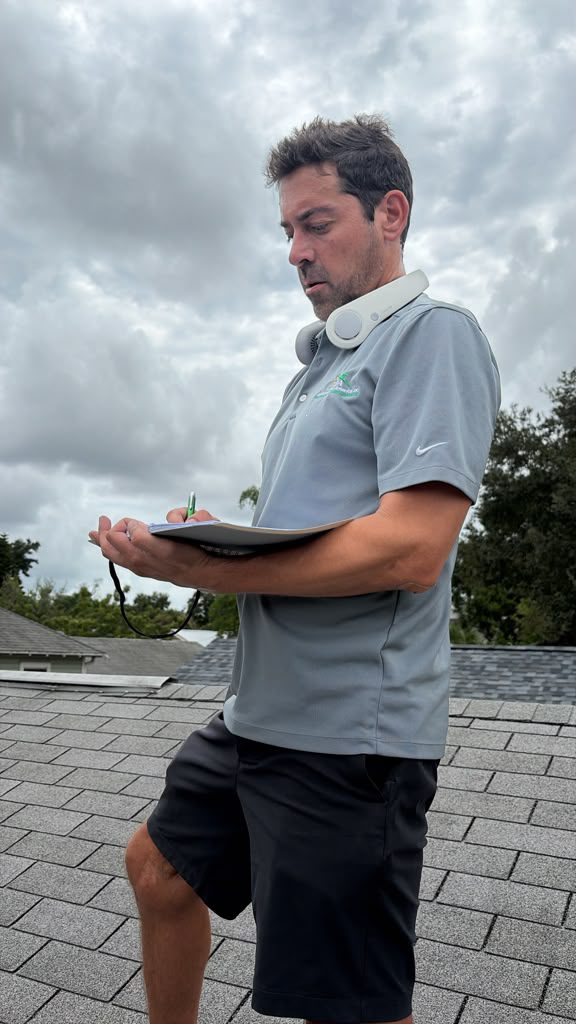
This is the practical reason we tell every homeowner across our four Florida markets to get a documented inspection before hurricane season peaks rather than after a storm. Not because something is wrong with your roof. Usually nothing is. The value is in having a dated record of a roof that was fine on August 7 so that if it stops being fine on September 12, the difference is provable rather than arguable. We wrote about what our crews found across Orlando, Tampa, Jacksonville, and the Treasure Coast after the July storm system, and the pattern was consistent: the homeowners with prior documentation had the smoothest claims.
What separates a house that qualifies from one that does not
| Underwriting looks at | Gets the better rate | Gets restricted, surcharged, or declined |
|---|---|---|
| Roof age | Documented replacement date, well inside carrier thresholds | Unknown or unverifiable age, or past the carrier's cutoff with no remaining useful life documentation |
| Condition record | Dated photo inspection report from a licensed contractor | Nothing on file, leaving aerial imagery and a desk underwriter to decide |
| Wind mitigation | Completed uniform mitigation form on file with the carrier | Qualifying features present but never inspected, so the statutory credits never apply |
| Open repairs | Small issues corrected and closed out before renewal | Visible tarps, patched sections, or deferred repairs at the moment of inspection |
What to do in the next sixty days
Hurricane season peaks in early September, and carrier binding restrictions kick in whenever a named storm enters the box, which means the window to make changes is right now and not in October.
- Find out how old your roof actually is. Pull the permit from your county building department if you do not know. Carriers will find out either way, and it is better to know first.
- Get a documented inspection while nothing is wrong. The report is the asset, whether the answer is "you are fine," a small repair, or something worth acting on. Ours are free across all four offices.
- Check whether you have an active wind mitigation form. Ask your agent. If the last one is more than five years old or was never done, that is money sitting on the table. Our wind mitigation inspection page walks through what gets measured.
- Compare before you renew. The state runs a free rate comparison tool at FLOIR's CHOICES search. With twenty-one new carriers in the market, the quote you got in 2023 has very little to do with what is available now.
- If replacement is coming anyway, do it before the peak. A roof replaced in August is an asset at renewal. A roof replaced in November after a claim is a completely different conversation. Our replacement process lays out the timeline.
One thing we want to be direct about: JA Edwards of America is a licensed roofing and general contractor, not an insurance agency. We do not sell policies, we do not adjust claims, and under current Florida law we cannot and will not ask you to assign your benefits to us. What we do is inspect roofs and document what we find, which happens to be the input every one of the decisions above depends on. Your agent handles the policy. We handle the roof.
What Florida homeowners are telling us
"It's pretty rare that I give 5 stars for anything. In this case all went as planned, expected, and most importantly, as promised. Off came the roof, and repairs day one. Side note: working with Geico and HomeSite Insurance was such a breeze. I have regained faith in the system."
"Overall had a great experience with JA Edwards when we had to have our roof and gutters replaced due to hail damage. Our PM guided us through every step of the process and was quick to address any areas of concern. Would highly recommend to anyone else in need of roof work."
"After having a negative experience with another roofing company, I was very hesitant to trust anyone again. Choosing JA Edwards of America Roofing turned out to be one of the best decisions I've made. Fair pricing, respected the project timeline, and professionalism throughout."
Questions we keep getting
Will my premium actually go down this year?
It depends on your carrier, your county, and your house. The OIR reported that average premiums including wind coverage fell in fifty-one of Florida's sixty-seven counties, with a statewide average of $3,757, and that the thirty-day average rate request at the time of the July report was negative 6.9 percent. Those are averages across the market. Your individual renewal is priced on your individual risk, which is why the roof documentation matters.
How old is too old for a roof in Florida?
There is no single statewide number, because each carrier sets its own underwriting guidelines. Citizens publishes its requirements and asks for documentation of full replacement on shingle and most other roof types over 25 years, and on tile, slate, clay, concrete, or metal over 50 years, with exceptions available when an inspection documents at least five years of remaining useful life. Private carriers frequently apply tighter thresholds than that. Your agent can tell you what your specific carrier uses.
What is a wind mitigation inspection and do I need one?
It is a standardized inspection that documents the wind-resistant features of your home, including roof covering, roof deck attachment, roof-to-wall connection, roof geometry, and opening protection. Florida law requires insurers to include actuarially reasonable credits for those features in their residential rate filings. If your home has qualifying features but no form on file, the credits are not being applied. The inspection is usually inexpensive and often pays for itself in the first renewal cycle.
Should I file a claim now if my roof has minor damage?
That is a decision for you and your agent, not for a roofing contractor, and it depends on your deductible, your claims history, and the scope of the damage. What we can tell you is that having a dated, documented inspection report makes that conversation far more concrete, because you are discussing measured findings instead of estimates. Some findings are repairs, not claims, and knowing which is which before you call anyone is worth the visit.
Can a roofing company handle my insurance claim for me?
No, and you should be cautious with anyone who says otherwise. Florida's reforms eliminated assignment of benefits for property insurance claims, so a contractor cannot take over your claim or your benefits. A licensed contractor can inspect your roof, document conditions with dated photographs, and provide a written scope of work. The claim itself stays between you, your agent, and your carrier.
Does JA Edwards charge for a roof inspection?
No. Inspections are free across all four offices, in Orlando, Tampa, Jacksonville, and Port St. Lucie. You get dated photo documentation of what we find whether the outcome is a clean bill of health, a small repair, or a recommendation to plan for replacement. You keep the report regardless of whether you hire us.
Sources
- Florida Office of Insurance Regulation, Property Insurance Stability Report, July 2026 (PDF). Primary source for carrier counts, rate filings, county premium data, litigation share, combined ratio, and Citizens policy counts.
- Florida Office of Insurance Regulation, Industry Reports archive, where every edition of the stability report is published.
- Insurance Journal, coverage of the July 2026 stability report, July 22, 2026.
- Claims Journal, analysis of Florida's declining share of national claims lawsuits, July 23, 2026.
- Florida Realtors, Florida property insurance lawsuits decline, August 5, 2026.
- The Florida Senate, Statute 627.0629, Residential property insurance; rate filings, covering required windstorm mitigation discounts.
- Citizens Property Insurance Corporation, roof age requirements for personal residential policies.
Find out where your roof stands before renewal
Free documented inspection across Orlando, Tampa, Jacksonville, and Port St. Lucie. Dated photos, written findings, and the report is yours either way.
JA Edwards of America is a licensed Florida roofing and general contractor (CGC1534283 / CCC1334804). We are not an insurance agency, agent, or public adjuster, and nothing in this article is insurance, legal, or financial advice. Coverage terms, underwriting guidelines, and available discounts vary by carrier and by property. Talk to your licensed insurance agent about your specific policy. Figures cited come from the Florida Office of Insurance Regulation's July 2026 Property Insurance Stability Report and are accurate as of publication.