
Tile Roof Replacement Cost in Florida (2026): Concrete vs. Clay
The Short Answer
A concrete tile roof replacement in Florida typically runs $18,000 to $35,000 for a full installation, or $12 to $18 per square foot installed. Clay tile costs more, $22,000 to $45,000, or $16 to $22 per square foot, because the material itself is pricier and often requires more specialized handling. Both numbers move with roof size, pitch, and whether your existing tile can be reused over new underlayment, which is frequently the biggest cost variable and the one most homeowners don't know to ask about.
In this guide
- 2026 pricing: concrete vs. clay, by size
- Why per-square-foot and whole-roof numbers don't always match
- The cost question most quotes skip: can your tile be reused
- Concrete vs. clay: which one for your home
- What actually moves your price
- Tile, wind mitigation, and insurance
- Tile by Florida market
- Frequently asked questions
Tile is one of the most common roofing materials in Florida, especially in Mediterranean and barrel-tile neighborhoods across Orlando, Tampa, Jacksonville, and the Treasure Coast, and it's also one of the most expensive to price correctly. Most online cost estimates either lump tile in with shingle pricing (wildly inaccurate) or quote a single number that ignores the single biggest variable in a tile job: whether the existing tile can be reused. This guide covers real 2026 pricing for both concrete and clay tile, and the cost question that changes the budget more than any material choice.
Why tile is everywhere in Florida
Tile's dominance in Florida isn't accidental. Spanish and Mediterranean Revival architecture shaped huge swaths of Florida residential construction from the early 1900s through the mid-century building booms, and clay tile was the material that style called for. When concrete tile became widely available and dramatically cheaper to produce starting in the 1970s and 80s, it opened tile roofing to a much broader range of homes without abandoning the look Florida buyers had come to expect. That's why you'll see tile just as often on a 1985 production-built ranch as on a genuine 1920s Mediterranean Revival estate, one is concrete chasing a look, the other is clay in its original context, and the cost gap between them traces directly back to that history.
The practical upside of tile's popularity here is a mature, competitive supply chain. Unlike a material that's rare in a given market, Florida has multiple tile manufacturers, established distributor networks, and crews who specialize in tile specifically rather than treating it as an occasional job. That maturity is part of why tile pricing, while higher than shingle, is more predictable and less prone to the wild swings you sometimes see with less common materials.

2026 pricing: concrete vs. clay, by size
| Home size | Concrete tile (installed) | Clay tile (installed) |
|---|---|---|
| 1,800 sq ft | $18,000 - $24,000 | $22,000 - $28,500 |
| 2,500 sq ft | $24,000 - $31,000 | $28,500 - $37,000 |
| 3,000+ sq ft | $29,000 - $35,000+ | $34,000 - $45,000+ |
Ranges reflect typical Florida-wide pricing for new tile, full tear-off and reinstall. Roof pitch, tile profile, and market all shift these numbers; see the market breakdown below.
Why per-square-foot and whole-roof numbers don't always match
You'll see tile priced two ways, and it's worth understanding both so a quote doesn't feel inconsistent with something you read elsewhere. Per-square-foot installed pricing for tile in Florida generally runs $12 to $18 for concrete and $16 to $22 for clay, and that figure is meant to apply to the roof's total square footage, not your home's living space, which is almost always smaller than the roof surface once you account for pitch and overhangs. Whole-roof pricing, the ranges in the table above, bakes in an assumed roof size for a typical single-family home. Both are correct; they're just answering slightly different questions, and a contractor who only gives you one without explaining which basis it's on is setting you up to feel misled later even if the number itself was accurate.
The cost question most quotes skip: can your tile be reused
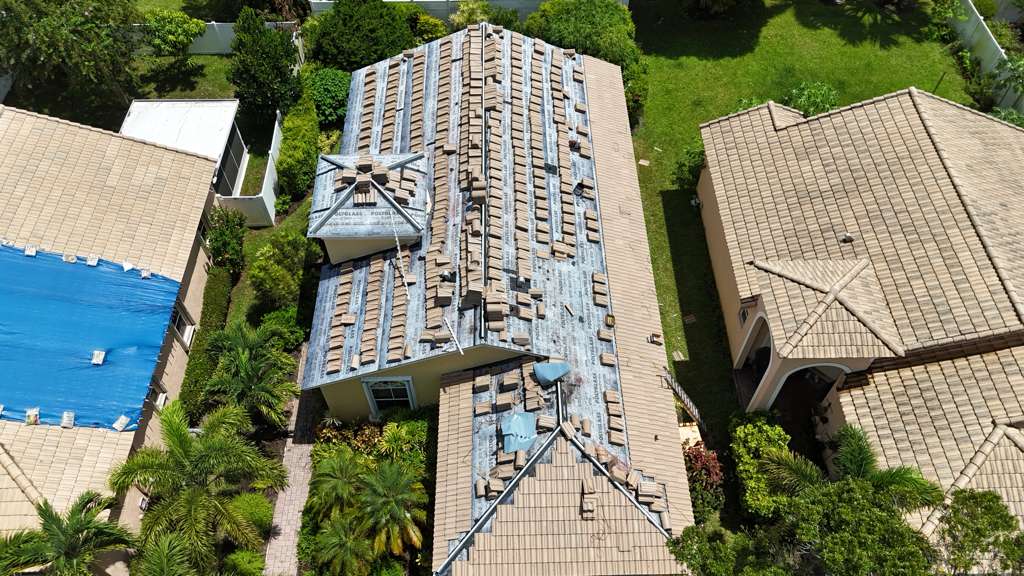
This is the single biggest variable in tile roof economics, and it's the reason two quotes for the "same" job can differ by $10,000 or more. Tile itself, especially concrete tile, commonly outlasts the underlayment beneath it by one or even two full cycles. That means a large share of what gets called a "tile roof replacement" isn't actually a new-tile purchase at all, it's a full underlayment replacement with your existing tile carefully lifted, inspected, and reinstalled. That job runs meaningfully less than buying tile from scratch, because the material cost drops out almost entirely; you're paying primarily for labor, new underlayment, and the percentage of tiles that break during removal and need replacing (typically 5-15% breakage is normal and should be built into any honest estimate).
The catch: this only works if your tile profile is still in reasonable condition and, ideally, still in production or available as a close match for the broken percentage. Older or discontinued profiles sometimes require sourcing reclaimed tile, which adds cost and time. A contractor should tell you which scenario your roof falls into during the inspection, before quoting, not after work has started.
Don't know if your tile can be reused?
Free inspection with a straight answer: new tile, reused tile with new underlayment, or repair. Photos included either way.
Get My Free InspectionConcrete vs. clay: which one for your home
Concrete Tile
The more common choice across Florida, and the better value for most homeowners.
- $18,000-$35,000 installed, or $12-$18/sq ft
- 30-50 year lifespan
- Wide range of profiles, including styles that mimic clay or wood shake
- Heavier than clay; roof structure should be verified to handle the load, especially on older homes
Clay Tile
Higher cost, longer realistic lifespan, and a distinct look common in upscale and historic-style communities.
- $22,000-$45,000 installed, or $16-$22/sq ft
- 50+ year lifespan, often outlasting two underlayment cycles
- More fragile during installation and walking; foot-traffic damage during unrelated roof work (AC service, gutter cleaning) is a real long-term cost to budget for
- Common in HOA communities with strict material requirements, Bella Collina and similar developments included
Neither material is objectively better; the decision usually comes down to budget, how long you plan to stay in the home, and in many cases, what your HOA requires. If you're comparing tile against other materials entirely, our metal roof vs. tile roof comparison for Florida covers that broader decision.
What actually moves your price
Roof pitch and complexity
Steep or multi-valley roofs take longer to work on and require more safety setup. Tile is also more fragile to walk on than shingle, which slows labor further on complex rooflines.
Tile profile and availability
Standard flat or low-profile concrete tile is widely stocked. Specialty profiles, discontinued lines, and most clay options often carry longer lead times and higher material costs.
Structural verification
Concrete tile is heavy. If your home has never had tile before, or you're upgrading from a lighter material, a structural check confirms the roof framing can carry the added weight, an extra step that's worth the cost to avoid problems down the line.
Underlayment specification
Secondary water resistance and higher-grade underlayment cost more upfront but factor directly into wind mitigation insurance credits, covered below.
What actually happens during a tile reroof
A tile replacement follows a more deliberate sequence than shingle work, and understanding it helps explain both the timeline and the cost. Crews start by carefully removing tile by hand, row by row, setting aside anything reusable in the order it came off, since matching original placement matters for older, weathered, or slightly irregular tile. Once the deck is exposed, it gets inspected for rot or damage, the same decking-repair cost that applies to every material. New underlayment goes down next, and this is where secondary water resistance gets added if it wasn't already part of the roof. Battens or a direct-nail system go on depending on the tile type and local wind requirements, per the state's tile installation manual co-developed by the Florida Roofing and Sheet Metal Contractors Association, and only then does tile go back on, new or reused, with fasteners and adhesive specified to meet Florida's wind uplift codes for the home's specific wind zone.
That sequencing is also why tile crews specialize the way they do. A crew that primarily installs shingle can competently tear off and reinstall tile, but the hand-by-hand removal, breakage management, and batten or fastener detailing is a different skill set built on repetition, which is worth asking about directly when comparing contractors.
Maintenance that protects your investment
Tile's long lifespan only holds up with basic upkeep, and skipping it is the most common way homeowners shorten a roof that should have lasted decades. Foot traffic is the biggest risk: any technician walking your tile roof for an unrelated reason, satellite dish work, gutter cleaning, AC servicing, should know how to walk on batten lines rather than tile centers, and it's worth confirming with any vendor before they get on your roof. Algae and staining are cosmetic rather than structural on most tile, but a periodic soft wash keeps the roof looking like what you paid for. And because the underlayment beneath the tile is the actual waterproofing layer, a wind mitigation reinspection or a general roof inspection every few years catches underlayment aging before it becomes a leak, the same logic covered in our tile repair cost guide.
Tile, wind mitigation, and insurance
A tile reroof is one of the more impactful moments for your home's wind mitigation profile. New tile installed under current product approval standards, paired with secondary water resistance and updated roof-to-wall attachment where the roof structure allows it, can meaningfully improve the credits your insurer applies under Florida's wind mitigation program. If you've never had a wind mitigation inspection, or your last one predates a reroof, our guide on Florida wind mitigation inspections explains what gets verified and why the inspection should always follow a reroof, not sit unused from before it.
Tile also carries a specific insurance nuance worth knowing: because reused tile over new underlayment is common and legitimate, insurers and adjusters sometimes need clarification that a "tile roof replacement" claim is age-and-condition based on the underlayment, not the visible tile. We document both separately in any claim-related inspection so that distinction doesn't get lost in the adjuster's assessment.
Tile by Florida market
Tile shows up differently across JAEA's four markets, and pricing within this guide's ranges shifts accordingly. In Orlando, tile is concentrated in established communities like Tampa Palms-style developments and Hunter's Green-equivalent estate sections, often on original underlayment old enough that reuse-versus-replace is a live question. In Tampa, the pattern is similar, concentrated in older, established neighborhoods rather than spread evenly across the metro. Jacksonville sees less tile overall, shingle-dominant housing stock skews the market, which sometimes means longer lead times for tile-specific crews and materials. The Port St. Lucie and Treasure Coast market has some of the heaviest tile concentration of the four, particularly in newer planned communities, where HOA material requirements often mandate tile specifically.
If you're closer to a repair than a full replacement, our tile roof repair cost guide for Tampa and roof repair cost guide for Port St. Lucie cover that side of the decision in more detail. Whichever market you're in, the reuse question from earlier in this guide applies the same way everywhere: it's a condition-of-underlayment question, not a location question, which is exactly why a real inspection beats any online estimate, ours included. The numbers in this guide will get you close enough to plan a budget; only a technician on your specific roof can tell you which side of the reuse-versus-replace line your home actually falls on.
Frequently asked questions
Is concrete or clay tile cheaper in Florida?
Concrete tile is less expensive, typically $18,000-$35,000 installed versus $22,000-$45,000 for clay, because the material itself costs less and is more widely available. Clay generally lasts longer and carries a different aesthetic, which is why it remains common in upscale and HOA-governed communities despite the higher cost.
Can my existing tile be reused on a new roof?
Often, yes, if the tile itself is in good condition and the profile is still available for the percentage that breaks during removal, typically 5-15%. When reuse is possible, it significantly lowers the cost compared to buying new tile, since you're paying mainly for underlayment and labor rather than material.
How long does a tile roof replacement take?
Most residential tile replacements take 3-7 days depending on roof size, pitch, and whether tile is being reused or newly sourced. Reused-tile jobs sometimes take slightly longer due to the careful removal and inspection process.
Does a tile roof cost more to insure than shingle?
Not inherently, and tile often performs well on wind mitigation credits due to its weight and wind resistance. The bigger insurance factor is the age and condition of the underlayment beneath the tile, which is what a wind mitigation inspection and any claim assessment actually evaluates.
Is tile heavier than my roof structure can handle?
Most Florida homes originally built with tile are engineered for the load. If you're switching to tile from a lighter material, or your home is older, a structural verification during the estimate confirms the framing can handle it before any work begins.
Why is clay tile more common in some Florida neighborhoods than others?
It traces back to architectural style. Neighborhoods built in a genuine Mediterranean or Spanish Revival style, particularly older or historic-designated areas, often specify clay to match that original design intent. Newer subdivisions more commonly use concrete tile, which achieves a similar look at a lower cost.
Can someone walk on my tile roof for other work without damaging it?
Yes, if they know proper technique, stepping over the batten lines rather than the center of each tile. It's worth confirming with anyone accessing your roof for an unrelated reason, satellite or antenna work, gutter cleaning, AC service, since improper foot traffic is a common cause of cracked tile unrelated to weather.