Does Homeowners Insurance Cover Roof Replacement in Port St. Lucie, FL?
Homeowners insurance in Port St. Lucie, FL covers roof replacement when the damage is caused by a sudden, accidental event such as a hurricane, wind storm, hail, or falling object. It does not cover damage caused by gradual deterioration, lack of maintenance, or normal aging. Most policies in the Treasure Coast area are written through Citizens Property Insurance or private carriers operating under Florida’s property insurance statutes, which require insurers to write policies with actual cash value (ACV) or replacement cost value (RCV) settlement terms. Under an ACV policy, the insurer pays the depreciated value of the roof, not the full replacement cost. Under an RCV policy, the insurer pays the full replacement cost minus your deductible. Port St. Lucie homeowners should confirm which settlement method their policy uses before a storm season begins, because it directly affects what they receive in a claim.
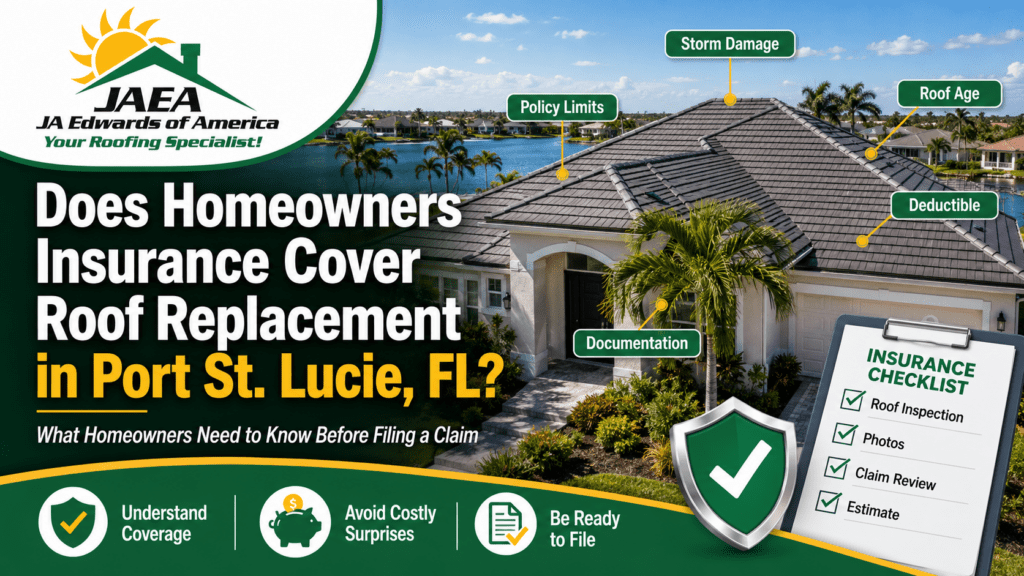
Does Homeowners Insurance Cover Roof Replacement in Port St. Lucie?
The Treasure Coast has been through enough hurricane seasons that most homeowners in Port St. Lucie have thought about this question at some point. The answer is more conditional than most people realize, and those conditions matter a great deal when you’re standing in front of an adjuster after a storm.
The short version: insurance covers sudden damage, not age or neglect. The details of how much it covers depend on your specific policy, which settlement method it uses, and the condition your roof was in when the loss occurred.
What Florida Homeowners Insurance Actually Covers (and What It Doesn’t)
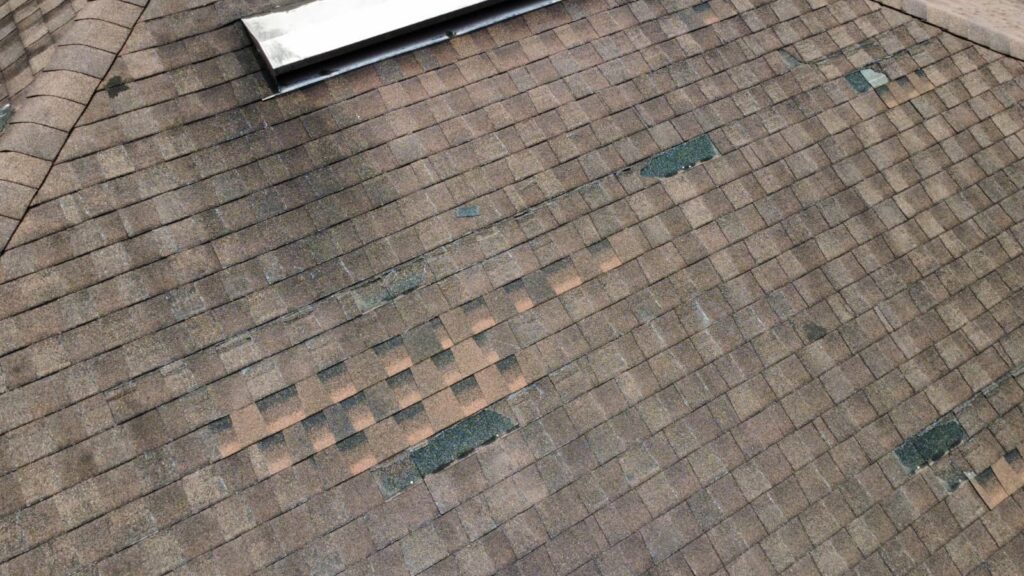
Florida homeowners insurance policies are property contracts. They cover physical damage to your home caused by covered perils. For roofing, the covered perils that apply most often in Port St. Lucie are:
Wind damage. This includes hurricanes, tropical storms, and regular windstorms. Wind damage to shingles, decking, or structural components is a covered loss under most policies.
Hail damage. Less common in PSL than in Central Florida, but hail events do occur during severe thunderstorm cells. Impact damage to shingles or tile is a covered loss.
Falling objects. Trees, limbs, or other debris that impacts the roof during a storm is covered.
Water intrusion from storm damage. If a covered wind event creates an opening in your roof and rain enters the home, the resulting interior damage is covered as part of the same loss.
What policies do not cover:
Gradual deterioration. If your roof has been aging for 20 years and shingles are cracking from UV exposure, that’s not a covered loss. It’s a maintenance issue.
Lack of maintenance. A roof with known leaks that were never repaired, damaged flashing that was left unsealed, or granule loss that went unaddressed for years is likely to face a dispute when a storm claim is filed.
Pre-existing damage. If an adjuster documents that the damage claimed after a storm was already present before the event, the carrier can deny or reduce the claim accordingly.
This last point is why having a pre-storm inspection report matters in Port St. Lucie specifically. St. Lucie County is in a high-risk hurricane zone, and carriers here scrutinize claims carefully.
Citizens Property Insurance in Port St. Lucie
A significant portion of homeowners in Port St. Lucie carry policies through Citizens Property Insurance, the state-backed insurer of last resort. Citizens is a major factor in the Treasure Coast market because private carriers have exited or restricted underwriting in coastal Florida counties.
Citizens has specific rules around roof age and condition that affect both coverage and renewal eligibility:
Roof age requirements. Citizens has implemented policies that tie renewal eligibility to roof age and condition. As of recent policy cycles, Citizens may require a roof inspection on homes with older roofs before issuing or renewing a policy. The specific thresholds change based on Citizens’ underwriting guidelines, which are updated periodically by the Florida Office of Insurance Regulation.
Actual cash value on older roofs. Citizens policies on roofs over a certain age may default to actual cash value settlement rather than replacement cost value. Under ACV, the settlement amount is reduced by depreciation. On a 15-year-old roof, the depreciated value can be significantly less than what a full replacement costs.
Separate wind deductibles. Most policies in St. Lucie County have a separate hurricane or wind deductible that is calculated as a percentage of the home’s insured value, typically 2% to 5%. On a home insured for $350,000, a 2% wind deductible is $7,000 before insurance pays anything. This is separate from your all-other-perils deductible.
The Florida Office of Insurance Regulation publishes current Citizens policy guidelines and consumer information on property insurance claims.
Actual Cash Value vs. Replacement Cost Value: Why It Matters in PSL
This distinction is one of the most important things to understand before you ever file a claim.
Replacement cost value (RCV) means the insurer pays what it actually costs to replace your roof with comparable materials today, minus your deductible. If a new roof costs $18,000 and your deductible is $3,500, you receive $14,500.
Actual cash value (ACV) means the insurer pays the replacement cost minus depreciation. If your 12-year-old shingle roof has 40% depreciation applied and replacement costs $18,000, the insurer pays $10,800 minus your deductible. On that same $3,500 deductible, you receive $7,300 rather than $14,500.
The difference between RCV and ACV on a typical Port St. Lucie roof replacement can easily exceed $5,000 to $7,000. Check your declarations page for the term “actual cash value” or “replacement cost.” If you’re not sure what you have, call your agent and ask directly.
How to Document Roof Damage After a Storm in PSL
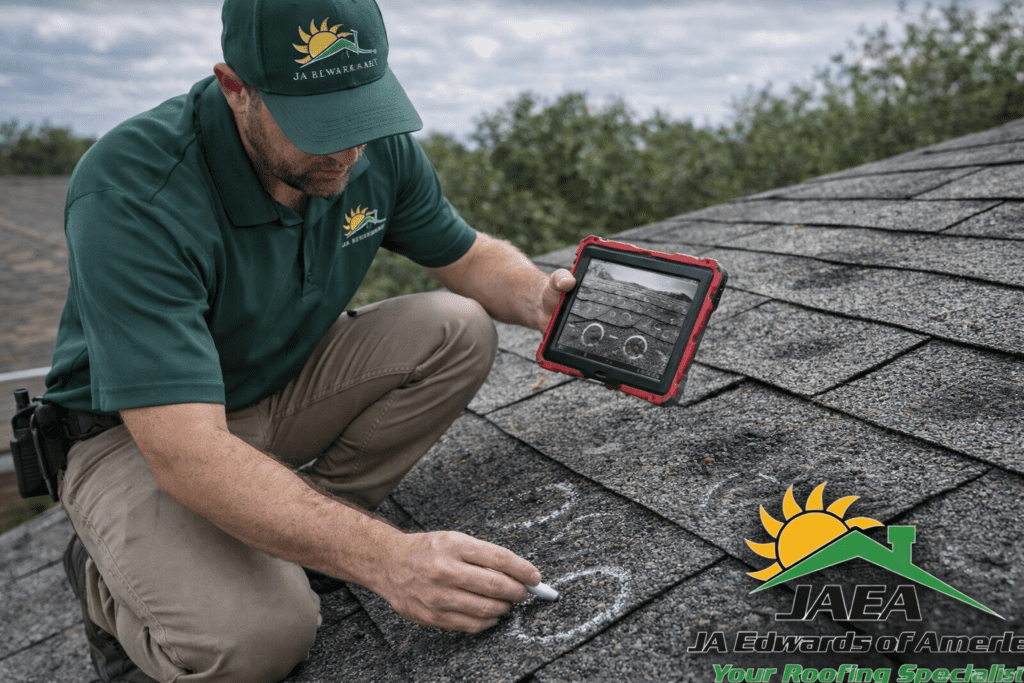
Documentation is what separates a smooth claim from a disputed one. If a storm damages your roof, do the following before any repairs begin:
Photograph everything. Take wide shots of the entire roof and close shots of every area of visible damage. Document the interior as well: ceilings, walls, any area showing water intrusion. Note the date and time on each photo.
Don’t make permanent repairs before the adjuster visits. You can use tarps to prevent additional water damage; in fact, you’re required to mitigate further loss under most policy terms. But permanent repairs before the adjuster documents the damage can complicate the claim.
Get a written contractor assessment. A licensed contractor’s written evaluation of the damage, separate from the insurance adjuster’s report, is useful documentation if the carrier’s assessment and yours don’t align.
File promptly. Florida law requires property damage to be reported within a reasonable time, and policies have specific notice requirements. Don’t wait weeks after a storm to initiate the claim.
The Florida Department of Financial Services insurance consumer helpline can assist if you have questions about the claims process or if you believe a claim is being handled improperly.
The Assignment of Benefits Issue in Florida
Port St. Lucie and St. Lucie County were significantly affected by Assignment of Benefits (AOB) abuse in prior hurricane cycles. AOB is a legal instrument that allows a homeowner to sign over their insurance claim rights to a third party, typically a contractor.
Florida enacted AOB reform legislation in recent years, and the practice is now much more restricted for property insurance claims. You should be cautious about any contractor who asks you to sign an AOB or similar document before they’ve done any work or before your adjuster has visited. Read any contract carefully before signing, and if you have questions, contact your insurance carrier first.
My Safe Florida Home Program in Port St. Lucie
The My Safe Florida Home grant program provides matching grants for wind mitigation improvements to Florida homeowners. Eligible improvements include roof deck attachments (a secondary water barrier) and roof covering upgrades. The program is funded through the state and administered through the Florida Department of Financial Services.
For Port St. Lucie homeowners, participation in the program can reduce the cost of a qualifying roof replacement while also generating wind mitigation documentation that supports insurance premium discounts.
Availability and funding levels for the program change with state budget cycles. JA Edwards of America is familiar with the program requirements in St. Lucie County and can provide information on whether your replacement project might qualify. See our My Safe Florida Home page for Port St. Lucie for current program details.
When a Claim Is Worth Filing vs. When It Isn’t
This is a practical question that doesn’t have a universal answer, but there’s a framework that helps.
In Florida, filing a property insurance claim has consequences beyond the immediate payout. Your carrier can non-renew your policy after a claim, and even if they don’t, a claim history affects your premium at renewal. In the current Florida insurance market, where carrier options in St. Lucie County are already limited, protecting your insurability is a real consideration.
The general guidance from insurance professionals in Florida is: if the damage cost is close to your deductible or only moderately above it, pay out of pocket rather than file. Reserve the claim for significant losses where the insurance payout meaningfully exceeds your deductible and where the roof cannot be addressed without it.
A licensed contractor can give you a written estimate before you decide whether to file. That estimate costs you nothing with JA Edwards of America, and it gives you the information you need to make an informed decision.
Getting a Free Roof Inspection in Port St. Lucie
JA Edwards of America serves Port St. Lucie and the entire Treasure Coast, including Palm City, Stuart, Hobe Sound, and Fort Pierce. If you’ve had a storm event and want to understand the damage before calling your carrier, or if you want a documented pre-season inspection before hurricane season gets into full swing, we offer free inspections with a written report.
Our Port St. Lucie office is located at 540 NW University Blvd STE 103, Port St. Lucie FL 34986. Call us at (772) 204-2452 or schedule a roof inspection for Port St. Lucie.
Frequently Asked Questions
Does homeowners insurance cover a full roof replacement in Port St. Lucie?
It depends on the cause of damage and your policy type. Insurance covers sudden damage from covered perils like wind, hail, and falling objects. It does not cover gradual deterioration or maintenance-related wear. Whether you receive full replacement cost or a depreciated amount depends on whether your policy settles on a replacement cost value or actual cash value basis.
What is the hurricane deductible on a Port St. Lucie homeowners policy?
Most policies in St. Lucie County carry a separate wind or hurricane deductible calculated as a percentage of the home’s insured value, typically 2% to 5%. On a home insured for $300,000, a 2% deductible is $6,000. This is separate from your standard all-perils deductible and applies to any loss triggered by a named storm or wind event meeting your policy’s threshold.
Does Citizens Property Insurance cover roof replacement in PSL?
Citizens covers storm-related roof damage under its standard property policy, but coverage terms depend on the specific policy form and the condition and age of the roof. Citizens has implemented roof age and condition requirements for policy issuance and renewal, and older roofs may be subject to ACV rather than RCV settlement.
How do I know if my policy is ACV or RCV?
Check your declarations page, which is the summary page at the front of your policy document. It will indicate whether your dwelling coverage settles on replacement cost or actual cash value. If it’s not clear, call your agent and ask specifically about the roof settlement method.
What happens if an insurance adjuster says the damage is from wear and tear, not the storm?
You have the right to dispute the adjuster’s determination. Getting a second written assessment from a licensed contractor is the first step. If the dispute continues, Florida law provides a process for appraisal and, if necessary, litigation. The Florida Department of Financial Services can provide guidance if you believe a claim is being handled improperly.
How long do I have to file a roof damage claim in Florida?
Under recent Florida legislation, property damage claims must be filed within one year of the date of loss for most covered events. This is a tighter window than previous law. Don’t delay reporting damage after a storm.
Can I get a free roof inspection before hurricane season in Port St. Lucie?
Yes. JA Edwards of America offers free roof inspections in Port St. Lucie and throughout St. Lucie County. Call (772) 204-2452 or schedule online. You receive a written report documenting the condition of your roof, which is useful for both maintenance planning and insurance documentation.