
How Hurricane Season Affects Your Florida Roof
Hurricane season runs June 1 through November 30. Every storm that passes within range of your home, even ones that never make landfall nearby, puts cumulative wind, rain, and debris stress on your roof. Most of the damage is not visible from the driveway. A roof that survives a season intact on the surface can still be weeks away from a leak it accumulated over months.
Florida homeowners think about hurricane season the way most people think about a car accident: something that happens to other people until the day it doesn't. But a Category 4 making landfall 100 miles away still sends tropical storm force winds across Orlando, Tampa, and the rest of the state. The damage those winds cause to a roof is real, it is incremental, and it almost never looks like the dramatic footage on the evening news.
The season runs six months. From June through November, your roof is under sustained stress from a combination of wind, rain saturation, debris impact, and UV acceleration that no other part of the country experiences at the same intensity. Understanding what that stress looks like at each stage is what separates a homeowner who catches a problem early from one who discovers it through a water stain on the ceiling.
How storms damage a roof, even when they miss
The most common misconception about hurricane damage is that your roof only takes a hit if a storm makes landfall nearby. The reality is that a named storm sitting in the Gulf or churning up the Atlantic coast changes wind patterns across the entire peninsula. Sustained tropical storm force winds, 39 mph and above, start loosening flashing, lifting shingle edges, and forcing water under surfaces that were perfectly sealed the week before.
Even a disorganized tropical wave passing through the Caribbean sends squall lines ahead of it. Those squalls can produce wind gusts above 60 mph across Central Florida with no warning and no named storm on the map. After a season of these events, a roof that looks fine from the street may have compromised flashing at three valleys, a handful of shingles with lifted edges, and a pipe boot that is no longer sealed correctly.
Wind damage: what actually happens
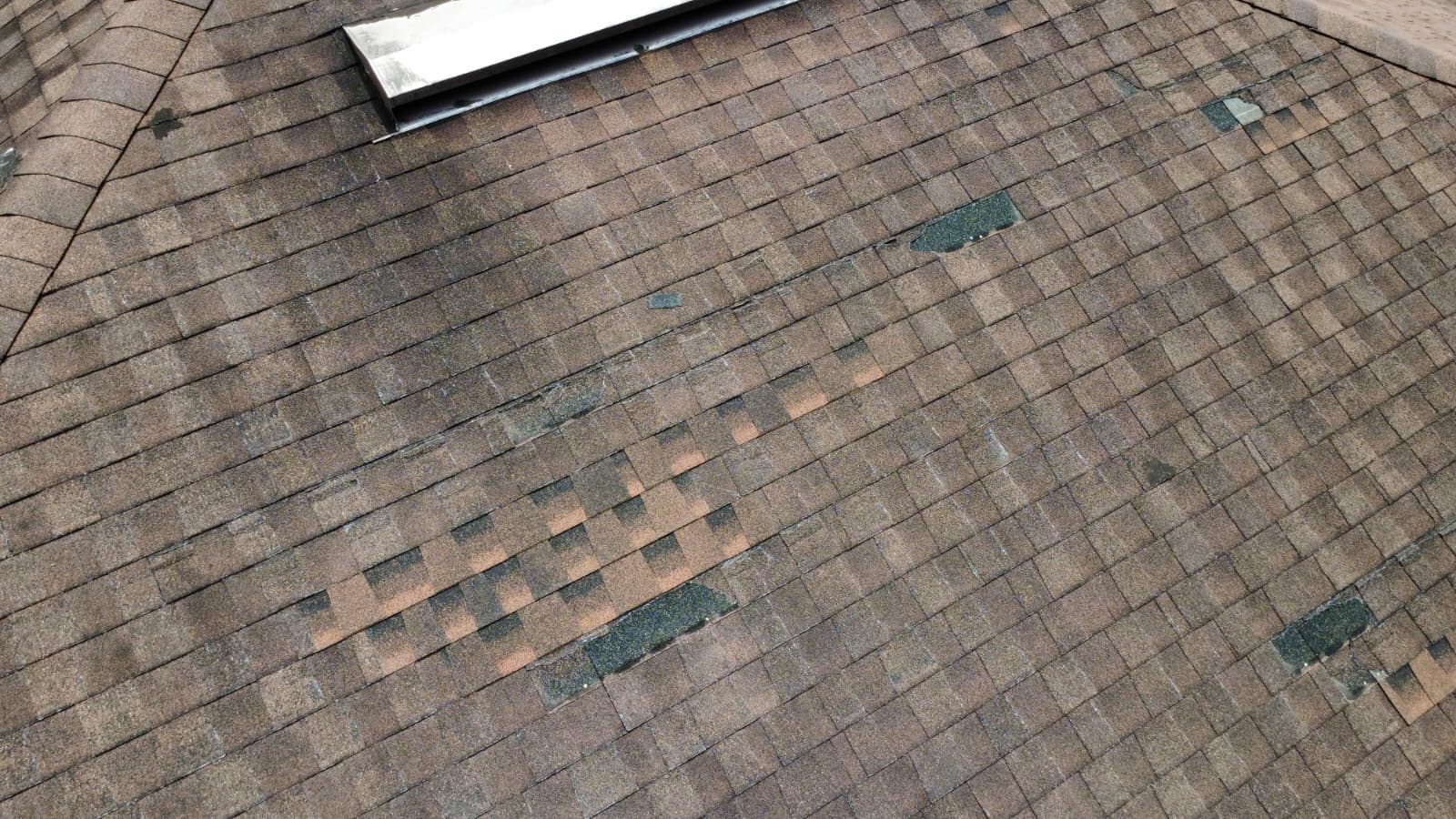
Wind damage to a roof follows a predictable pattern. It starts at the edges and works inward. The corners and ridgeline are the most vulnerable points because they experience the highest uplift pressure during a storm. When wind gets under a shingle edge, even briefly, it breaks the seal between that shingle and the one below it. The shingle looks fine from below. The seal is gone.
On a standard asphalt shingle roof, the wind rating matters significantly. Most builder-grade shingles are rated to 90 mph. A Category 2 hurricane sustains winds between 96 and 110 mph. Many Florida storms that never reach hurricane strength still produce gusts that exceed the rated threshold in isolated areas. The difference between a shingle rated to 90 mph and one rated to 130 mph is not academic when a squall pushes a 95 mph gust over your neighborhood.
Metal roofing handles wind considerably better, but it has its own vulnerability: improper fastening at the panel seams. A standing seam metal roof installed correctly is one of the most wind-resistant systems available in Florida. One installed with incorrect fastener spacing or inadequate sealant at penetrations can develop leaks after a season of repeated wind cycling even without a direct hit.
Rain and moisture: the slow damage
Florida averages around 54 inches of rain per year, most of it concentrated between June and September. That rain does not just fall straight down. During a storm, wind-driven rain enters at angles that your roof was not designed to shed. It finds the gaps that wind already loosened and forces water into spaces that were sealed before the season started.
The problem with moisture damage is the timeline. Water that enters your roof decking during a June storm does not necessarily appear as a ceiling stain in June. It saturates the wood, begins the conditions for rot and mold, and may not produce visible interior symptoms until October or November when the cumulative saturation finally reaches a threshold. By that point, what started as a manageable flashing repair has become a decking replacement.
High humidity compounds this. Between storms, Florida's summer humidity keeps roof surfaces and underlying materials at moisture levels that inhibit proper drying. A roof that takes on water in a June squall may not fully dry before the next storm arrives the following week.
Before the next storm hits, know where your roof stands.
A free pre-season inspection documents your roof's current condition, identifies any existing vulnerabilities, and gives you a written record before hurricane season activity picks up. If a storm damages your roof later, that baseline documentation supports your insurance claim.
Debris and impact damage

Wind picks up more than you expect. A Category 1 hurricane can turn a loose fence board into a projectile that punches through a shingle surface. But debris damage during hurricane season rarely comes from the dramatic stuff. It comes from the branches, palm fronds, and roof gravel that become airborne in every significant squall line and land on your roof at speed.
On asphalt shingles, impact from debris knocks granules loose. Those granules are not decorative. They are the UV protection layer for the asphalt beneath them. A summer's worth of debris events strips enough granules from vulnerable sections of the roof to accelerate aging by years. On tile roofs, debris impact can crack individual tiles in ways that are invisible from the ground but allow water to reach the underlayment below.
The gutters tell the story. After a significant storm, the volume of granules washing out of your gutters is a reliable indicator of how much impact your shingle surface absorbed. A sudden large deposit of granules in late June or July means your roof took real hits, even if the storm never made the news.
The cumulative season effect
This is the part that surprises most homeowners. A single major hurricane is obvious. Six months of repeated wind, rain, and debris events is not. Each individual storm may be minor. The accumulated effect of all of them together is what shortens roof life in Florida compared to national averages.
A roof that enters June in good condition with properly sealed shingles, intact flashing, and a sound pipe boot may exit November with loosened flashing at two valleys, three shingles with broken seals along the south-facing slope, and a pipe boot that has micro-cracked from repeated thermal cycling during the wet season. None of these individually triggers a leak. Together, they guarantee one by the following spring.
The homeowners who avoid expensive mid-winter surprises are the ones who inspect after the season ends, not just after the named storms.
What to check after every storm
You do not need to get on the roof after every squall. What you can do from the ground in ten minutes tells you whether a professional inspection is warranted.
- Gutters and downspouts. Heavy granule deposit after a storm means shingle impact. Denting on aluminum gutters means hail or significant debris.
- Visible shingle surface. From the driveway, look for any shingles that appear lifted, curled at the edges, or sitting differently than their neighbors.
- Flashings at visible points. If you can see the edge of your chimney, skylights, or any roof penetrations from the ground, check for any material that looks pulled away or displaced.
- Attic after significant rain. Within 24 to 48 hours of a heavy storm, check your attic with a flashlight. Water stains on the decking or wet insulation indicate an active intrusion point that needs immediate attention.
- AC unit and siding. Dented AC fins or cracked siding at random points indicates hail came down hard enough that your roof deserves a professional look.
How to prepare before June 1
The worst time to find out your roof has a problem is after a named storm is already in the Gulf. The best time is before June 1, when you still have scheduling flexibility and contractors are not running storm response crews around the clock.
- Schedule a professional inspection. A licensed roofer checks the things you cannot see from the ground: the condition of every flashing point, the seal integrity of pipe boots and penetrations, and the state of the underlayment at vulnerable edge zones.
- Clear overhanging branches. Any branch close enough to contact your roof during a storm is a liability. Trim back anything within falling distance of the roofline.
- Clean your gutters. Clogged gutters during a storm force water to back up under the drip edge. Clean gutters let water move away from the roof structure the way it was designed to.
- Document your roof's current condition. Photograph the surface, the gutters, the flashings, and any vulnerable areas. If a storm causes damage later, that documentation establishes your baseline for an insurance claim.
How hurricane damage affects your insurance claim
Florida homeowners insurance and hurricane damage have a complicated relationship. Most standard policies cover sudden storm damage. What they increasingly do not cover is damage that could have been prevented by maintenance, or damage where the baseline condition of the roof before the storm is unclear.
This is why pre-season documentation matters. An adjuster looking at storm damage on a roof with no prior inspection record has no baseline to work from. They will assess what they see and make judgments about what predates the storm. An adjuster looking at the same damage on a roof with a recent inspection report that documented its pre-storm condition has a clear record of what the storm caused.
If your roof sustains damage during hurricane season, the sequence matters: get a licensed contractor to inspect and document before the adjuster arrives. That independent documentation is often what determines whether a claim moves forward or stalls. For more on this process, see our guide on how insurance and roof condition interact in Florida.
Frequently asked questions
The Atlantic hurricane season runs June 1 through November 30. Peak activity historically falls between mid-August and mid-October, though significant storms have affected Florida outside those dates. Pre-season activity has increased in recent years, making a May inspection a reasonable precaution.
Yes. Tropical storm force winds (39 mph and above) extend well beyond a storm's center. A hurricane making landfall on Florida's west coast sends sustained winds across the entire peninsula. Even storms that stay offshore generate squall lines and wind bands that can produce roof-damaging gusts across Central and South Florida.
From the ground: check gutters for granule accumulation, look for lifted or displaced shingles, and inspect your AC unit for dented fins. Check your attic within 24 to 48 hours for any signs of water intrusion. If any of these show issues, schedule a professional inspection before contacting your insurance company.
Florida law allows three years from the date of the storm to file a property insurance claim. That said, waiting creates two problems: the damage worsens over time, and adjusters may question what was caused by the storm versus what deteriorated afterward. Get an inspection done as soon as possible after any significant event.
Yes, ideally before June 1. A pre-season inspection identifies any existing vulnerabilities before they become storm entry points, and the written report establishes your roof's baseline condition for insurance purposes. If a storm damages your roof later in the season, that documentation is often the difference between an approved and a denied claim.
Metal roofing, particularly standing seam systems, and concrete or clay tile both outperform standard asphalt shingles in hurricane conditions when installed correctly. Impact-resistant architectural shingles rated to 130 mph or higher are a more affordable middle option. The installation quality matters as much as the material, since a premium product installed with incorrect fastening performs no better than a standard one.
Storm damage itself does not void a manufacturer's warranty. However, if damage is left unaddressed and causes further deterioration, the warranty claim for the secondary damage may be denied. Documenting storm damage promptly and having repairs made by a licensed contractor preserves your warranty coverage.
Get your roof inspected before the next storm
A free inspection now tells you exactly what your roof can handle before hurricane season activity peaks. Written photo report included, no obligation.