
How to Patch a Roof Leak in Florida Without Missing the Real Problem
A bucket can stop water from reaching the floor. A tarp can sometimes reduce additional intrusion. Neither one tells you why the roof leaked. The right repair starts by protecting the interior, finding the actual entry point and deciding whether the failure is truly local or part of a larger roofing problem.
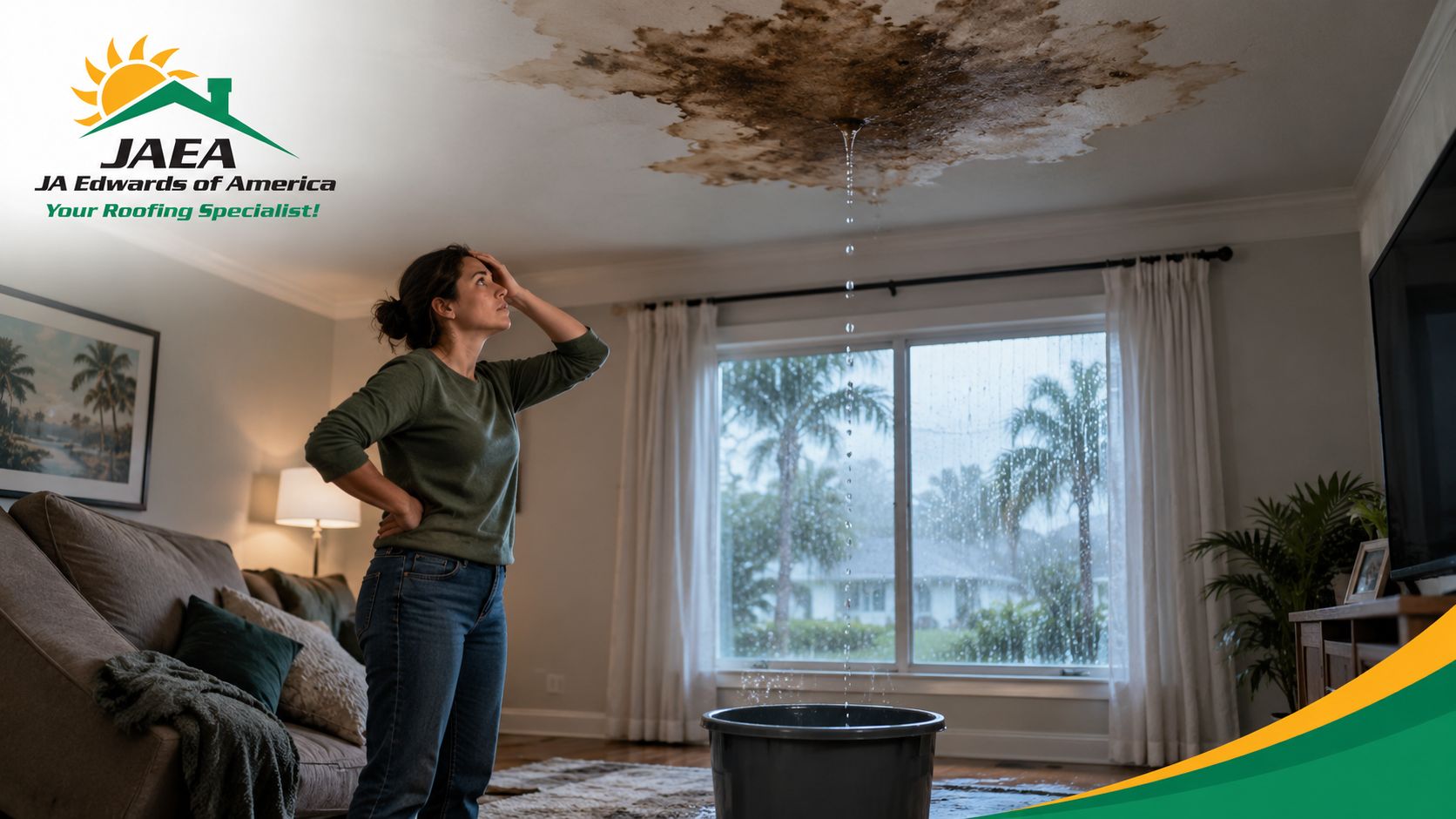
A ceiling stain is evidence of water movement, not a map of the roof failure. Water can enter around a shingle, tile, vent, flashing joint or membrane detail, then travel along decking or framing before it becomes visible indoors. That is why repeatedly sealing the area directly above the stain often turns into an expensive game of roofing whack-a-mole.
What to Do While the Leak Is Active
The first job is not exterior repair. It is reducing interior damage without creating a second emergency.
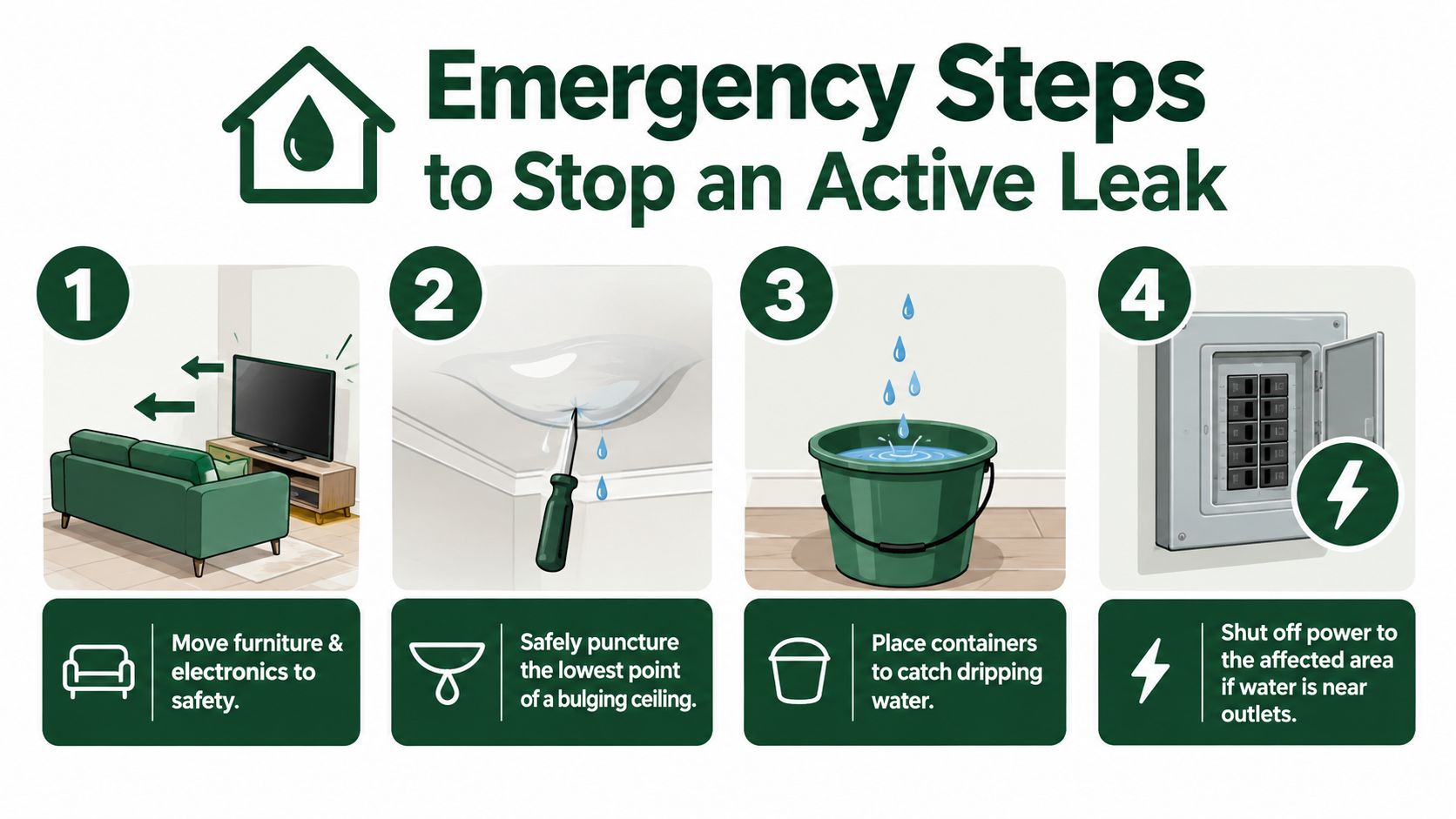
Move what can be damaged
Move furniture, electronics, rugs and other belongings away from the wet area. Place a container under active drips and use towels to limit water spreading across the floor.
Treat electricity seriously
If water is near a light fixture, outlet, ceiling fan or wiring, keep clear of the wet area. Shut off power only if the electrical panel can be reached safely without entering standing water.
Document what you see
Photograph the ceiling stain, active water, wet drywall and any visible exterior storm damage from a safe location. If the leak followed a storm, those photos can also help document the condition before cleanup or temporary work changes it.
Do not climb onto a wet roof
A wet, wind-damaged or steep roof is not the place to improvise a repair. Exterior tarping and roof access should wait until conditions are safe and the person performing the work can use appropriate fall protection.
For a shorter first-response checklist, see our guide to what to do during the first hour of a roof leak.
Finding the Leak Is Usually Harder Than Patching It
Where the ceiling gets wet and where the roof lets water in are often two different locations. Water follows gravity, but it also follows decking, framing, insulation, penetrations and other paths through the assembly.
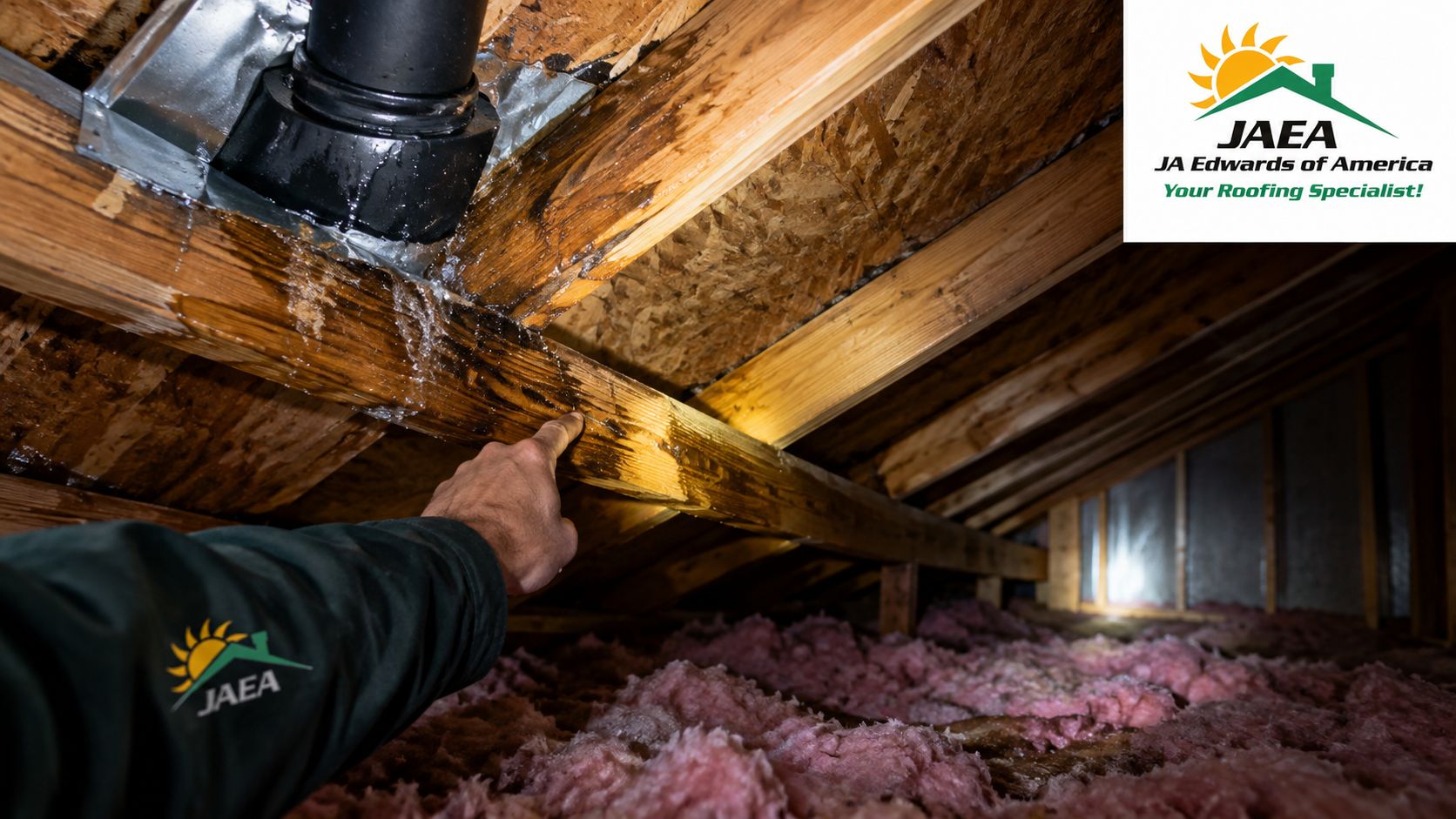
When attic access is safe, an inspection can look for wet insulation, staining on sheathing or framing, moisture around roof penetrations and other evidence that helps narrow the source. Outside, the roof area upslope of that evidence should be checked for damaged covering, flashing, penetrations, valleys, walls and transitions.
Common leak sources include:
- Missing, lifted, cracked or displaced roofing material.
- Pipe boots and plumbing vent flashing.
- Chimney, wall and step flashing.
- Skylight flashing and transitions.
- Valleys and roof-to-wall intersections.
- Exposed or backed-out fasteners.
- Low-slope membrane seams and penetrations.
- Water entering somewhere other than the roof, including plumbing or HVAC-related moisture.
If a stain is near a bathroom, wall cavity or plumbing line, it is worth ruling out a non-roof source before opening the roofing assembly. This plumbing leak detection guide is useful for that distinction.
Flashing is one of the most common places to investigate because it manages transitions where roofing materials meet walls, chimneys, vents and other interruptions. Our guide to roof flashing explains how those details work and why covering a failed joint with another layer of caulk may not solve the problem.
Temporary Protection vs. Permanent Roof Repair
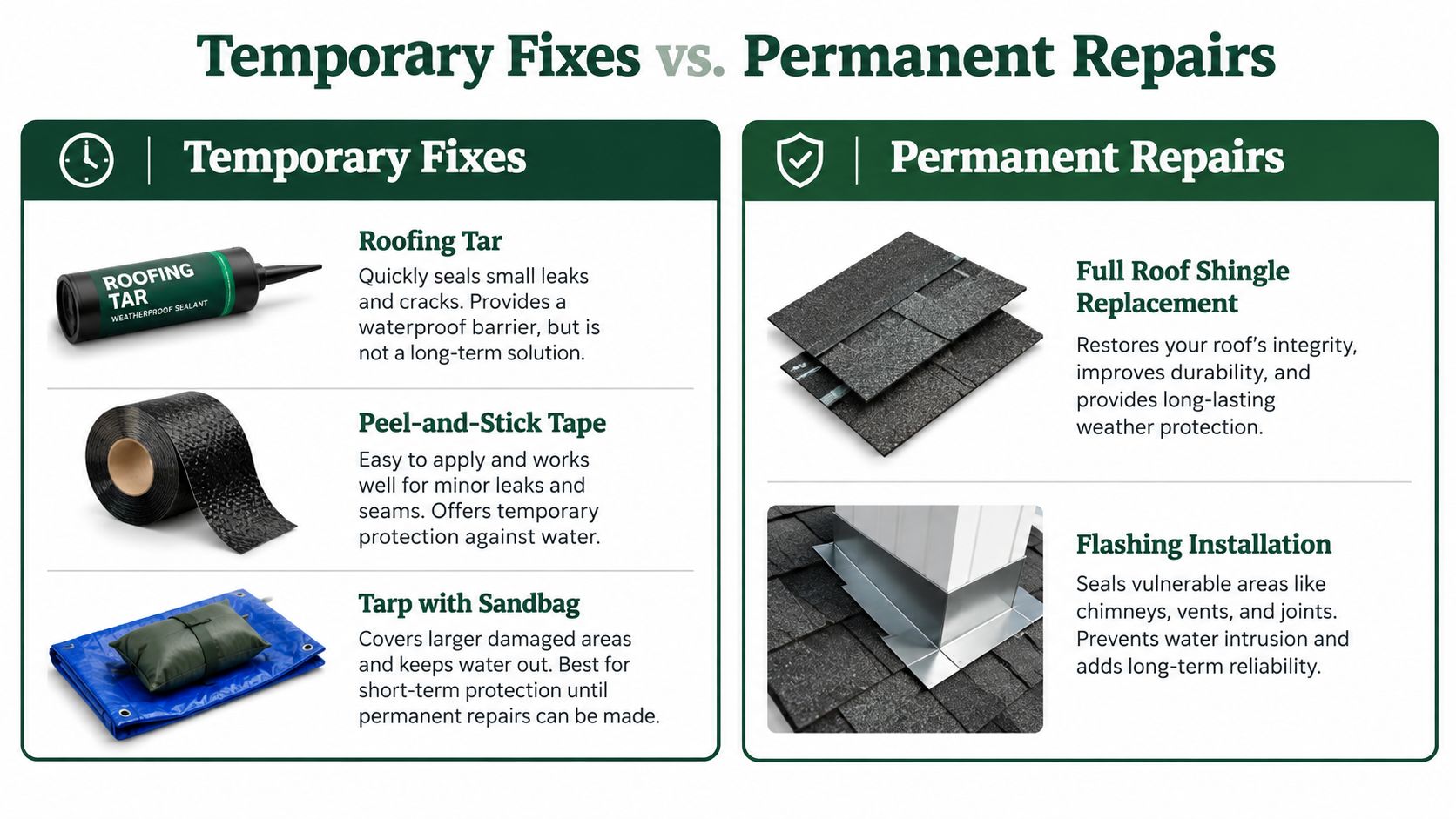
Temporary measures and permanent repairs have different jobs. Temporary work is about limiting additional water intrusion until the source can be properly repaired. Permanent work restores the roof system so it can shed water as designed.
| Condition | Temporary Protection | Permanent Repair Direction |
|---|---|---|
| Missing or lifted asphalt shingle | Temporary weather protection when safe and necessary. | Replace damaged roofing and inspect the surrounding fasteners, underlayment and deck. |
| Failed pipe boot or penetration flashing | Compatible temporary seal only when appropriate. | Replace or rebuild the failed flashing/boot detail and restore surrounding roofing. |
| Chimney or wall flashing leak | Temporary protection may reduce intrusion. | Repair or replace the actual step, apron or counterflashing assembly as required. |
| Single-ply or low-slope membrane damage | Emergency cover or compatible temporary membrane repair. | Use a compatible manufacturer-approved repair method for the actual membrane system. |
| Soft or deteriorated decking | Protect the area from additional water. | Open the affected area, replace damaged substrate as needed and rebuild the roofing layers above it. |
The exact material and repair method depend on the roofing system. Asphalt shingles, tile, metal, modified bitumen, TPO and EPDM are not interchangeable systems, and neither are their sealants, flashing methods or membrane repair products.
Why Another Bead of Caulk Often Fails
Sealant has a legitimate role in roofing. It is just not a replacement for failed flashing, damaged membrane, deteriorated decking or incorrectly installed roofing.
If the failure is a cracked pipe boot, corroded flashing base, open membrane seam or damaged shingle, burying the area under sealant may temporarily change where the water travels without restoring the assembly. Florida heat, UV exposure, humidity and repeated rain make that especially unforgiving.
On a localized repair, the roofer should be able to explain what component failed and what is being restored. If the explanation is simply “we are putting more tar on it,” that is not much of a diagnosis.
When a Localized Repair Makes Sense
Repair may make sense when
- The leak source is clearly identified.
- Damage is concentrated in one roof area or detail.
- The surrounding roofing remains serviceable.
- Compatible replacement material is available.
- The deck and underlayment can be restored without uncovering broader deterioration.
A broader scope may make more sense when
- The same leak keeps returning after prior repairs.
- Multiple areas are leaking or failing.
- Decking is soft or deteriorated across a larger section.
- The roofing system is broadly deteriorated rather than locally damaged.
- Opening the repair area reveals failure extending beyond the visible symptom.
If the question has moved beyond one leak, use our guide to roof repair vs. roof replacement.
For storm-related emergency protection, see our guide to emergency roof tarping in Florida. Tarping is mitigation, not a permanent roofing system.
Florida Roof Repair Code: What the 25% Rule Actually Means
As of September 2026, Florida is still operating under the 8th Edition (2023) Florida Building Code, which became effective December 31, 2023. Materials and repair methods must be compatible with the roofing system and applicable code requirements, and permit requirements can depend on the scope of work and local building department.
This is one reason blanket statements like “anything over 25% means a full roof replacement” are no longer accurate for many Florida roofs.
The current Florida Building Code also requires roof coverings and underlayment to be installed according to the applicable code provisions and manufacturer instructions. The exact underlayment method depends on the roof covering, slope, system and scope. A small leak repair should not be described as though every reroofing requirement automatically applies to every localized patch.
Official references: Florida Building Commission and Florida Statute 553.844.
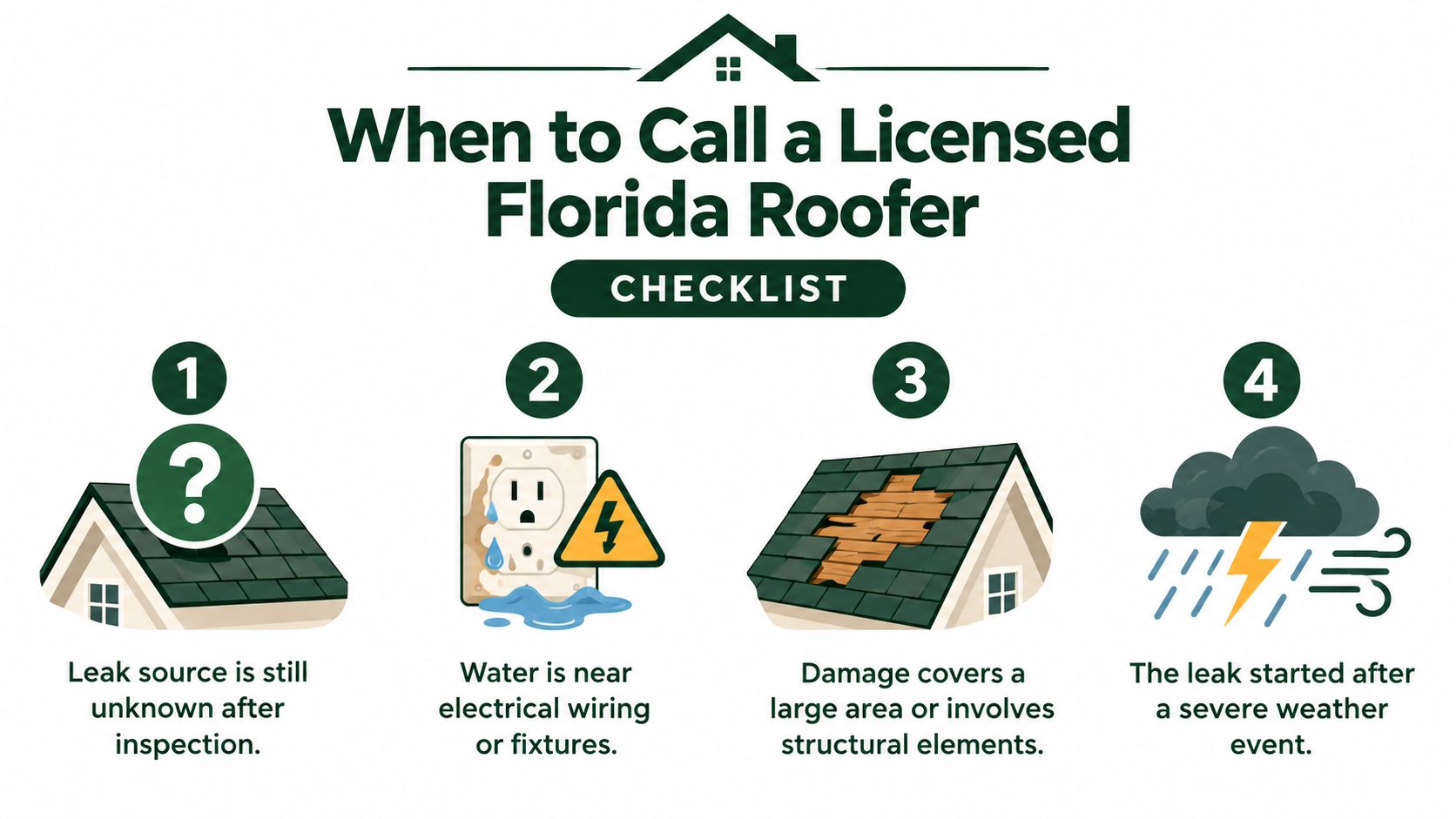
When to Stop Patching and Call a Licensed Roofer
Interior containment is one thing. Diagnosing and rebuilding an exterior roofing detail is another.
- The roof is wet, steep, damaged or difficult to access.
- Water is near electrical fixtures or wiring.
- The leak source is not obvious.
- Several rooms or roof areas show moisture.
- The same leak has returned after previous repairs.
- Tile, metal or low-slope membrane roofing is involved.
- Flashing around a chimney, skylight or wall transition has failed.
- Decking feels soft or deterioration is visible.
- The roof is under a manufacturer or workmanship warranty.
- The repair may require opening a larger roof section or pulling a permit.
Before hiring a contractor, verify the Florida license, insurance and repair scope. The written proposal should identify what is being repaired, what material is being used, whether damaged decking is included or priced separately, and who is responsible for any permit required by the local jurisdiction.
The Florida DBPR license lookup can be used to verify a contractor. This roofing contractor selection guide also provides additional hiring questions.
What a Professional Leak Inspection Should Give You
A useful inspection should do more than identify where water appeared inside. It should connect the interior evidence to the exterior roof condition and explain the repair scope.
- Photos of the suspected entry point and surrounding roof area.
- Photos of interior or attic evidence when accessible.
- Identification of the failed roofing component or detail.
- Condition of nearby roofing material.
- Decking or underlayment concerns where visible or accessible.
- A clear repair recommendation.
- An explanation of when repair is reasonable and when broader replacement should be considered.
JA Edwards of America provides free standard roof inspections and localized residential roofing repair and replacement services across our Florida markets.
Have a Leak That Keeps Coming Back?
JA Edwards can inspect the roof, trace the likely entry point, document what we find and tell you whether a targeted repair makes sense before the problem turns into another round of caulk and optimism.
Schedule a Free Roof InspectionFrequently Asked Questions About Patching Roof Leaks
Can I patch a roof leak from inside the attic?
Interior plastic or another containment measure may help redirect water temporarily, but it does not restore the failed exterior roofing, flashing or membrane. The exterior source still needs to be found and repaired.
Can I use roofing cement to stop a leak?
Roofing cement can be useful in certain compatible details and temporary situations, but it should not be treated as a universal repair. Failed flashing, split boots, damaged shingles, membrane seams and deteriorated decking often require component-level repair.
Why is the ceiling stain not directly below the roof leak?
Water can travel along roof decking, rafters, framing, insulation and penetrations before it becomes visible. The stain identifies where water emerged into the room, not necessarily where it entered the roof.
Does Florida's 25% rule mean I need a full roof replacement?
Not automatically. Florida Statute 553.844 provides an exception for roofing systems or roof sections built, repaired or replaced in compliance with the 2007 Florida Building Code or later. For qualifying roofs, only the affected portion must be brought to the current code even when 25% or more is involved.
What Florida Building Code is currently in effect?
As of September 2026, the 8th Edition (2023) Florida Building Code remains in effect. It became effective December 31, 2023. Materials for the 9th Edition (2026) are available, but it is not yet the active statewide code.
When should a leak be repaired instead of replacing the roof?
A targeted repair can make sense when the source is local, the surrounding roof remains serviceable and the affected assembly can be properly restored. Repeated leaks, broad deterioration, multiple failed areas or widespread decking problems can shift the decision toward a larger repair or replacement scope.
Should I climb onto the roof during a storm to install a tarp?
No. A wet, windy or damaged roof is unsafe. Protect the interior and wait for safe conditions or professional help before exterior roof access.
Does JA Edwards offer roof leak inspections?
Yes. JA Edwards of America provides free standard roof inspections across Orlando, Tampa, Jacksonville and Port St. Lucie, with photo documentation and a repair or replacement recommendation based on the roof condition.
Official & Technical Sources
Florida Building Commission — Current Florida Building Code
Florida Statute 553.844 — Windstorm Loss Mitigation and 25% Roof Rule Exception
Florida DBPR — Verify a Contractor License