
Does Homeowners Insurance Cover Roof Replacement in Jacksonville, FL?

Jacksonville sits at a geographic crossroads that no other Florida city quite shares. Atlantic nor’easters roll in from the east. Tropical systems track up the coast from the south. And a large portion of the city’s housing stock dates back to the 1960s, 70s, and 80s, which means a significant number of roofs are either already past their useful life or approaching it fast.
When a storm causes damage, the first call most homeowners make is to their insurance company. What happens next depends almost entirely on factors most people don’t know about until they’re already in the middle of a claim.
This guide breaks down how Florida homeowners insurance actually works when it comes to roof replacement, what Jacksonville homeowners specifically need to watch out for, and how to give yourself the best chance of a successful claim.
The Short Answer
Homeowners insurance covers roof damage caused by a sudden, covered event. That means wind, hail, falling trees, lightning, and fire are generally covered. What is not covered is wear and tear, aging, poor installation, or neglect.
In Florida, the distinction matters more than in most other states because of how aggressively insurers have started scrutinizing roof age and condition before writing or renewing policies. The Florida Office of Insurance Regulation has documented how carriers are now requiring inspections for roofs over 15 years old, and some are declining coverage entirely if a roof shows insufficient remaining useful life.
If your roof is relatively new and was damaged by a storm, your claim will likely go through. If your roof is older, the process gets more complicated.
What Florida Homeowners Insurance Typically Covers
Wind and Hurricane Damage
Florida policies cover wind damage, but there is a separate wind/hurricane deductible that applies specifically to named storms. This deductible is usually calculated as a percentage of your home’s insured value, typically 2% to 5%, which on a $350,000 home comes out to $7,000 to $17,500 out of pocket before insurance pays anything.
For damage caused by a storm that was not officially named, a standard deductible applies instead, which is usually much lower.
The National Hurricane Center maintains storm classification records that directly affect which deductible applies to your claim. It is worth knowing whether the event that damaged your roof was classified as a named storm before you file.
Hail Damage
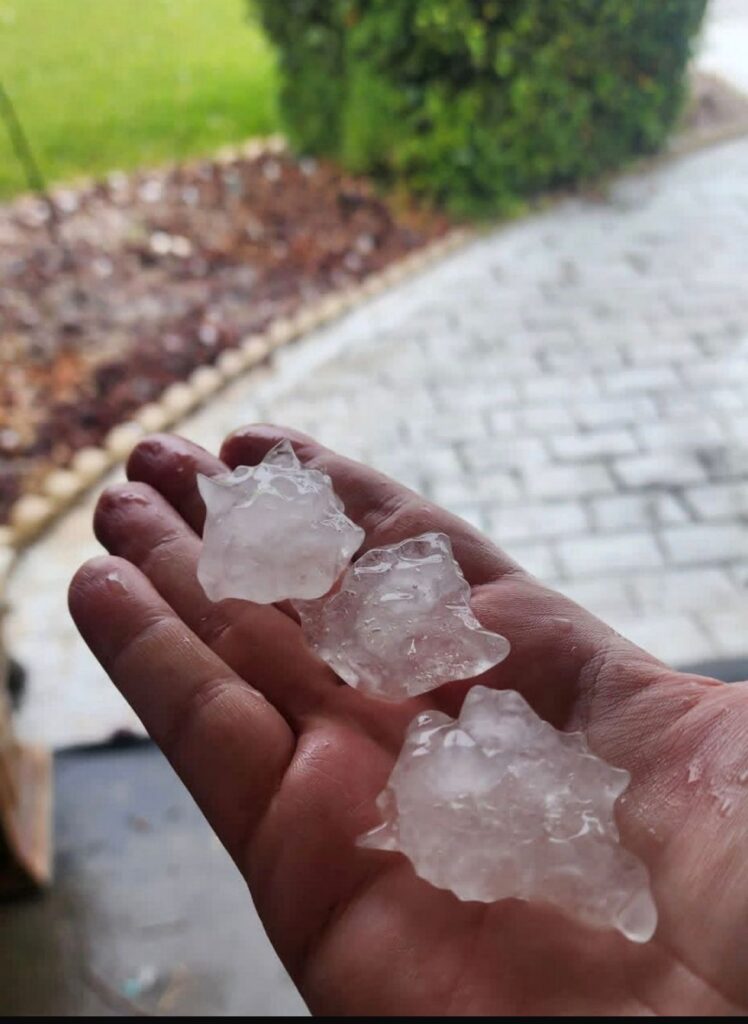
Hail damage is covered under most Florida policies, though it falls under your standard deductible rather than the wind/hurricane deductible in most cases. Jacksonville sees hail events more frequently than coastal South Florida due to its inland position and the convective storm patterns that develop over North Florida and Southeast Georgia.
Hail damage is also one of the more commonly disputed claim types because the damage is not always obvious from the ground. Small impact marks on shingles, granule loss concentrated in certain areas, and dented gutters or flashing are signs that are easy to miss unless you know what to look for. A professional roof inspection after any significant hail event is the best way to document damage while it is still clearly storm-related.
Fallen Trees and Debris
If a tree or large branch falls on your roof during a storm, that is generally covered. If a neighbor’s tree falls on your roof, your own insurance typically covers the repair to your home, though the liability situation with the neighbor’s tree is a separate matter that depends on whether there was prior notice of a dead or diseased tree.
Lightning and Fire
Both are covered perils under standard Florida homeowners policies.
What Insurance Does Not Cover
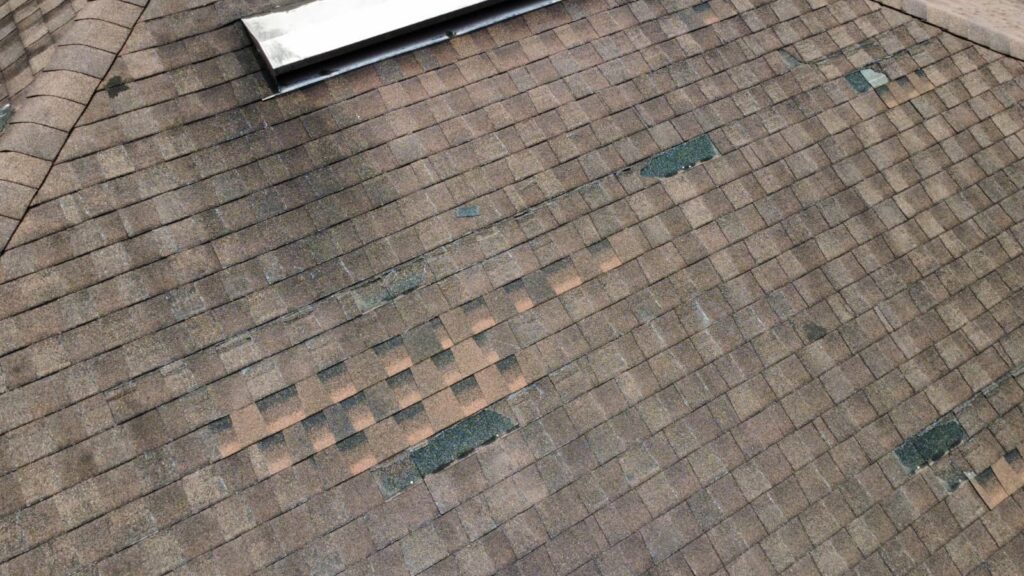
This is where a lot of Jacksonville homeowners run into problems.
Normal wear and tear. A 25-year-old shingle roof that has simply reached the end of its life is not a covered loss. Even if a storm triggers the final failure, the adjuster will look at the roof’s age and condition and may attribute the damage to pre-existing deterioration.
Neglect and lack of maintenance. Moss, algae, cracked caulking around flashing, broken gutters allowing water intrusion, and other maintenance-related issues are specifically excluded. Florida’s climate accelerates these issues faster than most states, so a roof that looks fine from the street may have years of deferred maintenance that an adjuster will point to when denying a claim.
Cosmetic damage only. Some policies exclude coverage for damage that affects only the appearance of the roof without compromising its function. This became a more significant issue after the 2022 and 2023 insurance reform legislation in Florida.
Improper installation. If the damage relates to how the roof was originally installed rather than a sudden event, it is not covered.
The 15-Year Rule and What It Means in Jacksonville
Florida law allows insurers to require an inspection for any roof that is 15 years or older before they will issue or renew a policy. If the inspection determines the roof has less than three years of useful life remaining, the insurer can decline coverage or non-renew the policy.
Per Florida Statute 627.7011, insurers are required to offer coverage for the actual cash value of the roof if the homeowner cannot get full replacement cost coverage due to roof age. Actual cash value factors in depreciation, which means the payout on an older roof is significantly lower.
This matters in Jacksonville because of the age of the housing stock. Large portions of neighborhoods like Ortega, Murray Hill, Arlington, and San Marco have homes built in the 1960s through 1980s. Even homes that have had one roof replacement may be on their second or third shingle roof, and the current roof may be 15 to 20 years old.
If your roof is in that range, getting a roof inspection before you file a claim or before your policy renews can tell you exactly where you stand.
How the Claims Process Works in Florida
Step 1: Document the Damage
Before you call your insurer, photograph everything. Do this the same day as the storm event, if possible. Roof damage claims are time-sensitive because the adjuster will look at the timing of the damage relative to the weather event. A public adjuster from FAPIA can help document claims properly if you want independent representation.
Take photos of:
- The full roof from multiple angles
- Any damaged or missing shingles
- Interior water stains, wet insulation, or structural damage
- Gutters, downspouts, and flashing
- Any debris that may have caused impact damage
Step 2: Call Your Insurance Company
Report the claim as soon as possible. Florida law requires insurers to acknowledge a claim within 14 days and make a coverage decision within 90 days under Florida Statute 627.70131.
Step 3: Get a Professional Roof Inspection
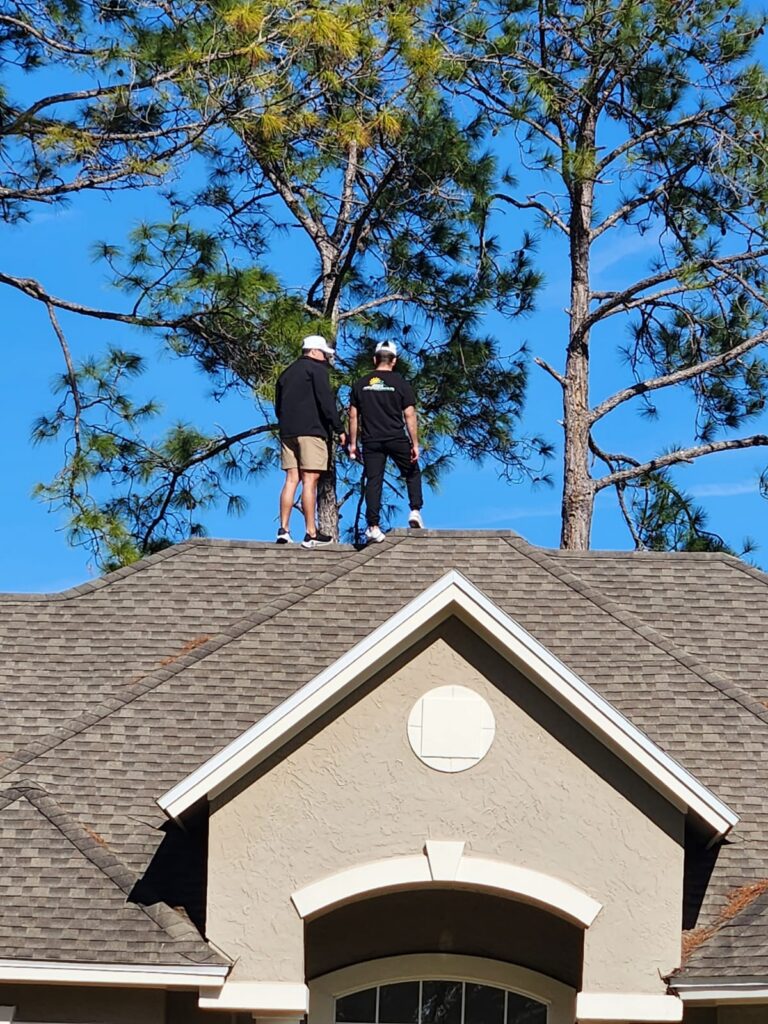
Your insurer will send their own adjuster, and that adjuster works for the insurance company. Getting an independent assessment from a licensed roofing contractor before or concurrent with the insurance adjuster’s visit gives you documentation that supports your claim rather than the insurer’s position.
The Florida Department of Business and Professional Regulation maintains the licensing database for roofing contractors in Florida. Always verify a contractor’s license before allowing them on your roof or accepting their assessment for an insurance claim.
Step 4: Review the Estimate
If the insurer approves your claim, they will issue an estimate based on their adjuster’s assessment. This estimate may be lower than actual repair costs. You have the right to negotiate, and a contractor familiar with Florida insurance claims can help identify line items that were missed or undervalued.
Step 5: Hire a Licensed Contractor
Once you have claim approval, you can proceed with the roof replacement. Make sure the contractor pulls the proper permits through the City of Jacksonville Building Inspection Division. Unpermitted work creates problems with future insurance claims and can affect your ability to sell the home.

What Happens If Your Claim Is Denied
Denials happen, and they do not always mean the end of the road.
Request a written explanation. Your insurer is required to provide one.
Get a second opinion. If you believe the denial was incorrect, have another licensed contractor document the damage. Photo and written documentation from a qualified professional carries weight in a dispute.
File a complaint with the Florida OIR. The Florida Office of Insurance Regulation handles consumer complaints and has authority to investigate claim handling disputes.
Hire a public adjuster. A licensed public adjuster advocates for the homeowner in a claim dispute. They work on a percentage of the settlement, so they have a direct incentive to maximize your payout.
Consider appraisal or litigation. Florida policies contain an appraisal clause that allows for a neutral third-party appraisal when you and the insurer disagree on the amount of a claim. An attorney specializing in insurance claims can advise on whether litigation makes sense for your situation.
Citizens Insurance in Jacksonville
A large number of Jacksonville homeowners carry policies through Citizens Property Insurance Corporation, Florida’s state-backed insurer of last resort. Citizens has specific rules around roof coverage that differ from private carriers.
For homes with roofs over 25 years old that have not been inspected and shown to have at least five years of remaining useful life, Citizens will not provide replacement cost coverage. You will be covered for actual cash value only, which accounts for depreciation and is typically significantly less than the full replacement cost.
If you have Citizens coverage and your roof is aging, a proactive inspection and any needed repairs may help you retain or upgrade your coverage level before you need to file a claim.
How a New Roof Affects Your Insurance Premium
Replacing an older roof with a new one that meets current Florida Building Code standards can meaningfully reduce your insurance premium. This happens for two reasons: the new roof is lower risk, and a new roof with features like secondary water resistance (SWR) and specific fastener patterns may qualify your home for wind mitigation credits.
A wind mitigation inspection after your new roof is installed documents the features that qualify for those credits. The Florida Department of Financial Services has standardized the wind mitigation form that insurers use to calculate your discounts. Many Jacksonville homeowners see premium reductions of $800 to $2,000 or more per year after a roof replacement and wind mitigation inspection.
Over a 10-year period, those savings can offset a significant portion of the roof replacement cost.
Storm Damage Repair vs. Full Replacement: What Insurance Prefers
Insurers generally want to pay for the least expensive repair that restores function. In practice, that can mean they approve a partial repair when a full replacement is warranted, especially on older roofs.
Florida’s matching statute has historically required insurers to replace damaged areas with materials that match the undamaged portions in color, quality, and appearance. This has been a contested area in Florida insurance law, and you should review your specific policy language carefully. A contractor experienced with insurance claims in Jacksonville can advise on what to push back on.
If your roof sustained storm damage and you are not sure whether a repair or replacement is appropriate, an inspection is the right starting point.
Frequently Asked Questions
Does homeowners insurance cover roof replacement in Jacksonville, FL?
Yes, if the damage was caused by a covered event like wind, hail, a falling tree, or lightning. Damage from normal aging, neglect, or pre-existing wear and tear is not covered. The condition and age of your roof at the time of the event significantly affects how the claim is handled.
What is the wind/hurricane deductible in Florida?
Florida homeowners policies have a separate deductible for wind and hurricane damage, typically 2% to 5% of your home’s insured value. On a $300,000 home, that is $6,000 to $15,000 out of pocket before insurance pays anything. This applies when damage occurs from a named tropical storm or hurricane.
Can my insurer cancel my policy because of my roof?
Yes. Florida law allows insurers to non-renew a policy if a roof inspection shows the roof has less than three years of useful life remaining. Insurers can also require an inspection for any roof 15 years or older before issuing or renewing coverage.
What is actual cash value vs. replacement cost coverage for roofs?
Replacement cost coverage pays for a new roof at current material and labor costs. Actual cash value subtracts depreciation, so an older roof gets a much smaller payout. Homeowners with older roofs may find their policy has shifted to actual cash value coverage, which significantly reduces what insurance will pay.
Should I get a roof inspection before filing a claim?
Yes. Having independent documentation of the damage before or concurrent with the insurance adjuster’s visit gives you evidence that supports your claim. It also establishes a clear record of the roof’s condition at the time of the event, which helps if the claim is later disputed.
How long does a roof insurance claim take in Florida?
Florida law requires insurers to acknowledge a claim within 14 days and make a coverage decision within 90 days. In practice, straightforward claims can resolve in 30 to 60 days. Disputes, additional documentation requests, or appraisal proceedings extend the timeline.
Does a new roof lower my homeowners insurance in Florida?
In most cases, yes. A new roof that meets current Florida Building Code standards reduces the insurer’s risk. If the roof qualifies for wind mitigation credits, the premium reduction can be significant. A wind mitigation inspection after the new roof is installed is the formal step that unlocks those discounts.
What if my insurance claim for roof damage is denied?
Request a written explanation of the denial. Get an independent inspection from a licensed contractor. File a complaint with the Florida Office of Insurance Regulation if you believe the denial was improper. A licensed public adjuster can represent you in negotiations, and the appraisal clause in your policy provides a process for resolving disputes over claim amounts.
JA Edwards of America has been replacing roofs in Jacksonville and throughout Northeast Florida since 2004. We are a GAF Master Elite and President’s Club certified contractor with a BBB A+ rating. If you have storm damage or want an inspection before your policy renews, call our Jacksonville office at (904) 367-2913 or schedule online at jaeofamerica.com.