
Is Your Roof Ready for Hurricane Season? What Florida Homeowners Need to Check Now
A Florida roof is ready for hurricane season when it has no missing, cracked, or lifting shingles; all flashing around chimneys, vents, and skylights is sealed and flat against the surface; the soffit and fascia are intact with no rot or separation; gutters are secured and clear of debris; and the attic shows no signs of water intrusion or daylight through the decking. Any roof older than 15 years with one or more of these issues should be inspected by a licensed contractor before June 1. A free professional inspection takes less than an hour and gives you a written report you can submit to your insurance carrier if storm damage occurs later.

Hurricane season officially starts June 1. If you’re reading this in late May or early June, you’re at exactly the right moment to do something about your roof before the season gets going.
Most homeowners in Florida know they should “check the roof” before hurricane season. Almost none of them actually do it until a named storm is 48 hours out, and by then every roofing contractor in the state is either already booked or triaging emergency calls. The time to find a problem is now, when you can actually get it fixed.
This guide covers what to look for, what actually matters when a storm hits, and what’s worth calling a professional about versus what you can assess yourself from the ground.
Why the Roof Is Your First Line of Defense
When a hurricane or tropical storm moves through Florida, the most common cause of serious interior damage isn’t the storm surge or the flooding. It’s roof failure. Once water gets through a compromised roof, it spreads fast into walls, insulation, electrical systems, and flooring. A roof that fails during a storm can turn a manageable insurance claim into a six-figure reconstruction.
The Florida Building Code requires roofs built or replaced after 2002 to meet specific wind resistance standards, including the Miami-Dade Product Approval requirements for high-velocity hurricane zones. But code compliance at installation doesn’t mean the roof is still performing to that standard years later. UV degradation, thermal cycling, and normal wear all reduce a roof’s wind resistance over time.
What holds a shingle roof together during high winds isn’t just the nails. It’s the combination of proper fastener count and placement, the integrity of the underlayment, the seal strips on each shingle course, and the condition of the flashing at every penetration point. When any one of those systems is compromised, the roof becomes vulnerable at that spot first.
The Pre-Hurricane Season Checklist
You can complete most of this inspection from the ground using binoculars. You do not need to get on the roof to do a preliminary assessment, and if you’re not experienced with rooftop work, you shouldn’t.
1. Shingle Condition

Look for any shingles that are:
- Missing entirely (gaps in the field)
- Curling at the edges or corners
- Cracked through the surface granules
- Lifting at the seams on the downslope edge
One or two problem shingles in isolation are usually a repair situation. A pattern of curling or granule loss across a significant section of the roof is a replacement conversation, especially if the roof is over 15 years old.
Florida’s UV index is consistently among the highest in the country. Asphalt shingles lose granules gradually every year; those granules are what protect the underlying fiberglass mat from UV breakdown. Once granule loss is significant, the shingle has limited life left regardless of how it looks at a glance.
2. Flashing at Every Penetration Point
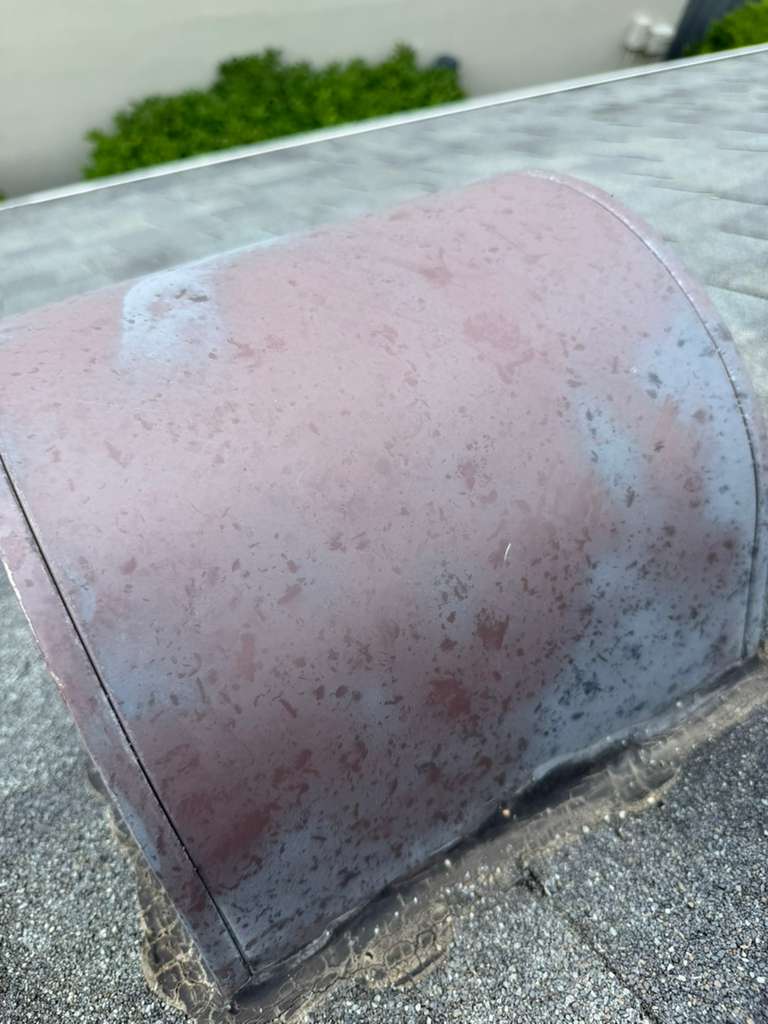
Flashing is the metal material that seals the joints where the roof surface meets a vertical surface: chimneys, plumbing vents, HVAC curbs, skylights, and roof-to-wall transitions. It’s also the most common point of failure in a storm.
From the ground, look for:
- Flashing that appears lifted, bent, or separated from the surface it seals
- Rust or discoloration around any penetration
- Visible gaps or cracks in the sealant line
If you have a chimney, pay particular attention to the step flashing on the sides and the counter-flashing at the top. These joints experience the most movement due to thermal expansion and are the first to separate on older roofs.
3. Soffit and Fascia
The soffit is the underside of your roof overhang; the fascia is the vertical board at the roofline edge where gutters attach. Both are visible from the ground.
Look for any section that appears:
- Rotted, soft, or discolored
- Separated from the structure
- Showing holes or gaps (even small ones)
In high winds, air pressure builds up under the roof deck and looks for a way in. Any gap in the soffit gives that pressure a path, and once wind gets under the deck, it can lift the entire roof assembly from the inside out. This is exactly what happened to thousands of homes in Central Florida during Hurricane Ian in 2022. The soffit fails first, and then the deck follows.
4. Gutters and Drainage
Gutters that are full of debris or pulling away from the fascia become projectiles in high wind. They also back up during the heavy rain that comes with tropical systems, which can force water up under the roof edge.
Before hurricane season, clean the gutters completely, check that all downspouts are clear and directed at least four feet away from the foundation, and confirm that the gutter brackets are secure. If sections are sagging or pulling away from the fascia, that’s a repair that takes less than an hour and costs almost nothing.
5. Attic Inspection
Go into the attic on a sunny day and look for two things: daylight and water stains.
Daylight coming through the roof deck, even small pinpoints, means there are gaps in the sheathing or missing fasteners. Water stains on the decking or rafters indicate past leaks that may have compromised the wood structure. Soft spots in the decking are a serious problem, because soft decking means the nails holding the shingles have less holding power.
If your attic has insulation covering the floor, you may not be able to see the decking directly, but water stains on the rafters are usually visible from the hatch.
What Your Insurance Company Wants to See
Florida homeowners insurance has been through dramatic changes over the past several years. Citizens Property Insurance, which covers a significant share of policies in Central and South Florida, now requires roof inspections before renewing policies on homes with roofs over a certain age, and has denied renewals on roofs with documented wear.
If a storm damages your roof and you file a claim, your insurance adjuster will assess the pre-storm condition of the roof. A roof that was already in poor condition before the storm gives the carrier grounds to dispute the claim or reduce the payout on the basis of depreciation and pre-existing damage.
Having a professional inspection report on file before hurricane season does two things: it documents the condition of your roof at a specific date, and it identifies any issues you can address before a storm occurs. If you fix a problem documented in an inspection report and a storm damages the area a month later, you have a much cleaner claim than someone whose roof had undocumented problems.
The Florida Office of Insurance Regulation provides consumer resources on property insurance claims, including documentation requirements and policyholder rights after a storm.
Age and Material: When to Have the Conversation About Replacement
Asphalt Shingles

Most asphalt shingle roofs in Florida have a realistic service life of 15 to 20 years under normal conditions. The Florida sun accelerates aging compared to roofs in northern climates, where the same product might last 25 to 30 years.
If your shingle roof is 15 years or older and you haven’t had a professional inspection in the last 12 months, schedule one before storm season. A 17-year-old roof that otherwise looks fine from the ground can have compromised seal strips and degraded underlayment that won’t survive a sustained 90 mph wind event.
Tile Roofing

Concrete and clay tile roofs are common in South Florida and along the Treasure Coast, and they’re significantly more wind-resistant than shingles when installed correctly. The tiles themselves can survive hurricane-force winds; the issue is usually the underlayment beneath them, which still degrades over time. A tile roof inspection should specifically evaluate the underlayment condition, because replacing only the underlayment on a tile roof is a fraction of the cost of replacing it after storm damage forces the issue.
Metal Roofing

A properly installed standing seam metal roof is among the most wind-resistant options available for Florida homes. Metal roofs in good condition with secure fasteners and intact sealant at all penetrations perform well in high wind. The inspection focus for metal is on the fasteners, the sealant at the ridge cap and penetrations, and any sections that may have experienced impact from previous storms.
What to Do If You Find a Problem
Minor issues like a few missing shingles, a small section of lifted flashing, or gutters that need reattachment are repairs that can be scheduled and completed within a week or two in normal conditions. During storm season, response times extend significantly once active storm threats develop.
If your inspection reveals more significant issues, the timing matters. A full roof replacement in Florida typically takes one to two days for the installation itself, but the permitting, material ordering, and scheduling process can take two to four weeks. Starting that conversation in early June gives you time to complete the work before the peak of hurricane season, which runs from mid-August through mid-October.
The National Hurricane Center publishes tropical weather outlooks twice daily during hurricane season. Monitoring those outlooks gives you advance notice of developing systems, but by the time a named storm is in the Gulf, the window to address roofing problems has already closed.
GAF Master Elite Certification and What It Means for Your Roof

Not all roofing contractors in Florida carry the same credentials, and the difference matters when it comes to warranty coverage.
GAF is the largest roofing manufacturer in North America. Their Master Elite certification is held by less than 2% of roofing contractors in the country and requires passing a licensing verification, maintaining adequate insurance, and demonstrating a commitment to ongoing training. Master Elite contractors can offer the GAF Golden Pledge warranty, which is the only roofing warranty that covers both materials and the contractor’s workmanship, backed by GAF directly.
JA Edwards of America holds GAF Master Elite status and has earned the President’s Club 3-Star designation, which is the highest tier of GAF recognition. For a homeowner with a valid Golden Pledge warranty, storm damage documentation and the claims process are significantly more straightforward than with a standard manufacturer’s warranty.
How a Professional Inspection Works
A professional roof inspection from a licensed Florida contractor takes 30 to 60 minutes. The inspector goes on the roof, evaluates shingle or tile condition, checks all flashing points, inspects the ridge cap, assesses drainage, and looks at the attic if access is available.
At the end of the inspection, you receive a written report documenting the findings. If repairs are needed, the report will describe what was found, where it’s located, and the recommended course of action. If no repairs are needed, the report documents that the roof was in acceptable condition as of that date, which has value for insurance purposes.
JA Edwards of America offers free roof inspections across Central and South Florida, including Orlando, Tampa, Jacksonville, and Port St. Lucie. You can schedule an inspection in Orlando or call any of our offices directly.
Frequently Asked Questions
How do I know if my roof is hurricane-ready?
A hurricane-ready roof has no missing, cracked, or lifting shingles; all flashing is sealed and flat against the surface; the soffit and fascia are intact with no gaps; gutters are clear and secured; and the attic shows no signs of water intrusion. A professional inspection is the most reliable way to confirm this, particularly for roofs older than 10 years.
How old does a roof need to be before it’s a problem in hurricane season?
There’s no single cutoff, but asphalt shingle roofs in Florida typically reach the end of their reliable service life between 15 and 20 years. A 15-year-old roof with no documented maintenance history should be professionally inspected before hurricane season every year.
Can I inspect my own roof before hurricane season?
You can complete a ground-level assessment using binoculars, checking for visible shingle damage, flashing issues, and soffit or fascia problems. That assessment has value, but it doesn’t replace a professional inspection for anything that requires getting on the roof or accessing the attic.
Does homeowners insurance require a roof inspection before hurricane season?
Florida homeowners insurance policies don’t universally require pre-season inspections, but many insurers, including Citizens, may require an inspection before renewal on older roofs. Having a recent inspection report on file also strengthens your position if you need to file a storm damage claim later.
What happens if I find damage right before a storm?
If a storm is already named and within 72 hours of your location, most contractors will not be able to schedule or complete repairs in time. Emergency tarping is an option to limit water intrusion until permanent repairs can be made after the storm passes. The better approach is to address known issues before the active storm season, when scheduling is still predictable.
How long does a roof replacement take in Florida?
The installation itself typically takes one to two days for a standard residential roof. The full process, including permitting, material ordering, and scheduling, usually runs two to four weeks from the initial inspection. Starting early in hurricane season gives you time to complete the work before the statistical peak of storm activity.
What’s the difference between a repair and a replacement?
A repair addresses isolated damage: a few missing shingles, a failed flashing joint, a section of damaged soffit. A replacement is warranted when damage is widespread, when the roof is near or past its expected service life, or when the cost of repairs approaches or exceeds a significant portion of full replacement cost. A licensed contractor can help you make that determination based on a physical inspection.