
How to Remove Shingles From a Roof in Florida
A proper roof tear-off removes the old shingles and underlayment down to the wood deck so the sheathing, fasteners, flashing, and penetrations can be inspected before a new roofing system is installed. For homeowners, the real question is not whether shingles can be pried up. It is whether the fall risk, Florida weather, debris, permitting, and possible hidden deck damage make a DIY tear-off worth it.
You're standing in the yard after a Florida storm, looking at curling shingle tabs, granules collected in the gutters, or a ceiling stain that wasn't there before. The next question is usually whether you can save money by taking shingles off a roof yourself, or whether the job needs a professional from the start.
A tear-off isn't prying up shingles and throwing them away. It removes the roofing layers down to the wood deck, where the condition of the sheathing, fasteners, flashing, and penetrations can be checked before a new system is installed. The waste also has to be contained, hauled, and processed responsibly. National data shows that about 10 million metric tons, or 11 million tons, of asphalt roofing shingle scrap are generated annually in the United States, with 90% to 95% coming from residential replacement tear-offs rather than manufacturing leftovers, according to Federal Highway Administration and EPA-linked roofing waste reporting.
Why Homeowners Start Thinking About Taking Shingles Off a Roof
The visible problem often starts the decision, but the hidden layers determine the scope. A roof may look worn from the ground because of missing tabs or dark streaks, yet the core question is what the old shingles have been hiding. Once the roof covering is removed, a roofer can inspect for soft spots, delaminated plywood or OSB, rusted fasteners, and rotted sections around vents, chimneys, skylights, and valleys.
That's the central difference between a proper tear-off and a quick overlay. A new roof installed over old shingles can conceal deck damage and leave the crew working from an uneven surface. Most residential building codes allow no more than two layers of asphalt shingles, and a roof with two existing layers must generally be torn down to the deck rather than receiving a third layer under the IRC framework, as explained in this roof overlay versus tear-off guide.
Practical rule: If the deck can't be inspected, the roof hasn't been fully evaluated.
A second layer may be allowed in some jurisdictions, but I rarely recommend it when the roof already shows age, storm damage, leaks, or uneven areas. It adds another material layer to a structure designed around a particular roof assembly, hides fastener and sheathing problems, and can make future repairs harder. If you're comparing replacement systems before making the decision, review this guide to the best roofing shingles for Florida homes.
The work begins before the first shingle comes loose. A contractor should determine how many layers are present, whether the roof deck is likely to need repairs, how debris will be controlled, and what Florida code requirements apply to the replacement system.
The Real Risks Behind a Roof Tear-Off
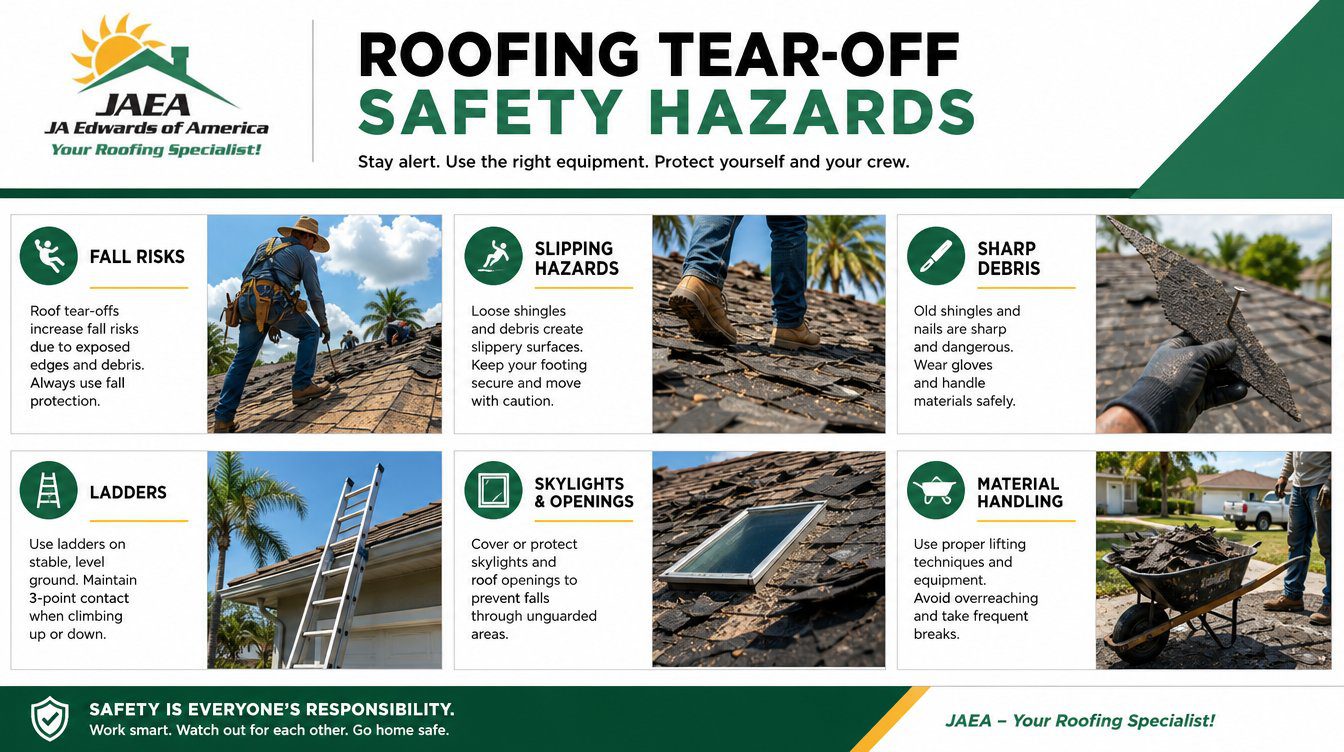
Taking shingles off a roof looks like demolition from the driveway. On the roof, it becomes a fall-protection job, a debris-control job, and an exposure-control job at the same time. Loose granules can make the surface slippery, old shingles may break into sharp pieces, and the deck can give way where water has damaged the sheathing.
A one-story ranch doesn't make the work automatically safe. A fall from a lower roof can still cause severe injury, especially when the worker is carrying a shovel, stepping backward, or moving across loose material. Skylights, roof openings, electrical cords, ladders, and falling debris create additional hazards that OSHA addresses in its guidance for reducing falls during residential re-roofing.
Older materials need a separate decision
Florida homes with older roofing assemblies deserve extra caution. Brittle three-tab shingles can shatter instead of lifting cleanly, sending sharp fragments across the work area. If a roof was built before 1980, asbestos testing is worth considering before demolition, especially when the material's composition and age are uncertain.
CDC field monitoring of five workers performing asbestos shingle tear-offs measured airborne asbestos concentrations of 0.04 to 0.16 fiber/cc, documented in the CDC field monitoring report. That doesn't mean every older roof contains asbestos, but it does mean dry, aggressive ripping can create a real exposure concern when legacy materials are involved.
A tear-off also leaves the home vulnerable to Florida's sudden rain. If the crew can't complete the next stage promptly, the exposed deck needs proper temporary protection. A delay, poorly secured tarp, or missed opening can turn a roof replacement into an interior water-damage event.
Thinking about a DIY tear-off to save money?
Before you climb onto the roof, get the deck, roof condition, and replacement scope evaluated. A free inspection can show you what may be hiding under those shingles before you take on the fall risk, disposal, and weather exposure yourself.
How Shingles Actually Come Off a Roof
A competent tear-off follows the roof's shape and gravity. The crew starts at the ridge, removes the ridge caps, and then works down in horizontal courses. Ridge caps cover the upper edges of the field shingles, so leaving them in place makes the lower removal less orderly and can trap nails and underlayment beneath them.
Once the caps are off, the roofer slides a roofing shovel or tear-off fork beneath the upper course. The tool lifts the shingles and felt or underlayment in manageable sections, often around 2 to 3 feet, as described in the proper way to remove roof shingles. Working downward lets gravity move the debris toward the eave and reduces repeated bending and prying.
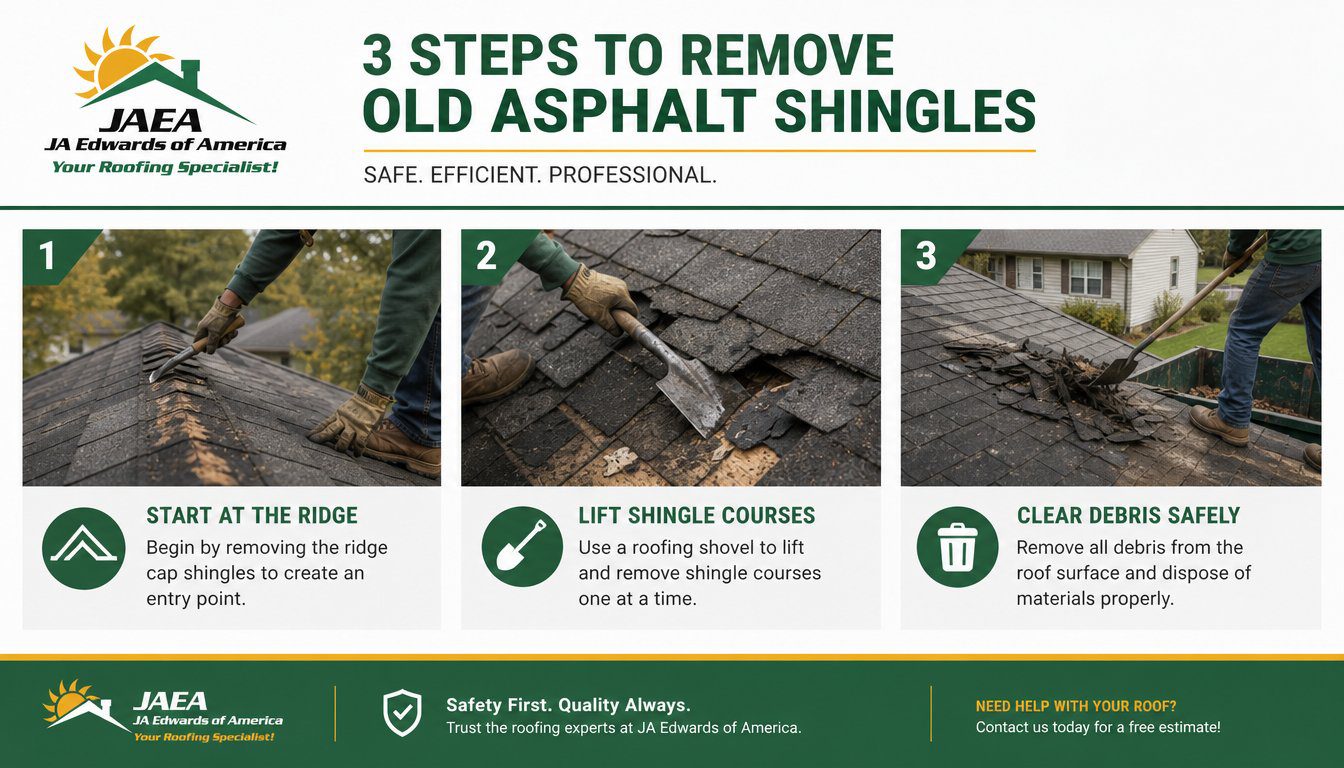
The shovel isn't the whole process. Around chimneys, skylights, valleys, and wall flashings, the roofer has to slow down so metal components and the deck aren't damaged. Fasteners must be fully removed or exposed and extracted. Leaving nails behind can puncture underlayment, interfere with new shingles, and create tire or foot hazards around the property.
The deck-reveal moment
After the shingles and underlayment are removed, the crew clears loose debris and examines the deck. High fasteners are driven flush or removed, damaged panels are marked, and soft areas are opened for closer inspection. The contractor confirms whether the original scope was realistic.
A tear-off estimate should account for that inspection, not just labor for lifting shingles. Homeowners comparing asphalt, metal, tile, and other systems can also use this resource to compare roofing material types. For a broader view of the replacement sequence, see JA Edwards' roof replacement process in Tampa, Florida.
Tools, Safety Gear, and Crew Setup
A homeowner who wants to handle a small amount of ground cleanup needs very different equipment from someone planning to remove roofing from the structure. For any work on the roof, the tools are only one part of the calculation. Fall protection, debris control, weather planning, and disposal arrangements matter just as much.
The basic tear-off equipment
A roofing shovel or tear-off fork is the primary tool for lifting shingle courses. A pry bar helps around flashing and tight edges, while a hammer and utility knife handle stubborn fasteners and cuts. You'll also need heavy-duty tarps, a magnetic nail sweeper, and a controlled way to move debris from the roof to the ground.
A wheeled debris chute or trailer can reduce scattered material, but it doesn't eliminate the need for people on the ground. Tarps should protect landscaping, siding, windows, air-conditioning equipment, and paved areas from falling pieces. The magnetic sweeper should be used repeatedly, not just at the end, because nails can travel well beyond the obvious debris pile.
Safety gear changes the answer
For roof work, the minimum setup should include:
Fall protection: Use an OSHA-compliant harness connected to a proper anchor designed for the roof and work being performed.
Footwear: Wear non-slip roofing footwear, not smooth-soled work shoes.
Hand and eye protection: Gloves and safety glasses protect against sharp shingle fragments and loose nails.
Clothing: Long sleeves limit contact with abrasive roofing material and hot surfaces.
Head protection: A hard hat helps protect workers below and anyone handling debris near the roof edge.
If one essential part of the fall-protection system is missing, the risk calculation changes. Don't substitute a rope tied to a random roof feature for a properly designed anchor.
Disposal is part of the job
A 2,000-square-foot Florida roof can produce 4 to 6 tons of shingle waste, according to the project data provided for this guide. That material needs a planned destination before removal begins. A roll-off dumpster sized to the job, often 20 to 30 cubic yards, may need driveway clearance, surface protection, and HOA approval, while the disposal facility's weight limit can affect the final charge.
Florida homeowners may have access to shingle recycling facilities that process tear-offs into asphalt pavement, as well as regional construction-and-demolition landfills. Recycling availability varies by area, and loads may need to be separated from wood, plastic, insulation, and other debris. Federal transportation research notes that most roofing shingle scrap is still landfilled, even though recycled material can be used in asphalt and other applications, as described by the Federal Highway Administration's roofing material research.
Contractors typically bundle loading, hauling, and disposal into the proposal. A DIY homeowner handles each part separately, so dumpster rental, labor, facility charges, and cleanup belong in an honest comparison. JA Edwards of America Roofing offers full roof replacement services that include tear-off, deck repairs, underlayment, and installation for residential and commercial properties.
Code, Permits, and Deck Prep in Florida
A legitimate Florida roof tear-off is governed by more than the shingle manufacturer's instructions. Most jurisdictions require a building permit before replacement work begins, and that permit can trigger inspections of the roof assembly, fastening, underlayment, and final installation. Requirements also vary by local wind exposure and the applicable Florida Building Code provisions.
The deck inspection is the point where hidden structural problems become visible. Crews look for soft areas, delamination, pulled fasteners, and rotted sheathing. Damaged panels must be replaced before the new underlayment and shingles go down, or the new roof will be installed over an unreliable base.
Underlayment requirements depend on roof slope. For asphalt shingle replacement, slopes from 2:12 up to 4:12 require two layers of underlayment, while slopes of 4:12 and steeper require one layer, according to the 2026 roofing guide. The permit process also brings the work into compliance with required deck protection, secondary water barriers, fastening patterns, and other assembly details.
Homeowners often ask whether insurance will pay to replace damaged decking. Coverage depends on the policy, cause of damage, exclusions, and the carrier's claim decision. This explanation of how to cover roof decking in a claim can help frame the question, but it isn't a substitute for the policy language or the insurer's determination. JA Edwards can document roof conditions and help explain the scope, but coverage decisions belong to the insurance carrier. Review the relevant Florida roof replacement rule before assuming a repair or replacement follows a simple statewide formula.
See damage after a storm? Document it before removal.
Once shingles come off, the original condition changes. JA Edwards can inspect the roof, photograph visible damage, and explain whether the next step is a repair, tear-off, or full replacement.
When to Call a Licensed Florida Roofing Contractor
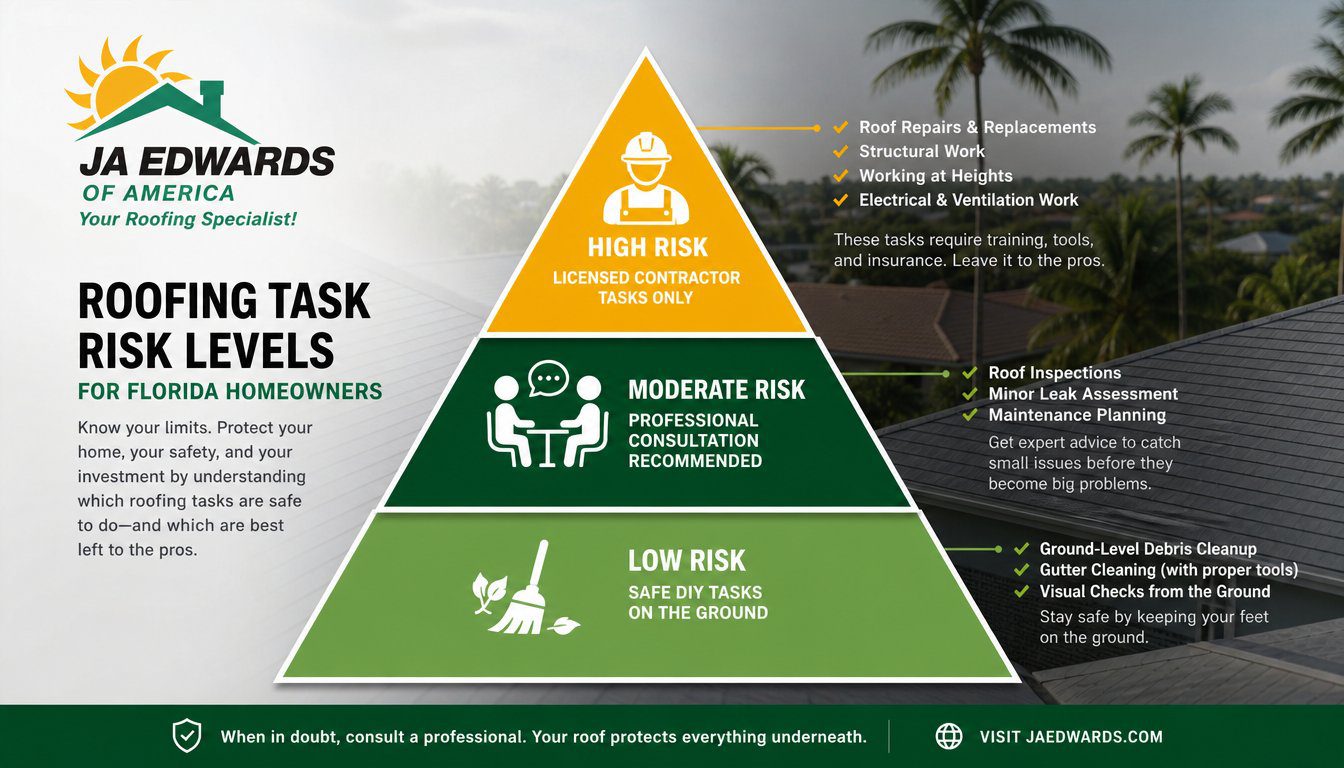
The right dividing line isn't whether you're handy. It's the level of risk and whether the work affects the roof system, structure, or permit. Ground cleanup, moving a tarp, hauling bundled debris, and cleaning nails from the driveway are reasonable homeowner tasks. Removing a small patch from a low-slope outbuilding may be manageable only if the surface is safe and local requirements allow it.
A handyman or general contractor might handle a limited repair involving a few square feet of matching shingles on an otherwise sound area. That changes quickly when the work reaches the decking, underlayment, flashing, valleys, or a roof with multiple layers.
Use this risk hierarchy
Safe for many homeowners: Ground cleanup, debris hauling, and limited material handling away from the roof edge.
Consult a professional: Full tear-off, structural repairs, steep-slope work, or any project where the deck condition is unknown.
Hire a licensed contractor: Full replacement, permit-required work, storm-damage assessment, and any installation involving the complete roofing assembly.
Full roof replacement work requires a properly licensed contractor, and permit applications generally require a qualified applicant. Manufacturer warranty eligibility can also depend on installation following published requirements and certified-contractor conditions.
The contractor's estimate should explain more than the shingle brand. Ask how the roofer will inspect the deck, remove or control fasteners, meet underlayment requirements, protect the property, and dispose of the waste. Visible deck rot, active attic leaks, or evidence of more than one shingle layer are clear reasons to stop planning a DIY tear-off. Use this guide to evaluate roof repair bids and questions to ask roofing contractors before signing.
Questions Florida Homeowners Ask About Removing Shingles
For an average 2,000-square-foot Florida roof, a professional crew usually completes the removal in one to two days, with additional time if the deck needs repairs, according to the project data supplied for this guide. Weather, access, roof height, multiple layers, and the disposal setup can change the schedule.
A second layer may be permitted in limited circumstances, but most Florida building codes generally prohibit going beyond one existing layer. Manufacturers may also refuse to warranty an overlay when their installation requirements aren't met. A full tear-off gives the contractor access to the deck and lets the new system start on a clean, inspectable surface.
Expect nails to remain around the roof perimeter, in the yard, and near the dumpster unless the crew actively controls them. A magnetic sweep, hand-picking in landscaped areas, and a final check of driveways and walkways reduce the chance of punctured tires or injured pets. Check your dog's paws after the work, and don't let children play near the debris area until cleanup is complete.
Usually, yes, but the removal is loud and can shake dust loose in the attic. Cover stored belongings, keep attic access closed when practical, and move fragile items away from ceilings below active work areas. The house should never be left without a weather-protection plan once the deck is exposed.
The deck may remain exposed for at least part of the day while repairs, inspection, and underlayment installation occur. If rain threatens, the crew should secure appropriate temporary protection rather than leaving the wood open to weather.
Use the Florida Department of Business and Professional Regulation's online license portal, and confirm that the contractor's license number appears on the contract. Verify that the license matches the company and scope of work, then ask who will obtain the permit and coordinate inspections. Those steps won't replace a careful estimate, but they help separate a documented roofing business from an unlicensed operator.
Before you tear it off, know what's underneath
A free roof inspection can document the existing roof, identify visible damage, and help you understand whether the right next step is repair, tear-off, or full replacement.