
What Roofing Underlayment Is Best?
The material you see on a finished roof is only part of the roofing system. Underneath shingles, tile or metal is another layer that can play a critical role when wind-driven rain or damaged roof coverings allow moisture past the surface.
If you are replacing a roof, one question is worth asking before the first bundle of shingles ever reaches the house: what roofing underlayment is best? For many asphalt-shingle roofs, a quality synthetic underlayment is a strong all-around choice because it is lightweight, tear-resistant and engineered to resist moisture. But there is no single underlayment that is automatically best for every Florida roof. Tile, metal and specialty roofing systems may use different materials or installation methods.
Table of Contents
- What Is Roofing Underlayment?
- Why Does Roof Underlayment Matter in Florida?
- What Types of Roofing Underlayment Are Available?
- What Roofing Underlayment Is Best in Florida?
- Best Underlayment by Roof Type
- What Does Florida Building Code Require?
- Can Roofing Underlayment Get Wet?
- How Long Does Roof Underlayment Last?
- Signs Roof Underlayment May Be Failing
- Does Old Underlayment Need to Be Removed?
- Questions to Ask Before a Roof Replacement
- Frequently Asked Questions
What Is Roofing Underlayment?
Roofing underlayment is a layer installed over the roof deck and below the finished roof covering. On a typical shingle roof, that means the underlayment sits between the plywood or OSB decking and the asphalt shingles you see from outside.
It acts as part of the roof's secondary moisture-protection strategy. If wind-driven rain gets beneath damaged shingles or another part of the roof covering, properly installed underlayment can help protect the deck below.
Underlayment is not a substitute for shingles, tile, metal panels or a properly constructed roofing system. Instead, it works together with the roof covering, flashing, valleys, ventilation, penetrations and deck.
That distinction matters. Homeowners often compare roofs based almost entirely on the visible material when some of the components that determine how the system performs are hidden underneath.
Why Does Roof Underlayment Matter in Florida?
A Florida roof deals with conditions that can expose weaknesses quickly: strong sun, high temperatures, heavy rain, high humidity and severe weather events.
Underlayment becomes particularly important when the primary roof covering is damaged or when wind-driven rain reaches beneath the surface material. It is one more part of the assembly designed to help manage moisture before it reaches the structural roof deck.
- Wind-driven rain: water does not always fall vertically during a Florida storm.
- Damaged roof coverings: missing or damaged shingles can expose the layers below.
- Roof penetrations: vents, pipes, flashing and valleys create details that must be installed correctly.
- Installation exposure: roof assemblies may experience short-term weather exposure while work is underway.
- Long-term moisture protection: the underlayment helps form part of the complete water-management system beneath the visible roof covering.
If you are comparing a full roofing scope, do not look only at the shingle or tile brand. The proposal should also identify important components beneath it. Our guide on how to read a roofing estimate explains what homeowners should look for when comparing proposals.
What Types of Roofing Underlayment Are Available?
The products used beneath residential roofing generally fall into several broad categories. The right category depends on the roofing assembly rather than simply which material sounds more advanced.
Asphalt-Saturated Felt
Traditional roofing felt has been used for decades. It is generally economical and familiar to installers, but it can be heavier and more vulnerable to tearing, wrinkling and moisture absorption than many modern synthetic products.
Synthetic Underlayment
Synthetic underlayments typically use engineered polymers such as polypropylene or polyethylene. They are generally lightweight, strong and designed to resist moisture and tearing.
Self-Adhered Underlayment
Self-adhered products bond directly to the substrate and are used in roof assemblies where enhanced water protection or a specific approved installation method calls for them.

| Underlayment Type | Typical Advantages | Things to Consider |
|---|---|---|
| Synthetic | Lightweight, strong, tear-resistant and generally resistant to moisture absorption. | Products vary. Installation and compatibility must follow the specific manufacturer's instructions and applicable roof assembly. |
| Asphalt Felt | Familiar product, widely available and often lower in material cost. | Can absorb moisture, wrinkle and tear more easily than many synthetic alternatives. |
| Self-Adhered | Creates a bonded layer and can provide strong water protection when used as part of an approved roofing assembly. | Usually costs more and must be compatible with the roof system, substrate and manufacturer's requirements. |
So, What Roofing Underlayment Is Best in Florida?
For many asphalt-shingle homes, a quality synthetic underlayment is often an excellent all-around choice.
It provides several practical advantages during installation and service: synthetic products can be lighter, stronger and more resistant to tearing than traditional felt. Some synthetic products also resist moisture absorption.
But the important part of the answer is the phrase “for many homes.”
The best underlayment is not selected in isolation. A contractor has to consider:
- The roof covering being installed
- The slope of the roof
- The approved roofing assembly
- Manufacturer installation instructions
- Applicable Florida Building Code requirements
- Deck condition
- Roof geometry and vulnerable areas
- Local wind and weather exposure
What Is the Best Underlayment for Each Roof Type?
Asphalt Shingle Roofs
Synthetic underlayment is commonly used with modern asphalt-shingle systems because of its strength, handling and moisture-resistant characteristics. The exact approved product and installation still depend on the roofing system.
Tile Roofs
The underlayment beneath a tile roof deserves special attention because the visible tile and the water-management layers below it perform different jobs. The selected tile assembly and applicable code requirements determine the appropriate system.
Metal Roofs
Metal roofing assemblies can have different underlayment requirements depending on panel type, deck, slope and manufacturer. Heat, compatibility and the complete assembly all matter.
Flat & Low-Slope Roofs
Flat and low-slope systems are different from typical steep-slope shingle roofs. TPO, EPDM and other membrane systems use assemblies that should not be reduced to the same “felt vs. synthetic” comparison.
If you are comparing roofing materials rather than only the layer below them, see our guide to metal roof vs. tile roof in Florida and our shingles vs. metal roofing comparison .
What Does Florida Building Code Say About Underlayment?
As of October 2026, Florida is operating under the 8th Edition (2023) Florida Building Code, which became effective December 31, 2023.
The Florida Building Code requires roofing to be installed under the applicable code provisions and the manufacturer's installation instructions. For roof slopes of 2:12 and greater, underlayment must comply with applicable standards listed in the code and be installed using the method applicable to the roofing assembly.
Homeowners can review current code resources through the Florida Building Commission .
Can Roofing Underlayment Get Wet?
Yes, some roofing underlayments can tolerate limited exposure to moisture during the construction process. But that does not mean underlayment should be treated as a finished roof or intentionally left exposed indefinitely.
The exact exposure limits depend on the product. This distinction matters because even products marketed as moisture-resistant are not automatically waterproof temporary roofs.
For example, GAF describes its FeltBuster synthetic roofing felt as water resistant, not waterproof, and specifically says it should not be used as a temporary roof to protect property.
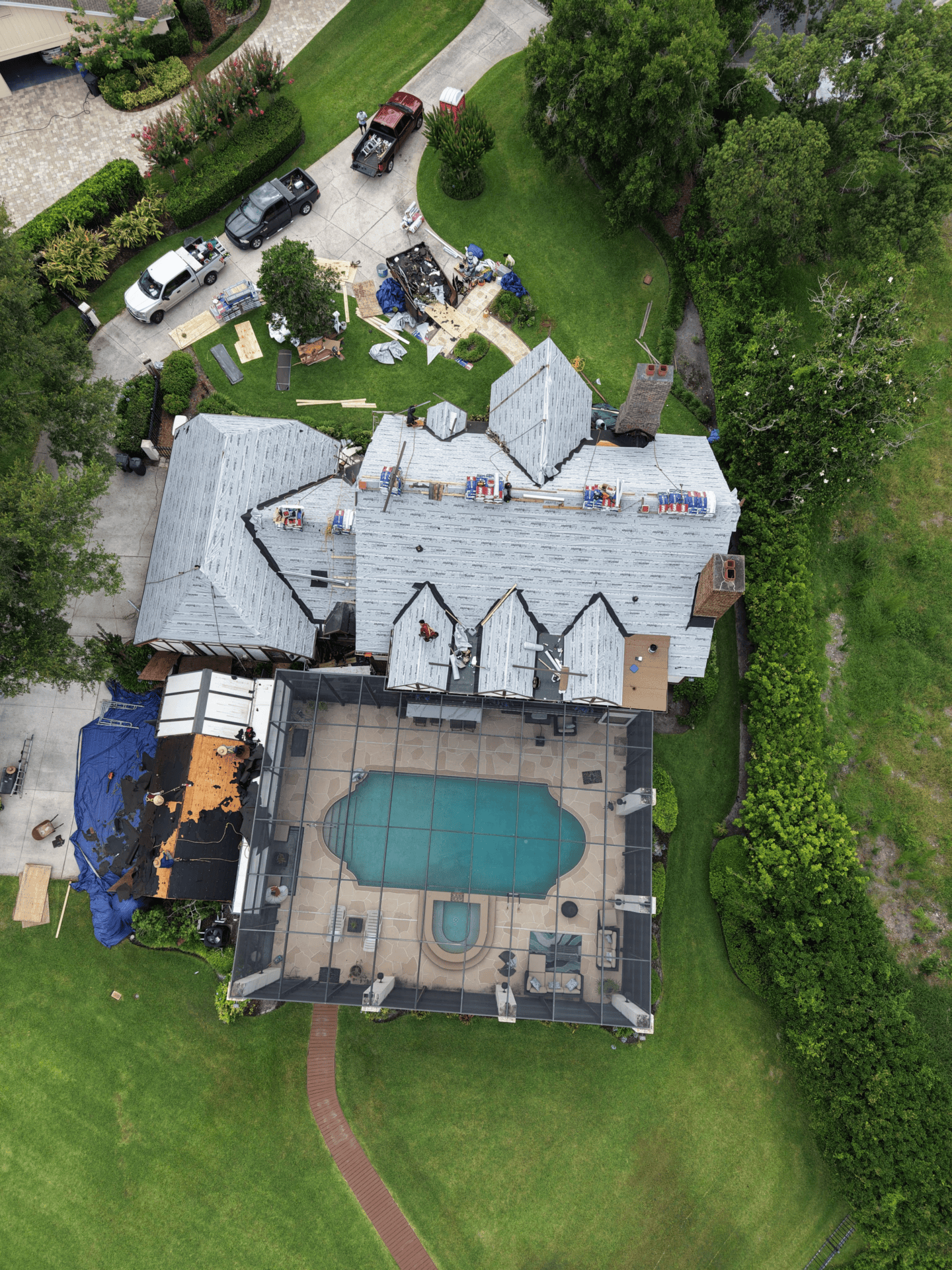
The bigger concern is repeated or prolonged water intrusion after the roof is complete. If water consistently gets beneath the roof covering, the underlayment, decking and surrounding components can eventually deteriorate.
That can lead to:
- Damaged roof decking
- Recurring leaks
- Moisture inside the attic
- Staining on ceilings or walls
- Deteriorated roofing components
- A repair that grows beyond the original visible problem
If you are seeing active water intrusion, our guide on how to handle a roof leak explains why the visible interior stain may not be directly below the actual entry point.
How Long Does Roofing Underlayment Last?
There is no single lifespan that applies to every underlayment. The answer depends on the material, roof covering, installation, exposure, ventilation, moisture history and roofing system.
That is also why homeowners should be careful with simple claims such as “this underlayment lasts 30 years” without identifying the product and the conditions under which it is being used.
In many roof replacements, the important question is not simply how old the underlayment is. It is:
- Is it still intact?
- Has water reached it repeatedly?
- Is the roof deck below it still sound?
- Is the existing system compatible with the new roof covering?
- Does the new assembly require a different underlayment?
A professional roof inspection can help document visible roof conditions, although underlayment itself may not be fully visible until roofing materials are removed.
What Are Signs Roof Underlayment May Be Failing?
One frustrating thing about underlayment is that homeowners normally cannot see it. By design, it is hidden beneath the finished roof.
So the signs of a problem are usually indirect.
- Recurring leaks in the same area
- Water staining in the attic
- Ceiling stains after heavy rain
- Soft or deteriorated decking discovered during repair
- Missing or damaged shingles above the affected area
- Failed flashing or roof penetrations
- Multiple prior repairs without solving the leak
Finding one of these conditions does not automatically mean all the underlayment needs to be replaced. It means the roof should be evaluated far enough beyond the visible symptom to identify the actual failure.
For homeowners deciding whether the scope is still local, see our guide to roof repair vs. roof replacement .
Does Old Roofing Underlayment Need to Be Removed?
During a complete roof replacement, removing the existing roof covering gives the contractor an opportunity to evaluate the roof deck and determine what has been happening beneath the visible surface.
The correct treatment of existing underlayment depends on the reroofing scope and approved roof assembly. It should not simply be assumed that old material is suitable to remain underneath a completely new roofing system.
Opening the roof can reveal conditions that were impossible to diagnose from the ground:
- Rotten or soft decking
- Previous leak paths
- Improper repairs
- Damaged flashing
- Old fasteners and penetrations
- Deteriorated water-management layers
This is one reason the visible shingle price should never be the only thing used to compare two residential roofing proposals.
Questions to Ask About Underlayment Before Replacing Your Roof
You do not need to become a roofing engineer before signing a contract. But you should be able to get clear answers to a few basic questions.
- What exact underlayment product is included? “Synthetic” is a category, not a complete specification.
- Why was this underlayment selected for my roof? The answer should connect to the roof covering and approved assembly.
- Will any self-adhered material be used? Ask where and why it is part of the system.
- What happens if damaged decking is found? The proposal should explain how additional deck work is handled.
- Are manufacturer installation requirements being followed? Underlayment is part of a complete roofing assembly, not an isolated accessory.
- What is covered by the roofing warranty? Understand the difference between material coverage and contractor workmanship coverage.
Underlayment Is Only One Part of a Shingle Roof
The roof covering, deck, underlayment, flashing, ventilation and installation details all work together. JA Edwards installs residential roofing systems throughout its Florida service areas.
Frequently Asked Questions
What roofing underlayment is best?
For many asphalt-shingle roofs, a quality synthetic underlayment is an excellent all-around option because it is lightweight, strong and resistant to tearing and moisture. However, the correct choice depends on the roof covering, slope, approved roof assembly, manufacturer instructions and applicable building-code requirements.
Is synthetic underlayment better than felt?
Synthetic underlayment generally offers advantages in strength, tear resistance, weight and moisture resistance compared with traditional asphalt felt. That does not make every synthetic product appropriate for every roofing assembly. Product specifications and installation requirements still matter.
Can roofing underlayment get wet?
Some underlayments can tolerate limited weather exposure during installation, but exposure limits vary by product. Water-resistant underlayment should not automatically be treated as a waterproof temporary roof. Follow the actual manufacturer's instructions.
What is the best underlayment for shingles?
Synthetic underlayment is commonly used beneath modern asphalt-shingle roofs because it can provide strong tear resistance, easier handling and moisture resistance. The specific product should still be compatible with the shingle system and installed according to applicable requirements.
What is the best underlayment for a tile roof in Florida?
There is no single answer for every Florida tile roof. The correct underlayment depends on the tile system, slope, deck, approved assembly and applicable Florida Building Code and manufacturer requirements. Tile roofs deserve particular attention because the visible tile and the water-management layers beneath it perform different functions.
Does old roof underlayment have to be removed?
The treatment of existing underlayment depends on the reroofing scope and approved new roof assembly. During a full replacement, removing old roofing materials also allows the contractor to inspect the deck for hidden moisture damage, deterioration and previous repairs.
How do I know if my roof underlayment is bad?
Underlayment is normally hidden, so homeowners usually notice indirect signs such as recurring leaks, attic moisture, ceiling stains or damaged decking discovered during repair. An inspection can help identify the likely source, but full underlayment condition may not be visible until part of the roof is opened.
Have Questions About Your Roof System?
If you are dealing with leaks, an aging roof or planning a roof replacement, start by understanding the condition of the complete roofing system, not only the material visible from the street.
Schedule a Roof InspectionSources & Further Reading
Florida Building Commission — Current Florida Building Code resources. The 8th Edition (2023) Florida Building Code became effective December 31, 2023.
GAF Synthetic Roof Underlayment — Manufacturer information on synthetic roof-deck protection, materials and application considerations.
GAF FeltBuster Synthetic Roofing Felt — Manufacturer specifications and exposure guidance for synthetic roofing felt.