
Hail and 50 MPH Winds Hit Central Florida in June 2026: What Repeated Storms Do to Your Roof
Through June 2026, a run of severe storms moved across Central Florida. The National Weather Service flagged 50 mph wind gusts and hail near Brevard County, including Titusville, Mims, and Oak Hill, on June 21, and earlier in the month storms pushed through Orlando, Sanford, Winter Park, and Lake Mary with winds over 50 mph and small hail. No single one of these storms is dramatic, which is exactly the danger. The repeated battering loosens shingles, lifts flashing, and strips protective granules in ways most homeowners never notice until a leak shows up months later. If your roof is older or has sat through several of these rounds, this is the season to have it checked. JA Edwards of America responds to storm damage same day across Central Florida at (407) 677-7663.
If you live in Central Florida, you barely noticed most of these storms. They roll in around mid-afternoon, dump rain, throw some wind and a little hail, and move off toward the coast inside an hour. By dinner the sky is clear and the whole thing is forgotten. That pattern is exactly why so many Orlando-area roofs take damage that goes unaddressed for months, and June 2026 has been a textbook run of it.
This is not a post telling you a catastrophe just hit and you need to panic. The honest read is the opposite, and it is more useful. The June storms were individually mild. The problem is what mild storms do when they keep coming.
What actually happened across Central Florida in June
The month brought repeated rounds of severe weather. On June 21, the National Weather Service issued special weather statements for parts of Brevard County, warning of 50 mph wind gusts and pea-sized hail near Titusville, Mims, and Oak Hill as storms pushed toward the Interstate 95 corridor. Earlier in the month, a separate line of storms moved through the core of the Orlando metro, with the NWS flagging winds over 50 mph and small hail across Orlando, Sanford, Winter Park, and Lake Mary. Mid-month, the Storm Prediction Center placed parts of Florida under a slight risk for severe weather. Taken together, it was a consistent pattern of modest wind and hail rather than any single headline event, and that is the part that catches people off guard.
The storm pattern that repeats all summer
What makes Central Florida different from most of the country is that this is not a one-off. Sitting on a peninsula between the Atlantic and the Gulf, the region runs on a daily sea-breeze engine through the warm months. Moisture builds through the morning, two sea breezes push inland from opposite coasts, and where they collide somewhere over the interior, storms fire up almost every afternoon from June into September. Some days that collision produces a passing shower. Other days, like several this June, it produces the gusty wind and hail that work on your roof.
That means a roof in Orange, Seminole, or Brevard County is not absorbing one storm this summer, it is absorbing dozens. The same shingle that got its seal nudged loose on June 21 gets worked on again the next week, and the week after. By the time hurricane season peaks in late summer, a lot of Central Florida roofs have already taken a beating that nobody was counting. This repetition is the whole story.
Why a "small" storm still works on your roof
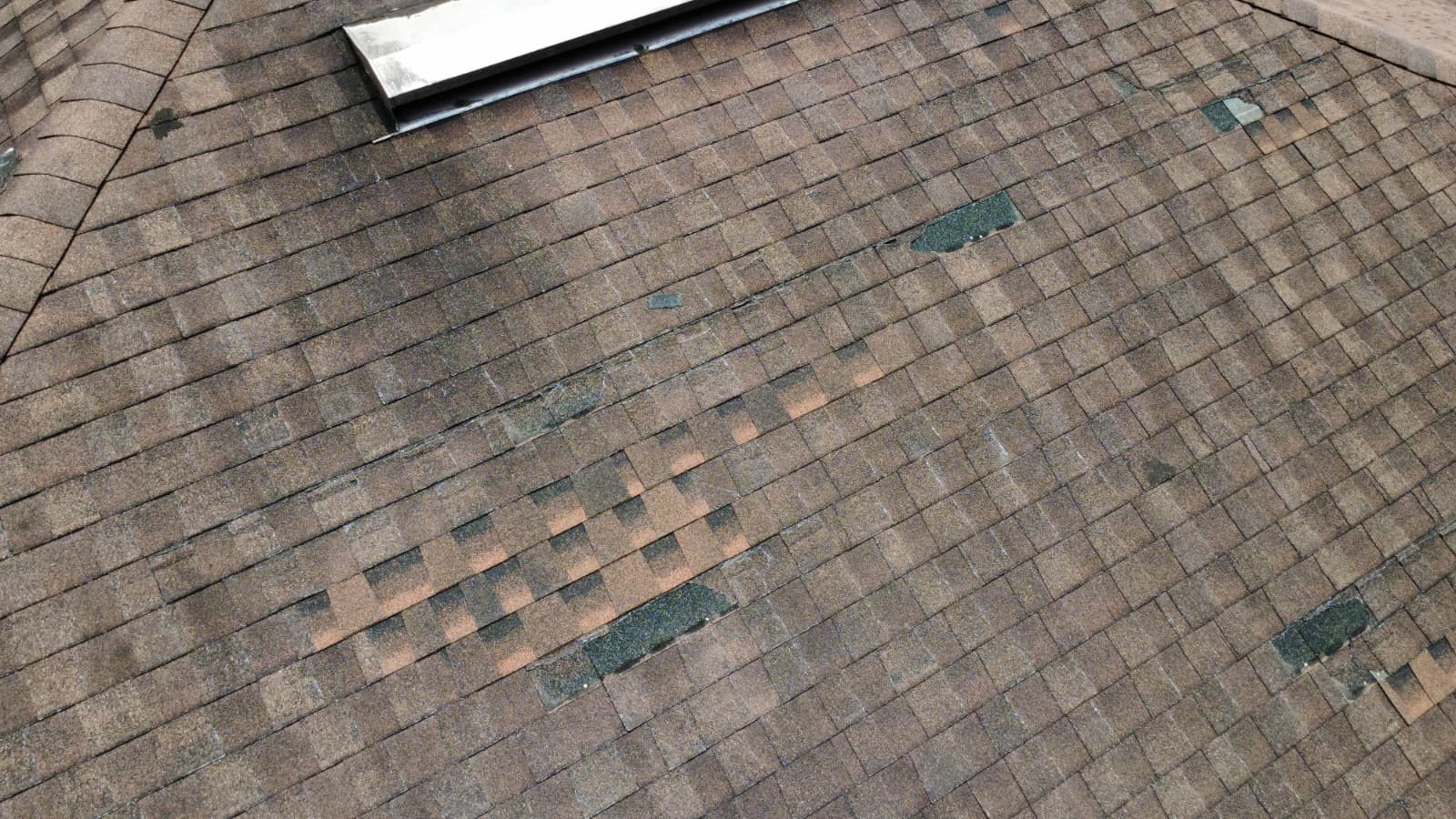
A shingle roof is a system of small overlapping defenses, and storms attack the weak points one at a time. Wind does not need to be hurricane force to find the edges. A 50 mph gust gets under the perimeter shingles, the ridge, and any spot where a previous storm already loosened a fastener, and it lifts. Each lift breaks the adhesive seal a little more. The shingle lays back down and looks fine from the ground, but the seal that kept water out is now compromised, and the next storm pries it a little further.
Hail does something different. Even small hail bruises the asphalt and knocks loose the granules, the gritty mineral surface that protects the shingle from UV. Lose enough granules and the asphalt underneath starts baking in Central Florida's sun, aging the roof years faster than it should. You can sometimes see this damage as a scatter of granules in your gutters or at the bottom of your downspouts. We put together a visual breakdown of exactly what this looks like in our guide on what hail damage looks like on a roof.
Why 2026 roofs are more brittle than usual
There is a second factor specific to this year that makes this run of storms worth paying attention to. Much of Central and South Florida went through extended drought and extreme heat this spring, with parts of the state under severe to extreme drought conditions before the rains returned. Long stretches of intense heat and sun dry out asphalt shingles and make them more brittle, and a brittle shingle cracks and sheds granules more easily when hail and wind finally arrive. A roof that baked through a dry, hot spring is simply less resilient when the June storms start rolling through.
Sat through the June storms? Get it checked.
A free inspection close to the storm date is the record that matters if you have a claim. Our Orlando team responds same day. Drop your address below or call (407) 677-7663.
Why homeowners miss it every time
The reason this damage goes unaddressed is psychological as much as physical. People wait for a "big enough" storm to justify climbing up or calling a roofer, and none of the June storms felt big enough. There was no single event to point to, no dramatic damage in the yard, so the roof never got a second look. Meanwhile the cumulative wear is real, and it tends to announce itself months later as a water stain spreading across a bedroom ceiling, long after the storms that caused it have been forgotten.
That matters practically because in Florida, the clock on a storm-related insurance claim starts at the date of the storm, not the date you notice the leak. Damage you document now is far easier to tie to a covered event than damage you discover next winter when every trail has gone cold.
Which roofs are most at risk
Not every Central Florida roof is equally exposed, and knowing where yours falls helps you decide whether to act. The roofs that get hurt most are the ones already past the middle of their life. A shingle roof in Central Florida ages faster than the same roof would up north because of the UV and heat, so a roof that is twelve or fifteen years old here is often closer to the end than the calendar suggests, and it has far less margin to absorb a summer of storms.
Roofs that have been repaired before are another group to watch, because a previous patch creates a seam, and seams are where wind finds its grip. Homes with a lot of roof penetrations, meaning multiple vents, skylights, or a chimney, have more flashing transitions for storms to work loose. And any roof that already lost its seal on a perimeter or ridge shingle in an earlier storm is primed for the next gust to peel it further. An inspection tells you which side of that line your roof sits on rather than leaving you to guess.
The roofs that leak in October are rarely destroyed by one storm. They are the ones that absorbed a summer of small events with nobody checking, until a small unaddressed issue became a big expensive one.
Cosmetic versus functional damage, and why the difference matters
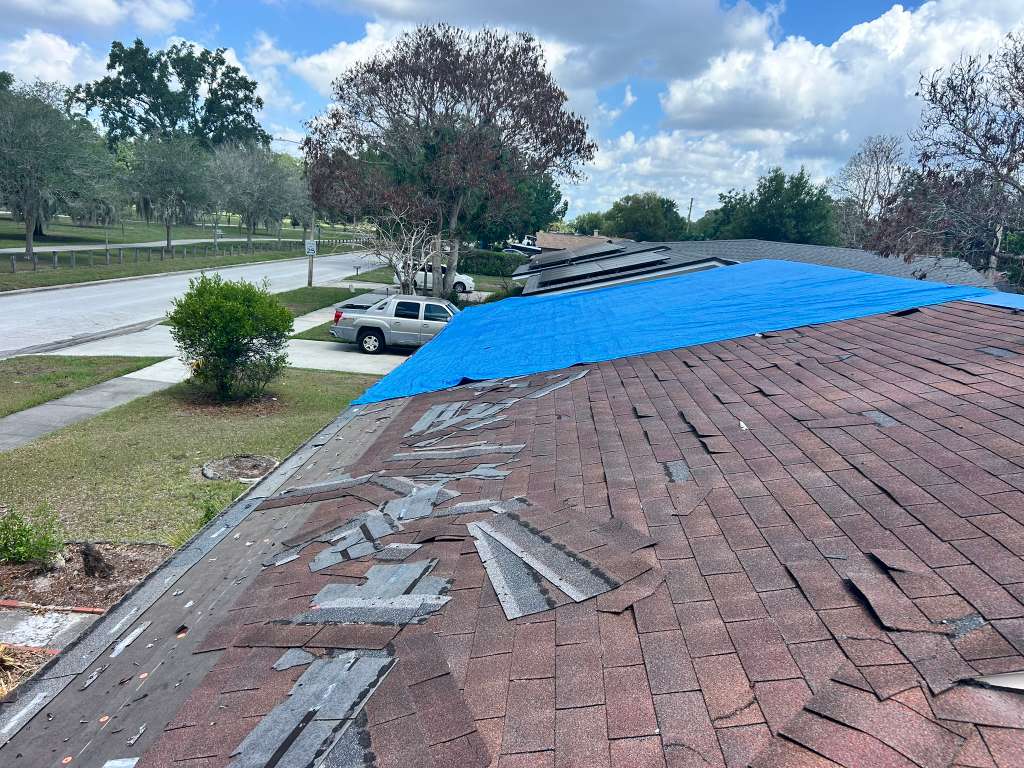
Not all storm damage threatens your home, and insurance adjusters draw a hard line between the two. A few scuffed granules or a cosmetic ding might not affect the roof's ability to keep water out, and a carrier may decline to cover purely cosmetic wear. Functional damage is different: a lifted shingle that has lost its seal, a cracked shingle exposing the mat, or flashing pulled loose. All of these let water in over time, and the trouble is that the two can look similar from the ground. What appears cosmetic can be functional once an inspector gets a close look. A professional inspection with a photo report puts the right label on what the storm actually did, which is what makes it worth having while the storm date is still recent.
What to do now, without overreacting
You do not need to panic, and you do not need a new roof because a few summer storms passed through. What makes sense after a run of weather like this June is straightforward. Walk your property and look for granules collecting in gutters and at downspouts, check your ceilings and attic for any fresh staining, and look at the roof from the ground for any shingles that sit unevenly or look lifted. If you see any of that, or if your roof is already on the older side, get a professional set of eyes on it while the cause is still recent.
If you do find something, document it before anyone touches it. Take dated photos from the ground and, if you can safely do it, close-up shots of the affected area. Our walkthrough on documenting storm damage for an Orlando insurance claim covers how to do that properly. And if the question on your mind is whether repeated storm wear has pushed your roof past the point of patching, our guide on when to repair versus replace your roof in Orlando lays out how to tell.
Hurricane season runs through November, and June was only the opening stretch. A free inspection after a stretch like this costs nothing and tells you exactly where you stand before the next round arrives. The Orlando office is at (407) 677-7663, and the photo report is yours to keep either way.
Frequently asked questions
Yes. The National Weather Service issued severe weather alerts across Central Florida through June, including 50 mph wind gusts and pea-sized hail near Brevard County on June 21 and storms with winds over 50 mph and small hail across Orlando, Sanford, Winter Park, and Lake Mary earlier in the month.
It can. Small hail bruises the asphalt and knocks loose the protective granules on shingles, which exposes the surface to UV and ages the roof faster. The damage is often invisible from the ground and shows up as granules in the gutters or downspouts.
Look for granules collecting in gutters and at downspouts, fresh water stains on ceilings or in the attic, and shingles that sit unevenly or look lifted. If you see any of these or your roof is older, have it professionally inspected while the storm date is still recent.
Florida law sets deadlines tied to the date of the storm, not the date you notice the damage, so acting sooner is always better. Documenting damage close to the storm makes a claim far easier to support than discovering a leak months later when the trail has gone cold.
After a single mild storm, not necessarily. After a run of repeated storms like Central Florida saw in June, especially if your roof is older, an inspection is worth it because the cumulative wear is what causes leaks, not any one storm in isolation.
Common signs include scattered or bare spots where granules were knocked off, bruised or cracked shingles, lifted or creased shingles from wind, and bent or loosened flashing around vents and chimneys. Much of it is hard to see without getting on the roof, which is why a professional inspection matters.
Sudden storm and wind damage is commonly covered, while gradual wear and age usually are not. The age and condition of your roof and your specific policy determine coverage, which is why a documented inspection close to the storm date is so valuable for supporting a claim.
For a roof that is older or has weathered several storms, yes. A free inspection with a photo report gives you a record of the roof's condition, catches small problems before they spread, and tells you whether anything needs attention, all at no cost and no obligation.
Get your roof checked now
Free inspection, full photo report, and an honest assessment. If your roof is fine, we will tell you that. If it is not, you will know exactly what the storms did.