
What to Expect During a Professional Roof Inspection
A real roof inspection should tell you more than whether the shingles "look okay." Here is how a professional roofer evaluates the roof, what can be checked from the attic, what the final report should show, and how to understand the recommendation that follows.
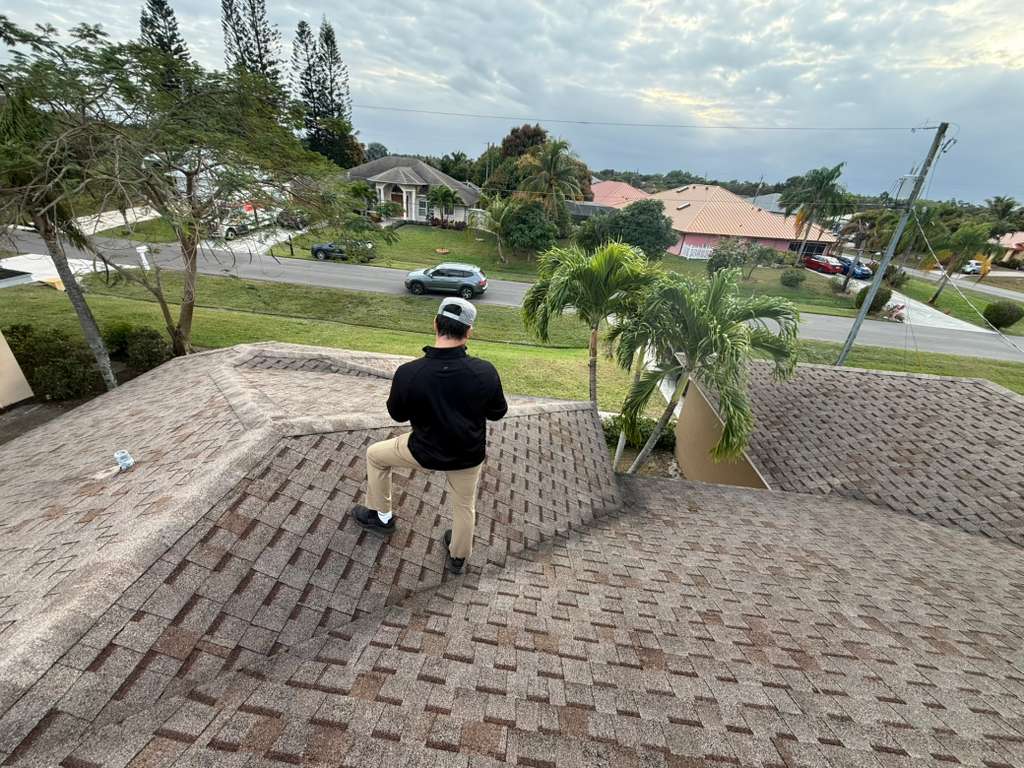
Most homeowners do not spend much time looking at their roof until something happens. A leak appears, a storm rolls through, an insurance company asks about the roof's age, or a few shingles suddenly look different from the driveway. That is usually when the question comes up: what does a professional roof inspection actually include?
The answer should be more substantial than a five-minute walk around the house. A useful inspection looks at the roofing material, edges, flashing, penetrations, drainage, visible structural conditions and, when accessible, the attic or underside of the roof deck. Just as important, it should leave you with documentation you can understand.
At JA Edwards of America, our standard roof inspection is designed to evaluate the condition of the roofing system and help determine whether the roof needs maintenance, a localized repair or replacement, or simply continued monitoring.
Why Get a Professional Roof Inspection?
A roof can have a problem before water reaches the living room. Loose flashing, a damaged pipe boot, cracked tile, open seams, displaced shingles or drainage problems can exist for some time before the first obvious ceiling stain appears.
That is the value of inspecting the system before the symptom becomes impossible to ignore. It does not mean every small issue will turn into a catastrophe, and an inspection cannot promise that a roof will never leak. It simply gives the homeowner better information about the roof's current condition.
The National Roofing Contractors Association recommends periodic residential roof inspections and additional checks after severe weather. GAF similarly recommends routine visual roof checks and inspecting after conditions that may have damaged the roof. Neither recommendation means every homeowner needs to hire a contractor every few months. Homeowners can monitor the property from the ground, while a professional inspection makes more sense when something changes, the roof is aging, or there are signs that deserve a closer look.
What Happens During a Professional Roof Inspection, Step by Step?
The exact sequence depends on the property, roof type, access and reason for the inspection, but a residential inspection usually follows the same basic logic: understand the problem, inspect the outside, inspect the roof surface where safe, check vulnerable details, look inside where accessible and document the findings.
1. The roofer asks why you called
A routine maintenance inspection is different from an inspection after a leak or major storm. Before getting on the roof, the contractor should understand what you have noticed, when it started, whether repairs have been made before and whether any rooms or attic areas have shown water stains.
2. The property is checked from the ground
The contractor may walk the perimeter first, looking at roof planes, edges, fascia, soffit, gutters, downspouts and visible drainage patterns. This can also reveal tree impact, missing material, sagging, debris accumulation or exterior staining before closer inspection begins.
3. The roof covering is inspected
The roofer evaluates the actual roofing material and looks for damage, deterioration, installation concerns and signs that individual components have moved or failed. What counts as a concern depends heavily on whether the roof is shingle, tile, metal or low-slope.
4. Flashing, penetrations and transitions are checked
Roof-to-wall intersections, pipe penetrations, vents, chimneys, skylights, valleys, ridges and other transitions deserve special attention because water needs only a small opening to enter the system. If you want a deeper explanation, see our guide to roof flashing and the different types used on a roof.
5. Drainage is evaluated
Gutters, valleys, scuppers and drains should move water away from the roof instead of allowing debris or standing water to accumulate. Drainage is especially important on low-slope roofs, where blocked drains or ponding can place additional stress on the system.
6. The attic or interior is checked when accessible
If there is safe access, the roofer may inspect the underside of the deck, rafters or trusses, insulation and areas around penetrations for staining, active moisture, daylight, deterioration or other visible evidence of water intrusion. This can help connect an interior symptom to an exterior roof condition.
7. Findings are documented and explained
The homeowner should come away knowing what the roofer found, where the concern is located, whether it needs immediate attention and what the next reasonable step is. Photos make that conversation considerably more useful than "trust me, it's up there."

What Does a Roofer Actually Look For?
GAF's homeowner guidance similarly calls out shingles, flashing, penetrations, gutters, soffit, fascia, attic moisture and roof-deck conditions as areas worth checking when evaluating roof damage. You can review its roof damage inspection guidance here.
What Changes Depending on the Roof Type?
A generic checklist is useful, but a professional inspection should account for the system actually installed on the home. Florida roofs are not interchangeable pieces of scenery.
Asphalt Shingle Roof
The inspector may look for missing or lifted shingles, creasing, damaged tabs, exposed fasteners, granule loss, ridge damage, flashing problems and signs of poor sealing or previous patch work.
If the roof is aging, the question is not simply "how old is it?" but whether enough of the system remains serviceable to make a repair reasonable.
Tile Roof
Concrete and clay tile roofs are checked for cracked, broken, slipped or displaced tiles, damaged ridge or hip pieces, flashing issues and evidence that water may be reaching the underlayment below.
A broken tile does not automatically mean full replacement, but repeated damage or aging underlayment can change the recommendation.
Metal Roof
Depending on the metal system, the inspection may include panels, seams, fasteners, clips, flashing, ridge and edge metal, sealants and penetrations. Rust or corrosion should be evaluated in context rather than treated as one universal diagnosis.
Flat or Low-Slope Roof
Low-slope systems require close attention to seams, penetrations, drains, scuppers, flashing, membrane condition and signs of ponding or trapped moisture. Commercial and larger low-slope systems can require a more formal maintenance inspection than a standard residential visit.
See our guide to TPO roofing for more on one common Florida low-slope system.
What Can the Attic Tell You About the Roof?
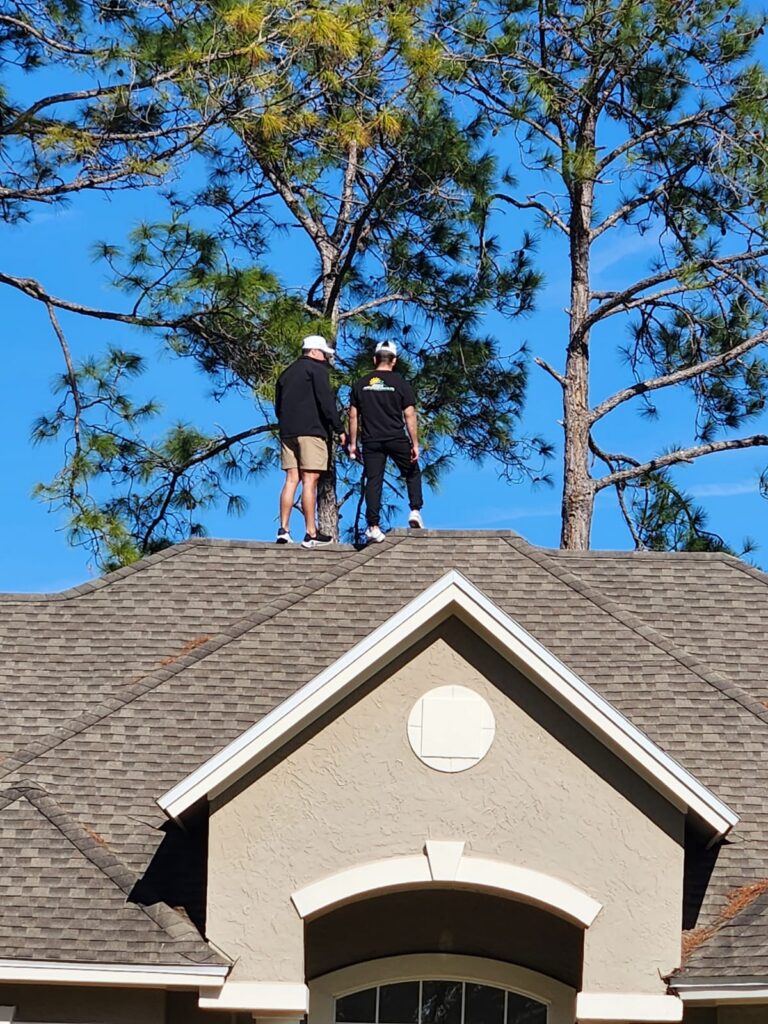
An attic inspection can add context that the roof surface cannot always provide. A stain on the underside of the deck may show that water entered at some point. Wet insulation can reveal a current problem. Rusted fasteners, deteriorated decking or staining around a penetration can help narrow down where water is traveling.
But the attic also has limits. A dry attic on the day of the inspection does not prove that the roof has never leaked, and a stain does not automatically prove the leak is active today. Water can travel along framing before it becomes visible, and some roof assemblies have little or no accessible attic space.
A good inspector describes what is observable and avoids turning every stain into a dramatic diagnosis.
Should the Inspector Check Ventilation and Insulation?
When attic access allows it, ventilation and insulation conditions can be part of the inspection because excessive heat and moisture in the attic can affect the roofing system and the building envelope.
The roofer may note blocked intake vents, inadequate visible ventilation, wet insulation or conditions that appear inconsistent with proper airflow. That does not make a standard roof inspection a full mechanical, energy or building-science evaluation. If the problem appears to involve HVAC design, structural engineering, extensive mold remediation or another specialty, a different professional may be needed.
What Should Be in a Roof Inspection Report?
This is where a lot of inspections become disappointingly vague. A useful report does not need to resemble a 70-page engineering study, but it should give you enough information to understand the roof's condition and the recommendation.
| Report Element | What You Should Expect |
|---|---|
| Photos | Images showing the roof generally and close-ups of specific conditions or damage that matter. |
| Location | A clear explanation of where the issue is on the roof instead of a generic statement that "damage was found." |
| Condition | What was observed: missing material, cracked tile, open flashing, staining, soft decking, drainage problem or another specific finding. |
| Priority | Whether the issue requires prompt repair, should be monitored or appears to be normal aging without immediate action. |
| Recommendation | Repair, further investigation, maintenance, replacement or no immediate roofing work. |
| Scope / Estimate | If work is recommended, the homeowner should understand what portion of the roof will be addressed and what the proposed work includes. |
At JA Edwards, photo documentation is an important part of the inspection because it lets the homeowner see what the project manager is discussing instead of making a decision based on a roof they cannot safely access themselves.
How Long Does a Roof Inspection Take?
There is no single honest answer. A small, straightforward single-story shingle roof is not the same inspection as a steep tile roof with multiple elevations, skylights, additions and limited attic access.
GAF notes that a thorough residential roof inspection by an experienced roofer may take a few hours or less, depending on the property. Larger commercial roofs can take substantially longer. The useful metric is not whether the contractor finished in a particular number of minutes. It is whether the property received enough attention to support the recommendation.
How Often Should You Inspect Your Roof?
For homeowners, it helps to separate a visual roof check from a professional contractor inspection.
NRCA recommends checking residential roof systems at least twice per year, preferably in spring and fall, and after severe weather. GAF offers similar advice for routine visual monitoring. Much of that monitoring can be done safely from the ground or from inside the attic.
A professional inspection becomes more useful when:
- You see a leak or new ceiling stain.
- Shingles, tile, flashing or metal appear to have moved or broken.
- Your area experienced significant hail, wind or a named storm.
- The roof is older and you want to understand its current condition.
- You are planning a major repair or deciding whether replacement makes more sense.
- You recently bought the home and do not have reliable information about the roof.
- A previous repair is leaking again.
- You need roof documentation for a specific transaction, warranty or property-management purpose.
If your concern started after severe weather, see our full guide on when to get a roof inspection after a storm in Florida.
Does a Professional Inspection Use Drones or Thermal Imaging?
Sometimes, but those tools should not be treated as a universal part of every roof inspection.
A drone can be useful when a roof is unsafe or difficult to access, but aerial images do not automatically replace hands-on evaluation of flashing, material condition or accessible interior evidence. Infrared or other moisture-detection tools can also be useful in certain commercial or low-slope applications, but the equipment has to be appropriate for the roof assembly and the purpose of the investigation.
GAF's commercial inspection guidance identifies infrared thermography and other moisture analysis methods as optional tools when moisture penetration is a concern. In other words, these are diagnostic tools used when they make sense, not mandatory accessories added to make the inspection sound more futuristic.
How Much Does a Professional Roof Inspection Cost?
The original version of this article listed a broad national price range. That is not especially useful because "roof inspection" can mean very different things.
A standard contractor inspection performed to evaluate whether roofing repair or replacement is needed may be offered at no charge. A real-estate inspection, engineering evaluation, specialized moisture survey, wind mitigation inspection, certification letter, warranty inspection or expert report may be a different service with a separate fee and scope.
Is a Roof Inspection the Same as a Wind Mitigation Inspection?
No. They serve different purposes.
A standard roofing inspection evaluates the physical condition of the roof and helps determine what roofing work, if any, is needed. A Florida wind mitigation inspection uses the state OIR-B1-1802 form to document specific wind-resistant construction features for insurance rating purposes.
That distinction matters because a homeowner may need one, the other or both. A contractor's roof inspection report should not be represented as an insurance wind mitigation form unless the correct qualified inspection and documentation requirements are actually being completed.
Can an Inspection Tell You Whether to Repair or Replace?
That is one of the most useful outcomes of the inspection, but it should not begin with the assumption that replacement is inevitable.
A localized flashing failure, a handful of damaged shingles or tile, or a repairable penetration problem may justify a targeted repair when the surrounding roof remains serviceable. Widespread material failure, repeated leak areas, compromised decking, extensive storm damage or a system that can no longer be repaired reliably may point toward replacement.
Roof age matters, but age alone does not answer the question. The condition of the system and whether a durable repair can be made matter more. Our guide to roof repair versus roof replacement goes deeper into that decision.

What a Roof Inspection Cannot Tell You
A trustworthy inspection is also clear about its limits.
- It cannot see every concealed component. Underlayment, deck conditions and fastening may be hidden by the installed roof system.
- It cannot guarantee the roof will never leak. An inspection describes conditions observed at a specific point in time.
- It does not automatically determine insurance coverage. A roofer can document physical conditions and prepare a roofing estimate, but an insurer determines policy coverage.
- It is not automatically a structural engineering inspection. Serious framing movement or structural concerns may require an engineer.
- It does not make inaccessible areas magically inspectable. Safety, roof configuration, weather and access can limit what can be observed.
That kind of limitation is not a weakness in the inspection. It is the difference between reporting what can actually be verified and inventing certainty because it sounds better in a sales presentation.
How to Choose a Roofing Contractor for the Inspection
If the inspection may lead to roofing work, verify that you are dealing with a properly licensed contractor. Florida's Department of Business and Professional Regulation provides an official license verification portal where homeowners can search by name, license number, city, county or license type.
If a contractor represents itself as GAF certified, homeowners can also use GAF's contractor certification verification tool.
JA Edwards of America holds Florida Certified Roofing Contractor license CCC1334804 and Certified General Contractor license CGC1534283. We are also a GAF Master Elite contractor and GAF President's Club 3-Star contractor.
Roof Inspections Across Our Florida Service Areas
JA Edwards performs standard roof inspections from four Florida offices. Use the location closest to the property so the request reaches the right local team.
Orlando
Residential roof inspections for shingle, tile, metal and other roofing systems across Central Florida.
Roof Inspection in Orlando(407) 677-7663
Tampa
Roof condition inspections, storm-related inspections and repair or replacement evaluations in the Tampa market.
Roof Inspection in Tampa(727) 953-3181
Jacksonville
Professional roof inspections for homeowners throughout the Jacksonville service area.
Roof Inspection in Jacksonville(904) 367-2913
Port St. Lucie
Roof inspection and storm-damage evaluations for Port St. Lucie and Treasure Coast homeowners.
Roof Inspection in Port St. Lucie(772) 204-2452
Want to Know What Is Actually Going On With Your Roof?
JA Edwards of America offers free standard roof inspections with photo documentation. We will inspect the roofing system, explain what we find and recommend the next step based on the condition of the roof.
Schedule a Free Roof InspectionFrequently Asked Questions About Professional Roof Inspections
What happens during a professional roof inspection?
A roofer typically checks the property from the ground, evaluates the roof covering, flashing, penetrations, ridges, edges and drainage, and checks accessible attic or interior areas for evidence of water intrusion. The inspection should end with documentation and a recommendation based on the conditions found.
How long does a roof inspection take?
It depends on the size, slope, complexity, roofing material, attic access and reason for the inspection. A straightforward residential roof may be inspected relatively quickly, while larger, steeper or more complex roofs require more time. The inspection should take enough time to support the findings rather than meet an arbitrary time target.
How much does a roof inspection cost?
There is no universal price because inspection scopes vary. JA Edwards offers free standard roof inspections for homeowners evaluating roof condition, repair or replacement. Specialized inspections, engineering evaluations, insurance forms, certifications or other formal reports may have different requirements or fees.
How often should I have my roof inspected?
NRCA recommends homeowners visually inspect residential roof systems at least twice per year and after severe weather. That does not necessarily mean hiring a contractor twice a year. A professional inspection is especially useful when you see damage or leaks, the roof is aging, severe weather occurred, or you need help deciding whether repair or replacement is appropriate.
Does a roof inspection include the attic?
When safe and accessible, an attic inspection can help identify staining, active moisture, damaged decking, wet insulation or other visible evidence related to the roof. Some homes have limited or no accessible attic space, so the scope can vary by property.
Will the roofer tell me if I need a repair or replacement?
That should be one of the main outcomes of the inspection. The recommendation should be based on the extent of damage or deterioration, the roof type, whether the affected area can be repaired reliably and the condition of the surrounding roofing system.
Is a standard roof inspection the same as a Florida wind mitigation inspection?
No. A standard roof inspection evaluates roof condition. A Florida wind mitigation inspection uses the state OIR-B1-1802 form to document specific construction features for insurance rating purposes.
Should I climb onto the roof before the contractor arrives?
No. Homeowners can safely look from the ground and check accessible interior areas, but walking on a steep, wet, tile or potentially damaged roof creates unnecessary risk. NRCA advises inexperienced homeowners not to access roof systems without the proper experience and equipment.
Can a roof inspection guarantee there are no leaks?
No. An inspection documents conditions that can be observed at that time. Concealed components, intermittent leaks and inaccessible areas can limit what is visible. Further testing or opening portions of the system may sometimes be required to diagnose a specific problem.
Technical & Homeowner Resources
GAF — How to Identify Roof Damage and What to Look For
GAF — How to Conduct a Roof Inspection From the Ground
National Roofing Contractors Association — Maintaining Residential Roof Systems
Florida DBPR — Verify a License
GAF — Verify Contractor Certification