How to Choose a Roofing Contractor in Orlando, FL - 2026
To choose a roofing contractor in Orlando, start by verifying the company holds an active Florida license through the DBPR license lookup, then confirm it operates from a real Orlando address and not an out-of-state storm chaser's PO box. Check whether the contractor carries manufacturer certification like GAF Master Elite, read the full written estimate line by line before you sign anything, and ask for proof of liability and workers' compensation insurance. The contractors worth hiring give you everything in writing, pull the permit themselves, and never pressure you to sign on the first visit. JA Edwards of America has served Orlando since 2004 and you can reach the Orlando office at (407) 677-7663.
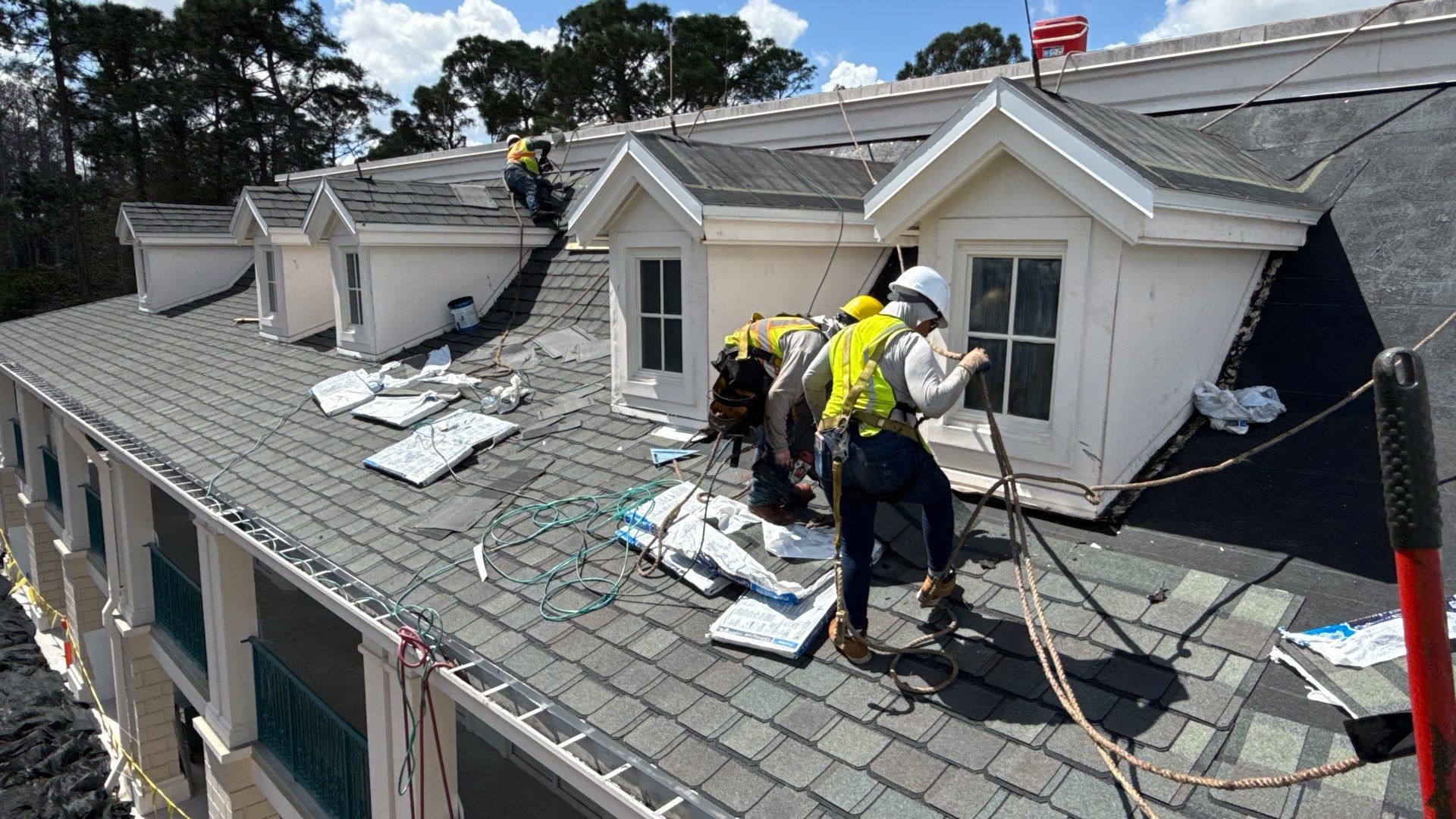
Hiring a roofer feels simple until you start calling around. One company quotes you eleven thousand dollars, the next quotes nineteen, a third knocked on your door after a hailstorm and wants a signature today. They all sound confident, they all have a truck with a logo, and none of that tells you which one will still answer the phone in three years when a seam starts to leak. In Orlando the stakes are higher than most of the country realizes, because the climate here works against your roof every single day and the local market attracts a steady stream of out-of-town crews who follow the storms.
This guide walks you through how to actually vet a roofing contractor in Orlando, in the order that matters. Not a generic checklist you could find for any city, but the specific things that separate a real Central Florida roofer from someone who will be gone by next season.
Why choosing a roofer in Orlando is its own problem
A roof in Orlando ages differently than a roof in Atlanta or Charlotte. The UV exposure here is relentless, and the daily heat cycle expands and contracts your shingles from sunup to sundown, which slowly works fasteners loose and dries out the asphalt long before the warranty year on paper says it should. Add the afternoon thunderstorms that run from late spring through hurricane season, the hail that tends to peak between March and July, and the humidity that feeds mold under any flashing that was installed even slightly wrong, and you get a roof that needs a contractor who builds for this environment, not one who learned the trade somewhere it snows.
The second issue is the storm chasers. After any significant hail or wind event in Central Florida, crews from out of state flood the area, knock on doors, and offer to handle your insurance claim. Some are legitimate. Many are not, and by the time a problem surfaces the company has packed up and moved to the next disaster. Knowing how to tell the difference is half the battle, and it starts with one document.
Step one: verify the Florida license before anything else
In Florida, roofing is licensed work. A contractor cannot legally replace or substantially repair your roof without holding the proper state license, and you can check this yourself in about two minutes. Go to the Florida Department of Business and Professional Regulation license search at myfloridalicense.com and type in the company name or the qualifier's name.
You are looking for an active license in good standing. A general contractor license carries the prefix CGC, and a certified roofing contractor license carries the prefix CCC. JA Edwards of America holds both, CGC1534283 and CCC1334804, which you can verify yourself rather than taking our word for it. If a contractor cannot give you a license number, or the number does not come back active in the DBPR system, or the name on the license does not match the company on the truck, stop there. Everything else is irrelevant if the license is missing, because an unlicensed job can void your homeowners coverage and leave you with no recourse if the work fails.
While you have the DBPR page open, this is also where you confirm the contractor carries the insurance Florida requires. Ask for a certificate of general liability and workers' compensation coverage. If a roofer working on your property gets hurt and the company has no workers' comp, that liability can land on you as the homeowner.
Step two: confirm a real, local Orlando presence
A license tells you the company is legal. A physical address tells you whether it will still be here when you need it. Ask where the company's Orlando office is, then look it up. A real local roofer has a yard, a warehouse, or an office you can find on a map, not just a cell phone and a magnetic door sign.
This is the cleanest way to filter out storm chasers. The crews that follow hail events operate out of trucks and short-term rentals, and they will give you a phone number that goes dead the moment the work is done. A warranty from a company with no address is a warranty you cannot enforce. JA Edwards of America has run its Orlando headquarters at 220 Weber St since long before whatever storm prompted your search, and our roots in the area are the reason our Orlando roofing work comes with people who actually answer when you call back.
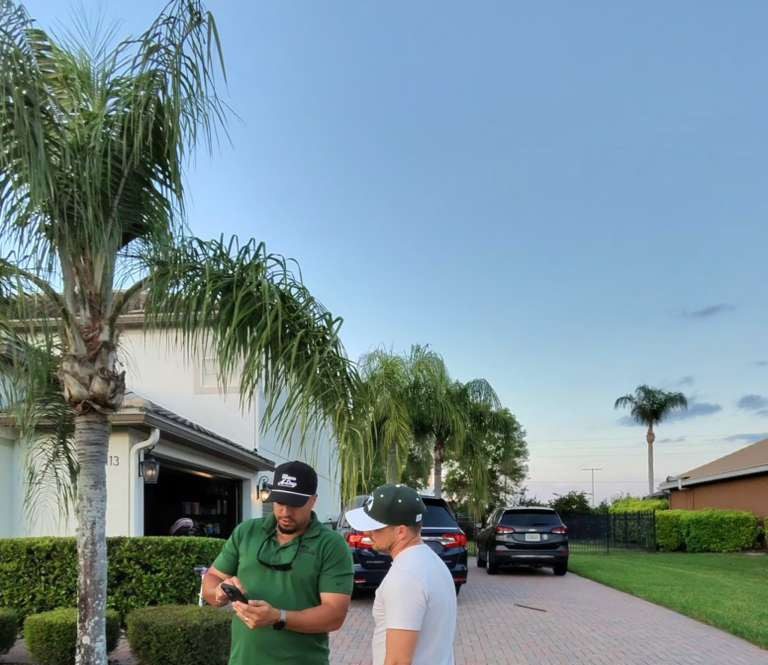
Before you sign anything, get the roof inspected properly.
A free inspection gives you photos, a written condition report, and a clear scope before a contractor asks you for a commitment. No pressure. No mystery line items. Very rebellious behavior in roofing, apparently.
Step three: check the manufacturer certification
Anyone can buy shingles. Not everyone can install them under a manufacturer's strongest warranty. Shingle makers run certification programs, and the top tier means something concrete for you as a homeowner.
GAF, the largest roofing manufacturer in North America, certifies its best installers as GAF Master Elite, a designation that fewer than two percent of roofing contractors in the country hold because it requires years of licensing history, proven workmanship, and ongoing training. JA Edwards of America carries that certification along with President's Club 3-Star recognition , which is the highest tier of GAF certification a contractor can reach. The practical benefit is the warranty. A Master Elite contractor can register your roof for enhanced coverage that a regular installer simply cannot offer, and that coverage is backed by the manufacturer rather than resting entirely on whether the contractor stays in business.
If you want the full breakdown of how the credentials differ and what each one covers, we wrote a detailed explainer on GAF Master Elite versus GAF Certified contractors that is worth reading before you sign with anyone.
Step four: read the written estimate like it is a contract, because it is
Once you have a couple of licensed, local, certified contractors, the estimate is where you separate them. A weak estimate is a single line that reads "replace roof" with a price. A real estimate tells you exactly what you are buying.
Look for the scope in detail. It should name the shingle brand and product line, the underlayment, the drip edge and flashing, the ventilation, how many layers are being removed, and whether the price includes the permit and the final county inspection. It should state who hauls away the old material and who is responsible if rotten decking is found once the tear off begins, because in Orlando's humidity that happens more than you would think. Vague estimates exist so the number can change later. We broke down exactly what to look for, and the red flags that should make you walk, in our guide on how to read a roofing estimate in Florida.
Get at least two estimates, ideally three. Not so you can chase the lowest number, but so you can see whether the scope matches. When one bid is thousands lower than the others, it is almost never because that contractor found a magic discount. It is because something was left out, and you will pay for it later as a change order.
Step five: understand the insurance side before you sign anything
If your roof was damaged in a storm, the conversation changes, and this is where Orlando homeowners get hurt most often. Storm chasers will offer to "handle everything" with your insurance and ask you to sign an assignment of benefits, often called an AOB, which transfers your insurance rights to the contractor. Be very careful here. A signed AOB can hand control of your claim to a company you barely know, and Florida has seen years of litigation and fraud tied to abused AOBs.
A legitimate Orlando roofer can absolutely document storm damage, meet your adjuster, and provide the inspection report and photos your claim needs, without taking ownership of your claim. If you are working through a storm claim, our walkthrough on how to document storm damage for an Orlando insurance claim shows you how to protect yourself and your payout. For active leaks and storm response, our storm damage repair team responds same day across Central Florida.
Step six: separate the workmanship warranty from the manufacturer warranty
Homeowners often hear "lifetime warranty" and assume they are covered for life. The reality has two parts. The manufacturer warranty covers defects in the shingles themselves. The workmanship warranty covers the installation, and that one only matters if the contractor is still in business to honor it. This is why steps one and two matter so much. A long workmanship warranty from a company with no license and no address is worth nothing, while a solid warranty from an established local contractor is one of the most valuable things you are buying.
Ask how long the workmanship warranty runs, what it specifically covers, and whether it transfers if you sell the house. A transferable warranty is a selling point when you list your Orlando home, and a roofer who offers one is telling you they expect to stand behind the work.
The questions to ask before you sign
By the time a contractor has cleared the license, the local presence, the certification, and a detailed estimate, you are close. These last questions surface the few that still slip through.
- Who is actually doing the work? Ask whether the company uses its own crews or subcontractors, and who supervises the job.
- Who pulls the permit? A contractor who asks you to pull an owner permit is trying to keep the job off its record.
- Can they show recent local references? Look at the company's Google reviews for your specific market, not just the overall star count.
- What happens if the inspection fails? The answer tells you whether they run a tight operation or just improvise with a clipboard and vibes.
- How long will the project take from start to finish? A serious roofer can explain the timeline, permit process, material schedule, installation, cleanup, and final inspection.
If your roof is at the point where you are weighing a repair against a full replacement, that decision shapes which contractor you even need, and we cover it in our guide on when to repair versus replace your roof in Orlando.
The short version
The Orlando market is full of confident voices, and confidence is the easiest thing in the world to fake. The license, the local address, the certification, and the written scope are not. Run any contractor through those four filters, in that order, and the storm chasers fall away on their own. What is left is a small group of roofers who actually live and work in Central Florida and will be here when your roof needs them again.
When you are ready for a written estimate from a licensed, local, GAF Master Elite contractor that has worked on Orlando roofs since 2004, the Orlando office is at (407) 677-7663, and the inspection is free with a photo report that is yours to keep either way.
Frequently asked questions
Yes. Florida requires roofing work to be performed by a licensed contractor. A certified roofing contractor holds a CCC license and a general contractor holds a CGC license. You can verify any license through the Florida DBPR license search before you hire.
Go to the Florida Department of Business and Professional Regulation license lookup at myfloridalicense.com and search the company or qualifier name. Confirm the license is active and in good standing, and that the name matches the company quoting your job.
GAF Master Elite is the top certification GAF awards to roofing contractors, held by fewer than two percent of roofers nationwide. It matters because a Master Elite contractor can register your roof for enhanced manufacturer backed warranty coverage that standard installers cannot offer.
Two to three is sensible. The goal is not to chase the lowest price but to compare scope. If one bid is far below the others, it usually means materials, permits, or labor were left out and will return later as added cost.
You are not required to. You can choose any licensed contractor you trust to do the work. A preferred vendor may be fine, but you have the right to get independent estimates and to have your own contractor document the damage for your claim.
An assignment of benefits transfers your insurance claim rights to a contractor. Signing one hands significant control of your claim to that company. A reputable Orlando roofer can document damage and work with your adjuster without requiring you to assign your benefits, so be cautious before signing.
Storm chasers usually knock on doors right after a storm, pressure you to sign immediately, operate from out of state, and cannot show a local Orlando address. A licensed local contractor gives you time, a written estimate, and a verifiable physical location.
Most residential roof replacements in Orlando are installed in one to three days once permits and materials are ready. The full process from inspection to the final county inspection usually runs a couple of weeks, longer if an insurance claim is involved.
Get a licensed Orlando roof inspection before you choose a contractor
A free inspection gives you roof photos, a written condition report, and a clear next step before anyone asks you to sign a roofing contract.